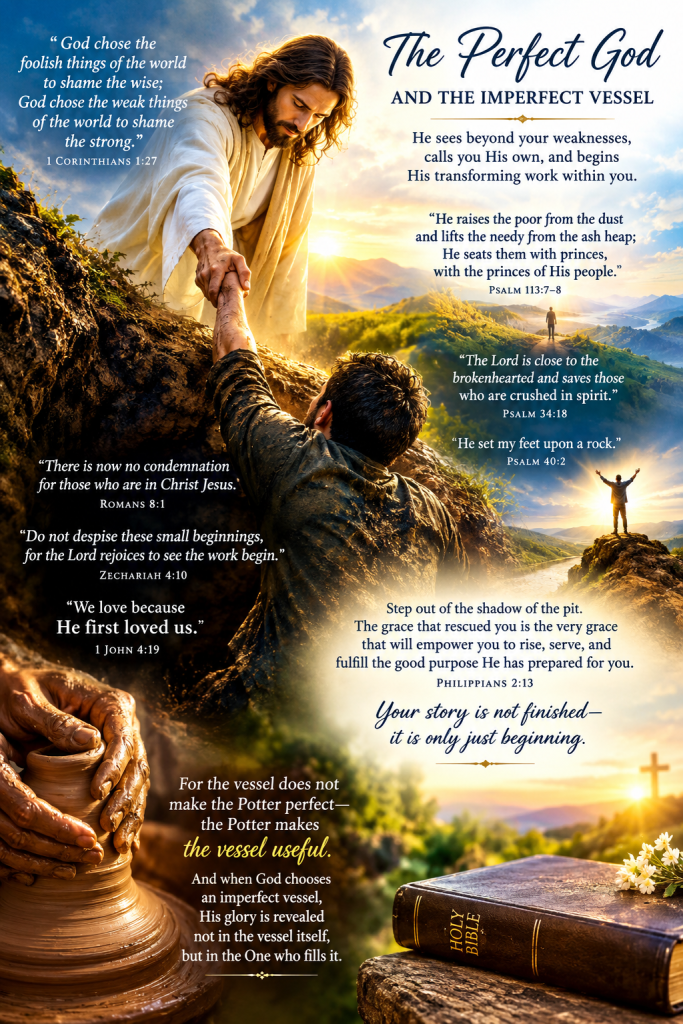
The perfect God, whose throne is established in holiness and light, has chosen the imperfect to serve the All-Perfect One.
As the Apostle Paul writes, “God chose the foolish things of the world to shame the wise; God chose the weak things of the world to shame the strong” (1 Corinthians 1:27).
You may feel inadequate, fragile, and unworthy, yet in His divine mercy, He sees beyond your weaknesses, calls you His own, and begins His transforming work within you.
He is the God who stoops down to the lowest places. Long before you knew how to reach for Him, “He raises the poor from the dust and lifts the needy from the ash heap; He seats them with princes, with the princes of His people” (Psalm 113:7–8).
You may have felt buried beneath the weight of your own limitations, trapped in a pit of pain and despair. Even when your voice failed and you could not cry out, His eyes never left you. “The Lord is close to the brokenhearted and saves those who are crushed in spirit” (Psalm 34:18). He saw every hidden tear, every silent struggle, and reached deep into the mire to pull you out, setting your feet upon a rock (Psalm 40:2).
Within your soul burns a quiet desire to do greater things for Him, to offer a life of purpose, power, and glory to His name. Yet you look back and feel as though you have not done enough. Do not let condemnation weigh heavily on your heart, for “there is now no condemnation for those who are in Christ Jesus” (Romans 8:1). God does not measure your worth by the greatness of your past achievements, but He delights in a heart that turns toward Him in faith and obedience. “Do not despise these small beginnings, for the Lord rejoices to see the work begin” (Zechariah 4:10).
You love Him deeply, yet you often feel that you have not fully expressed that love, held back by fear, hesitation, or the weight of your own unworthiness. But remember this: “We love because He first loved us” (1 John 4:19). Your love for Him, even when expressed through quiet obedience and unspoken longing, is precious before Him. He is not asking you to become flawless before you serve Him; He asks for a willing and surrendered heart.
“For it is God who works in you to will and to act in order to fulfill His good purpose” (Philippians 2:13).
The hands that lifted you from the pit have not released you. The God who found you in your brokenness is the same God who can use your life for His glory.
Do not wait until you feel worthy. Do not wait until you feel strong. Come as you are, surrender what you have, and let Him do through you what you could never accomplish by your own strength.
For the vessel does not make the Potter perfect, but the Potter makes the vessel useful.
And when God chooses an imperfect vessel, His glory is revealed not in the vessel itself, but in the One who fills it.
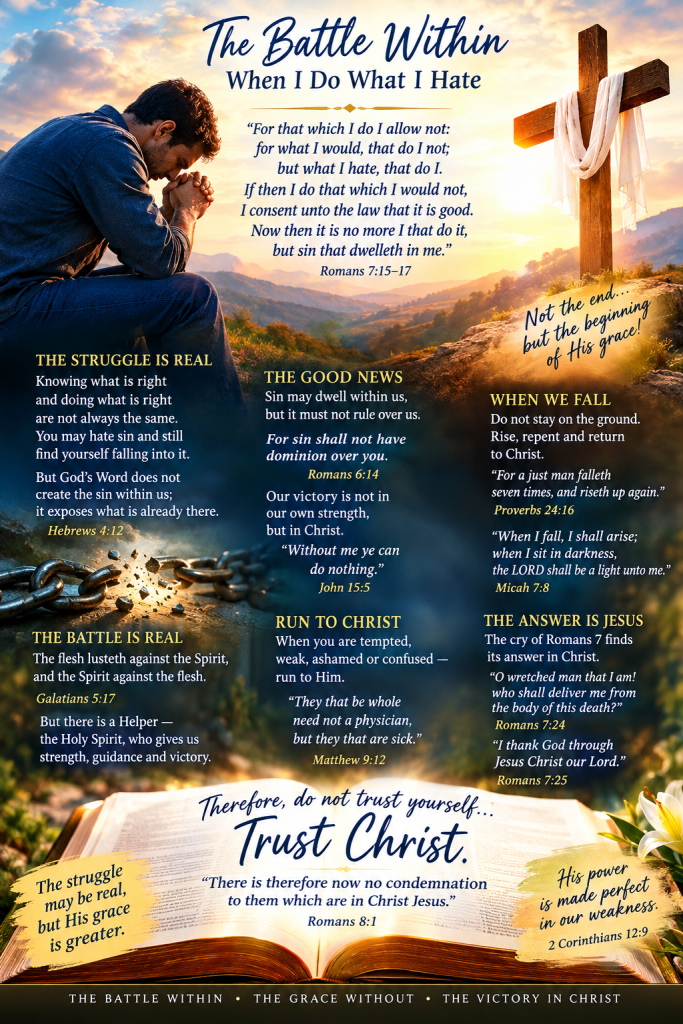
There is a battle that cannot always be seen by human eyes. It is not fought with swords, armies, or earthly weapons. It is fought within the heart of man.
The Apostle Paul speaks with remarkable honesty in Romans 7:15–17: “What I would, that do I not; but what I hate, that do I.”
These words reveal something every believer must understand: knowing the will of God and obeying the will of God are not always the same thing.
A person may know what is right and still struggle to do it. He may hate sin and yet find himself falling into temptation. He may desire holiness and still discover weakness within himself.
The Apostle Paul says: “If then I do that which I would not, I consent unto the law that it is good.”
The problem is not God’s law. God’s commandment is good because God is good. “Wherefore the law is holy, and the commandment holy, and just, and good” (Romans 7:12). God’s Word does not create the sin within us; it exposes what is already there. Hebrews 4:12 declares: “For the word of God is quick, and powerful, and sharper than any twoedged sword.” When God’s Word enters our hearts, it shows us not merely what we want others to see, but who we truly are before God.
The Apostle Paul says: “What I hate, that do I.” He acknowledges his weakness with humility, and that is where spiritual healing begins. He who comes before God and says, “Lord, search me, reveal me, cleanse me, and change me,” has opened his heart to the work of grace. King David prayed: “Search me, O God, and know my heart: try me, and know my thoughts” (Psalm 139:23). True spirituality is bringing our struggles into the presence of God.
The Apostle Paul says: “Sin that dwelleth in me.” In Romans 6:14, he later declares: “For sin shall not have dominion over you.” We are not strong enough to defeat sin. Christ is stronger than the sin that is fighting against us. Lord Jesus said: “Without me ye can do nothing” (John 15:5). Our victory does not come from trusting our own strength. It comes from abiding in Christ.
Are you struggling with sin or making peace with it?
If you have sinned, then you must repent. You must return to Christ. “For a just man falleth seven times, and riseth up again” (Proverbs 24:16). “When I fall, I shall arise; when I sit in darkness, the LORD shall be a light unto me” (Micah 7:8).
You may have been experiencing a painful struggle, making you wonder whether you truly belong to God and why you are still fighting this battle. The Christian life involves warfare. Galatians 5:17 says: “For the flesh lusteth against the Spirit, and the Spirit against the flesh.” But the Holy Spirit works within us, teaching us, correcting us, strengthening us, and leading us toward holiness. Therefore, when you recognize the battle within, do not run away from God, but run toward Him. When you face weakness, temptation, or moments of doubt and shame, turn immediately to Christ for strength.
Do not hide from the Physician. Go to the Physician. Lord Jesus said: “They that be whole need not a physician, but they that are sick” (Matthew 9:12).
The Lord Jesus Christ is more real than our weaknesses. His grace outlasts our failures, His mercy covers our shame, and His power is greater than any temptation. Whenever we stumble, His strong hand is always ready to lift us back up. Therefore, do not trust yourself, but trust the Living Christ.
The Lord told the Apostle Paul: “My grace is sufficient for thee: for my strength is made perfect in weakness” (2 Corinthians 12:9).
Abide in Christ. “There is therefore now no condemnation to them which are in Christ Jesus” (Romans 8:1).
For the battle is not ultimately won by the strength of the man who fights. It is won by the grace of the Christ who lives in him.
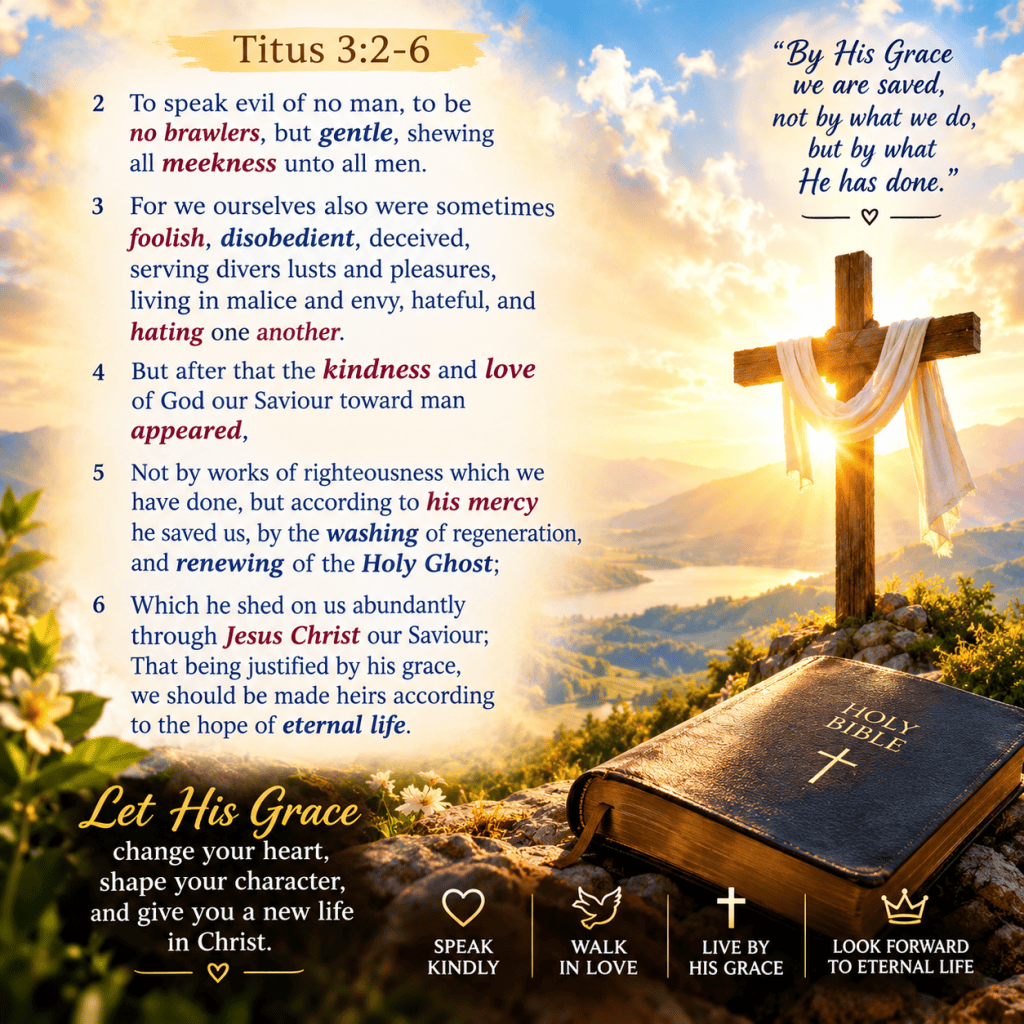
“I therefore, the prisoner of the Lord, beseech you that ye walk worthy of the vocation wherewith ye are called, With all lowliness and meekness, with longsuffering, forbearing one another in love; Endeavouring to keep the unity of the Spirit in the bond of peace” (Ephesians 4:2-4).
Human life possesses an inherent dignity that cannot be measured by status or achievement, because every person is created in the image of God (Genesis 1:27). Therefore, how we treat others reflects our true relationship with God.
We cannot genuinely love God while harboring hatred or speaking maliciously against those made in His image.
Our words and emotions carry immense power to build up or destroy. Uncontrolled anger, pride, jealousy, and neglect frequently ruin families, break friendships, and prevent reconciliation. Yet Scripture calls us to be slow to anger, quick to seek forgiveness, and guarded against bitterness. Before judging or despising others, we must remember our own past failures and foolishness. We were not saved by our own righteousness, but by God’s abundant mercy and grace. Because the ground at the foot of the cross is level, we have no basis for spiritual superiority. The grace we have received from Christ must become the grace we extend to others.
True discipleship is demonstrated through humility, kindness, and active forgiveness. “Death and life are in the power of the tongue” (Proverbs 18:21).
Pride deadens relationships; genuine peace requires the strength to say, “I was wrong.”
“By this shall all men know that ye are my disciples, if ye have love one to another” (John 13:35).
The grace that saves us must ultimately change us. Let your life reflect the gentleness, mercy, and love that God has shown to you.
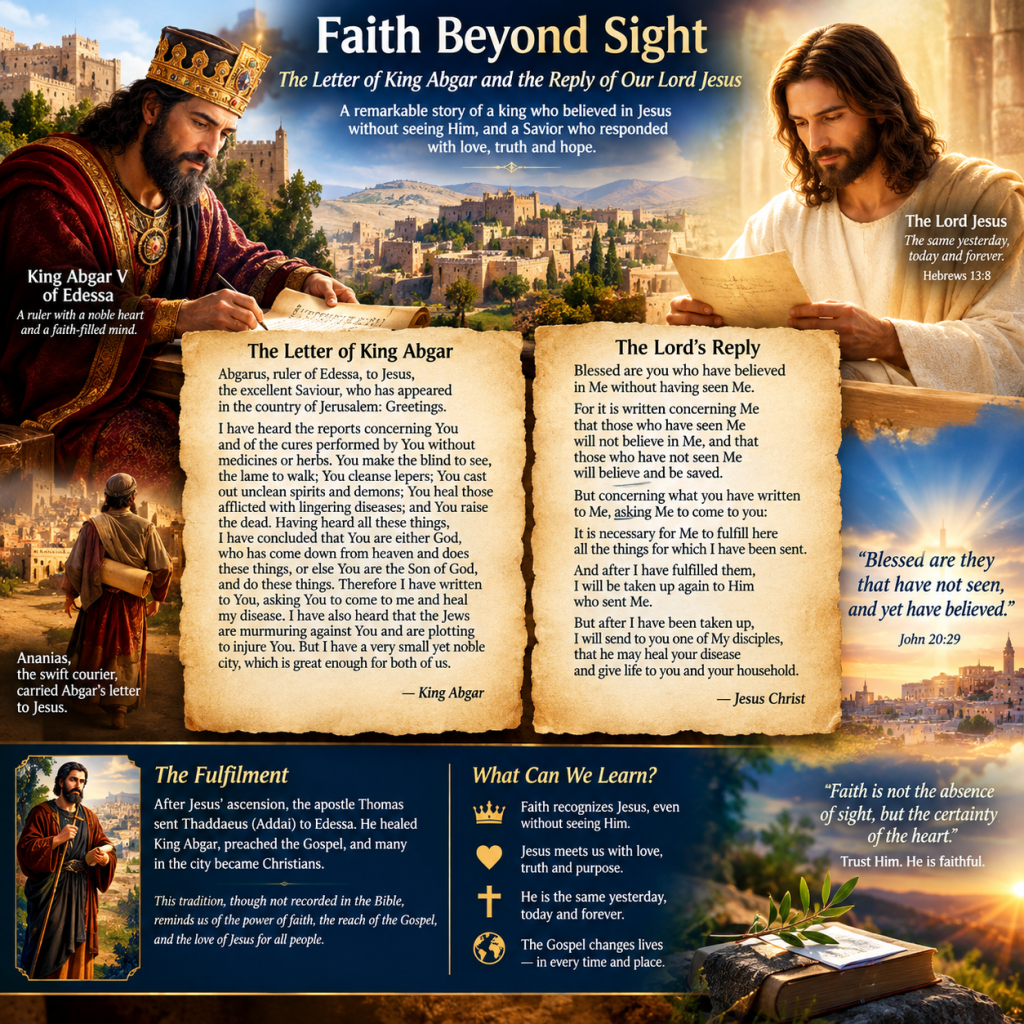
The Letter of King Abgar and the Reply of Our Lord Jesus
There are moments in history when a story reaches across centuries and speaks directly to the human heart. One such story is the ancient tradition concerning King Abgar V of Edessa and our Lord Jesus Christ. A king who had never seen Jesus heard about His mighty works. He heard that the blind received sight, the lame walked, the lepers were cleansed, demons were cast out, the sick were healed, and even the dead were raised.
Abgar believed what he had heard. And he wrote to Jesus. His letter was not simply a request for healing. It was an extraordinary expression of faith in the One whom he had never seen.
The King’s Letter
According to the account preserved by the early Christian historian Eusebius, King Abgar addressed Jesus as “the excellent Saviour.” He had heard about the miracles Jesus performed and came to a remarkable conclusion: either Jesus was God who had come down from heaven, or He was the Son of God. Abgar then asked Jesus to come to Edessa and heal him.
Abgar had not seen Jesus with his physical eyes. He had never watched Jesus perform a miracle. He had never sat among the crowds listening to Him teach. Yet he believed. His faith began with what he had heard about Jesus. That reminds us of the words of the Apostle Paul: “So then faith cometh by hearing, and hearing by the word of God” (Romans 10:17). Abgar’s physical eyes had never seen Christ, but his heart had begun to recognize Him.
The Reply of the Lord Jesus
The traditional account states that Jesus sent a reply to King Abgar. The message begins with words of extraordinary spiritual significance: “Blessed are you who have believed in Me without having seen Me.” Those words immediately bring to mind the words spoken by the risen Christ to Thomas: “Blessed are they that have not seen, and yet have believed” (John 20:29).
What a profound connection. Thomas had seen the risen Lord. Abgar, according to the tradition, had not. Yet both stories point toward the same great truth: faith does not require physical sight. The Christian faith says, “Believe in Christ, trust His Word, and walk with Him—even when you cannot see what lies ahead.” We cannot see tomorrow. We cannot see every answer to our prayers. We cannot always understand why God permits certain things to happen. But we can still trust the One who holds tomorrow.
Jesus Did Not Come to Edessa—But He Had a Greater Purpose
Abgar invited Jesus to come to his city. But according to the traditional reply, Jesus explained that He had a divine work to accomplish first. He had been sent for a purpose. He would fulfil the work given to Him and then return to the One who sent Him. Sometimes we ask God, “Lord, come into this situation and change it according to my desire.” But God’s answer may be, “Trust Me. I am accomplishing something greater than you can presently see.”
Jesus did not simply respond according to Abgar’s request. He remained faithful to the Father’s purpose. The Lord had come into the world for something infinitely greater than one king’s healing. He came to seek and save the lost. He came to give His life as a ransom for many. He came to reconcile sinners to God. He came to accomplish the work of salvation.
According to the tradition, Jesus promised that after His ascension He would send one of His disciples to Abgar. The disciple would come to him and bring healing. The tradition identifies that disciple as Thaddaeus, also known as Addai, who was associated with the apostle Thomas in the Edessan tradition. Jesus Himself would not come physically to Edessa at that time, but His work would continue through His messenger. No longer would the physical presence of Jesus be limited to one geographical location. The Gospel would go out as His disciples carried His message, empowered by the Holy Spirit. Consequently, the name of Jesus would travel from city to city, nation to nation, and generation to generation.
Faith Without Sight
The most powerful part of the Abgar story is not really the king’s illness. It is not even the letter. It is faith. A king heard about Jesus and believed. He had not seen the Lord, yet he trusted Him. Centuries later, we stand in a similar position. We have not physically walked beside Jesus in Galilee. We did not stand at the empty tomb. We did not touch the wounds in His hands as Thomas did. Yet we are called to believe. The Apostle Peter expresses this beautifully: “Whom having not seen, ye love; in whom, though now ye see him not, yet believing, ye rejoice with joy unspeakable and full of glory” (1 Peter 1:8).
That is the mystery and beauty of Christian faith. We have not seen Him with our physical eyes. Yet we love Him. We speak to Him. We trust Him. We worship Him. We call upon His name. And we wait for the day when faith will become sight. “Blessed are they that have not seen, and yet have believed” (John 20:29).
You might be praying for things you cannot see yet. You might be waiting for an answer. You might be walking through a quiet season where God feels silent. You might be asking, “Lord, where are You?” Remember King Abgar. He had not seen Jesus, but he believed. And remember the Apostle Thomas. He struggled to believe until he saw the risen Christ. Remember what Jesus said: “Blessed are they that have not seen, and yet have believed.” Faith does not mean pretending that difficulties do not exist. Faith means believing that God is greater than what we can see.
What will we do with what we have heard about Jesus? Abgar heard about Christ and responded with faith. We have something even greater. We have the testimony of Scripture. We have the Gospel. We know of His birth, His ministry, His crucifixion, His resurrection, His ascension, and His promise to return. We know His words: “I am the way, the truth, and the life” (John 14:6). The question is: Do we believe Him?
One day we shall see the King. And until that day, let us walk by faith, let us keep believing, keep praying, keep trusting, and keep seeking Christ. “For we walk by faith, not by sight” (2 Corinthians 5:7).
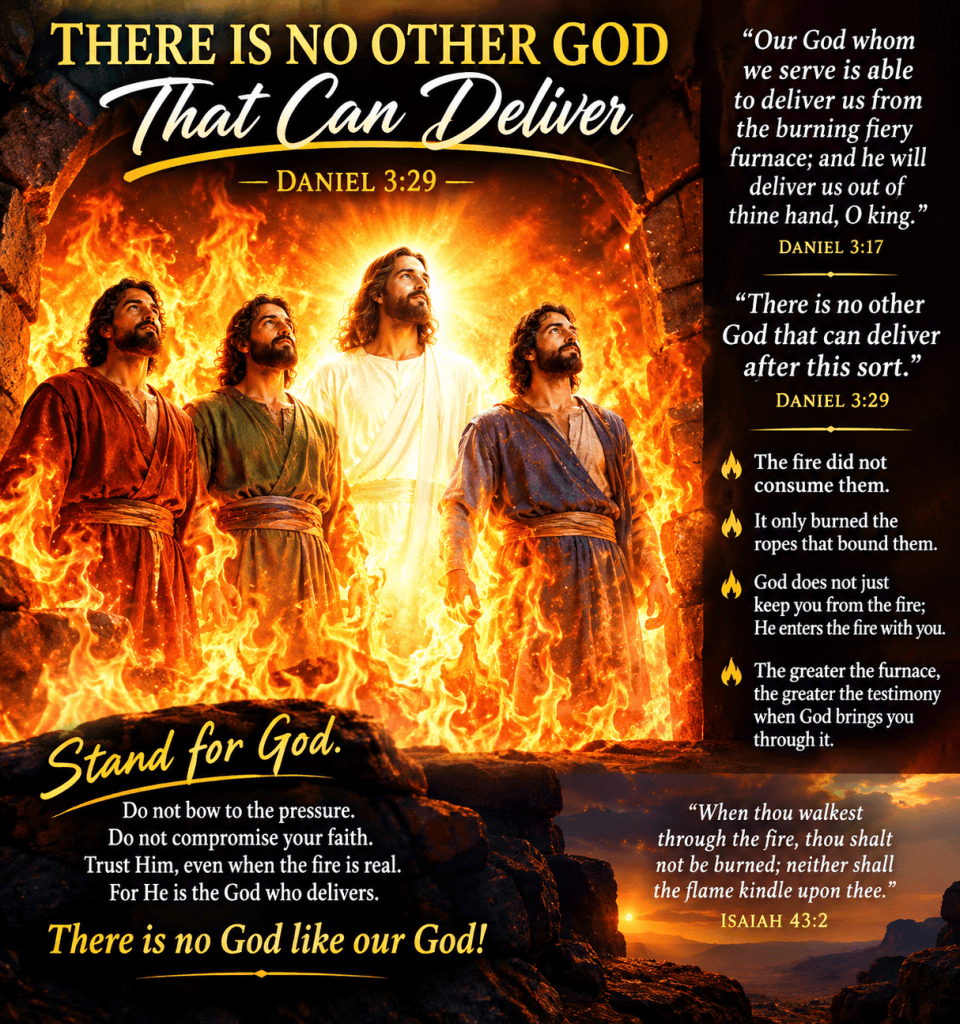
When thou walkest through the fire, thou shalt not be burned; neither shall the flame kindle upon thee” (Isaiah 43:2).
There are moments in life when the fire becomes so intense that human strength cannot save us, human wisdom cannot rescue us, and human connections cannot deliver us. But it is precisely in those moments that God reveals who He truly is.
Shadrach, Meshach, and Abednego were thrown into a blazing furnace because they refused to bow before an idol. They did not know how God would deliver them—but they knew God was able to deliver them.
Their faith was not based on the absence of fire. Their faith was based on the presence of God in the fire.
They declared: “Our God whom we serve is able to deliver us from the burning fiery furnace” (Daniel 3:17).
And when they entered the furnace, they were not alone. The king looked into the fire and saw a fourth man walking with them.
What the enemy intended to destroy became the place where God displayed His glory. The fire did not consume them. It only burned the ropes that bound them.
Sometimes God does not keep you from entering the fire; He enters the fire with you.
Your trial may be painful, but God has not abandoned you.
Your situation may look impossible, but God is still sovereign.
Your enemies may think your story is finished, but God has the final word.
Nebuchadnezzar himself had to acknowledge what he had witnessed: “There is no other God that can deliver after this sort” (Daniel 3:29).
Never measure the power of God by the size of your problem. The greater the furnace, the greater the testimony when God brings you through it.
The God who delivered the three Hebrew men is still God today. He is the God who makes a way where there seems to be no way. He is the God who can turn a furnace into a testimony, a trial into a testimony of faith, and a place of suffering into a place where His presence is revealed.
Do not bow to the pressure. Do not compromise your faith to escape the fire. Do not worship what the world worships just because everyone else is doing it.
Stand for God. And if you must walk through the fire, walk through it knowing this:
You may enter the fire with chains, but you will come out with freedom.
You may enter the fire being tested, but you will come out with a testimony.
You may enter the fire alone in the eyes of men, but you will never enter it alone in the presence of God.
There is no God like our God. There is no deliverer like our Deliverer. There is no fire hot enough to defeat the God who walks with His children through the flames.
The fire may be real—but so is the God who stands with you in it.
King Asa did what was good and right in the eyes of the LORD, and God did not forsake him. He reigned for forty-one years. For thirty-five years, his heart was fully committed to the Lord. Because there was peace, the land had rest for many years.
“For the eyes of the LORD run to and fro throughout the whole earth, to show himself strong on behalf of those whose heart is perfect toward him. You have done foolishly in this; therefore, from now on you shall have wars” (2 Chronicle 16:9).
However, when King Asa trusted in the King of Syria instead of relying on God, he lost the peace he once enjoyed. In the thirty-ninth year of his reign, Asa became severely diseased in his feet. Yet in his illness, he sought not the LORD, but physicians. Asa slept with his fathers and died in the forty-first year of his reign.
Trust God. Whenever the kings trusted Him, there was peace; when they yoked themselves with unbelievers, there was no peace.
Let’s trust God, walk with Him, and follow peace with everyone.
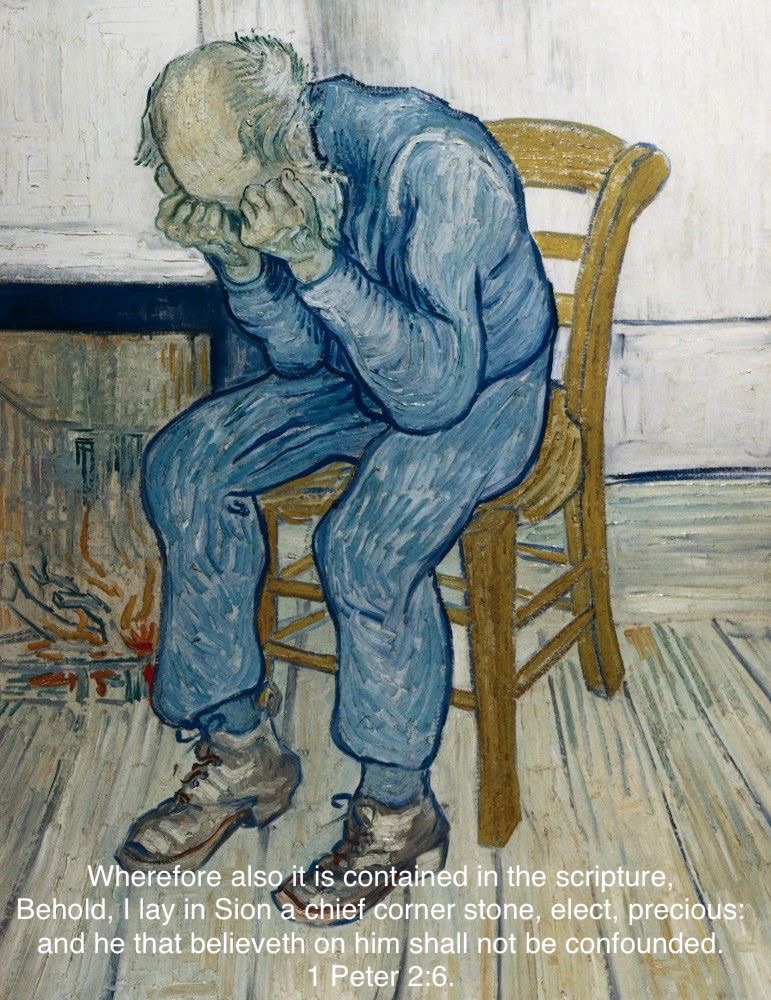
Come what may, those who trust in the Lord will never be confounded.
An insult to you is an insult to the Holy Spirit in you; an insult to you is an insult to the King of kings whom you trust. Be of good courage.
The Lord Almighty is seated on a magnificent throne. He has created all these things for His glory; will He not do this little thing for which you have prayed? He hears the faintest cry.
The answer is at your door. Have faith and keep thanking Him. He will never take His eyes off you. Just keep thanking the Lord without getting distracted, and expect the move of the Lord.
Our Lord hears, He answers, and He comforts. He is a good God. You are perplexed, troubled and confused. Let not your heart be troubled. He was silent because He wants you to trust Him and Him alone.
Life is like the vapour, it’s like the morning dew. As long as we live, let us be sincere to God and love Him. Keep ourselves holy and follow His commandments.
Make every effort to live in peace with everyone. Never hurt anyone. Forgive one another.
We must not miss the waiting hour with the Lord, for He waits for us.
In this world we are to only maintain the things given to us by the Lord.
Nothing belongs to us. Not even our body, soul and spirit. We are not going to take anything with us.
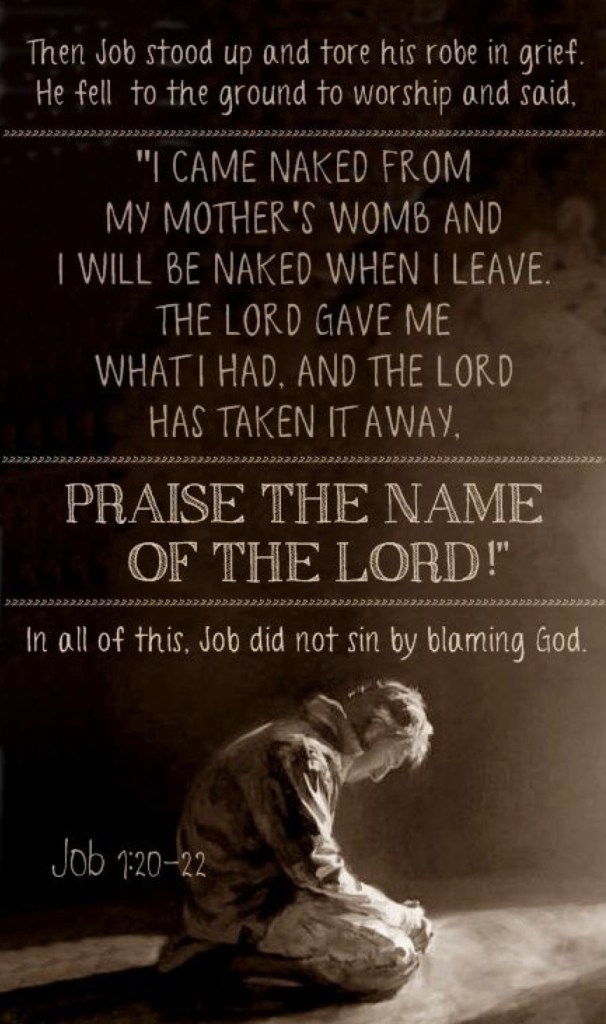
“For we brought nothing into this world, and it is certain we can carry nothing out” ( 1 Timothy 6:7).