“Keep me as the apple of Your eye; hide me under the shadow of Your wings” (Psalm 17:8).
During a period of intense trial and opposition, King David penned this verse, which is one of the most tender, powerful, and reassuring declarations of divine love and protection in the entire Bible.
“Keep me as the apple of Your eye.” The pupil is one of the most vital, delicate, and sensitive parts of the human body.
Just as your eyelid reflexively blinks to shield your eye from the slightest particle or harm, God actively guards you with the same instinctual, instant protection.
You are central to His vision. You are not an afterthought or lost in the crowd; God’s gaze is focused on you with immense value, tenderness, and love (Zechariah 2:8).
“Hide me under the shadow of Your wings.”
A mother bird gathers her young under her broad, strong wings to shield them from predators, harsh weather, or scorching heat.
A place of physical proximity, you have to be right next to God to stay within His shadow. It implies total intimacy and refuge. While the danger outside may still rage, beneath His wings there is stillness, comfort, and ultimate security.
God does not protect us out of mere duty; He protects us out of deep affection. You are cherished like the most delicate part of His eye and sheltered with the fierce, protective love of a parent bird over its young. Step out of the storm and rest in the safety of His presence.
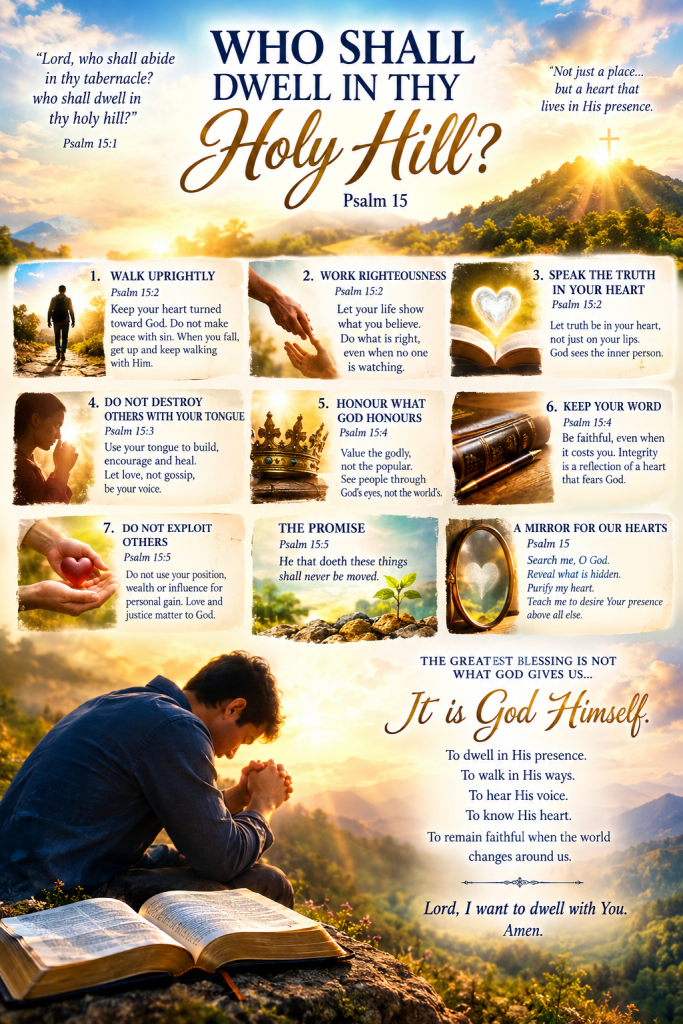
“LORD, who shall abide in thy tabernacle? who shall dwell in thy holy hill?” (Psalm 15:1)
King David is not asking about a physical address. He is asking about fellowship with the living God.
Who can come near Him?
Who can remain in His presence?
What kind of life does God desire from those who call upon His name?
“He that walketh uprightly” (Psalm 15:2).
God is concerned not merely with what we say, but with how we walk.
To walk uprightly does not mean that a person has never fallen. It means that his heart is turned toward God and that he desires to walk in truth.
The upright person does not deliberately make peace with sin. When he discovers sin in his heart, he brings it before God. When he is corrected, he listens. When he falls, he gets up.
King David continues: “and worketh righteousness…” (Psalm 15:2)
Righteousness is not merely something we profess with our lips. It must become visible in our lives.
True faith means doing what is right even when no one is watching, because we live and walk before God, not for human applause.
God desires truth not only on our lips but within our hearts. He desires a heart without deception, a heart that does not need to maintain one appearance before people and another before God.
“He that backbiteth not with his tongue, nor doeth evil to his neighbour, nor taketh up a reproach against his neighbour” (Psalm 15:3).
A person can worship God with his lips and yet wound another person with those same lips.
Words hold the ultimate power to either build lives up or tear them down.
King David says:
“In whose eyes a vile person is contemned; but he honoureth them that fear the LORD” (Psalm 15:4).
We often admire people because of wealth, power, influence, appearance, status, or popularity.
But God looks differently.
The person who fears the Lord may have little recognition in this world and yet be precious in the sight of God.
“He that sweareth to his own hurt, and changeth not” (Psalm 15:4)
God desires people whose word can be trusted.
This is integrity. A person of integrity does not keep his promise only when it is comfortable. He who walks with God learns that faithfulness is more valuable than convenience.
“He that putteth not out his money to usury, nor taketh reward against the innocent” (Psalm 15:5).
God cares about how we treat those who are vulnerable.
Our relationship with God cannot be separated from our relationship with people. A heart that truly desires God’s presence must learn to love righteousness and reject exploitation.
“He that doeth these things shall never be moved”(Psalm 15:5).
The world, people, and circumstances constantly change, and earthly possessions or approval easily disappear. However, someone who builds their life upon God and walks in His ways gains a foundation that external shifts cannot take away.
Ultimately, the greatest blessing we can experience is God Himself. While the world around us remains in constant flux, true peace is found in dwelling in His presence and walking in His ways. By taking the time to hear His voice and deeply know His heart, we gain the spiritual strength needed to remain faithful through every season of change.
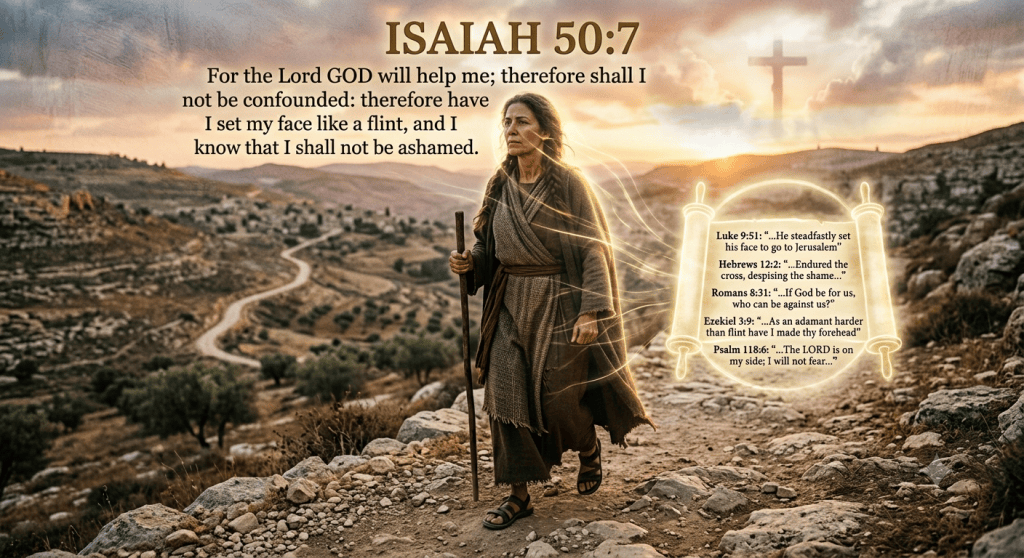
Life frequently brings moments where your purpose is tested, your motives are questioned, or the road ahead looks steep and lonely. In those seasons, human willpower eventually fatigues but holy conviction does not.
Setting your face like flint is not about being cold, rigid, or stubborn toward people; it is about being entirely uncompromising regarding your direction in God.
Stop measuring your journey against the noise, criticism, or doubts of the crowd.
Realise that if God has called you to step forward, His strength will sustain every step you take.
Circumstances may test you today, but God’s promises guarantee that your story does not end in defeat.
Whatever trial, goal, or calling lies before you today, fix your gaze forward. Let your trust in God make your resolve harder than any obstacle in your path.
“Therefore, my beloved brethren, be ye stedfast, unmovable, always abounding in the work of the Lord, forasmuch as ye know that your labour is not in vain in the Lord” ( 1 Corinthians 15:58).
“Cast not away therefore your confidence, which hath great recompence of reward. For ye have need of patience, that, after ye have done the will of God, ye might receive the promise” (Hebrews 10:35, 36).
Christians are called to follow Christ not merely in name, but in life, in obedience, in holiness, and in the power of the Holy Spirit.
The Lord Jesus Himself was baptized in water, and the Holy Spirit descended upon Him. The Scripture says: “And the Holy Ghost descended in a bodily shape like a dove upon him” (Luke 3:22).
If we call ourselves followers of Christ, we must earnestly seek to walk in the footsteps of Christ.
When Israel passed through the Red Sea, the Apostle Paul described it as a figure of baptism: “And were all baptized unto Moses in the cloud and in the sea” (1 Corinthians 10:2).
Their passage through the waters marked a separation from the life they had known in Egypt. They were moving forward into a new journey under the leadership of God.
Then God manifested His presence among them. At Mount Sinai, the glory and fire of the Lord were revealed. And throughout their wilderness journey, God did not leave His people without direction: “And the LORD went before them by day in a pillar of a cloud, to lead them the way; and by night in a pillar of fire, to give them light” (Exodus 13:21)
Cloud by day. Fire by night.
God did not merely bring His people out, He desired to lead them.
In the same way, receiving the Holy Spirit is not merely about having an experience. The Holy Spirit comes to dwell in you, to teach, guide, comfort, convict, strengthen, and lead you into the truth.
The Lord Jesus said: “And I will pray the Father, and he shall give you another Comforter, that he may abide with you for ever” (John 14:16).
And in John 16:13: “Howbeit when he, the Spirit of truth, is come, he will guide you into all truth.”
The Holy Spirit is the Spirit of God.
The Apostle Paul writes: “Now if any man have not the Spirit of Christ, he is none of his.” (Romans 8:9).
If you are not filled with the Spirit of God, you don’t belong to Him.
Water baptism has profound biblical meaning. It testifies to repentance, identification with Christ, the death of the old life, and the beginning of a new life: “Therefore we are buried with him by baptism into death: that like as Christ was raised up from the dead by the glory of the Father, even so we also should walk in newness of life” (Romans 6:4).
The old life must die, and the new life must be lived in Christ. The Holy Spirit is central to that new life.
The Lord Jesus declared: “Except a man be born of water and of the Spirit, he cannot enter into the kingdom of God” (John 3:5).
The new birth is the work of God within the heart.
On the Day of Pentecost, the promise of the Father was manifested with extraordinary power: “And there appeared unto them cloven tongues like as of fire, and it sat upon each of them. And they were all filled with the Holy Ghost” (Acts 2:3–4).
They were filled with the Holy Spirit, and they began to speak with other tongues as the Spirit gave them utterance.
Tongues are one of the spiritual gifts mentioned by the Apostle Paul among the manifestations of the Spirit (1 Corinthians 12:8–10). The Holy Spirit gives different gifts to different believers according to His will (1 Corinthians 12:11).
Therefore, we should not measure the presence of the Holy Spirit merely by one particular manifestation.
God looks deeper than our outward actions. “For man looketh on the outward appearance, but the LORD looketh on the heart” (1 Samuel 16:7).
Therefore, do not be satisfied with water baptism alone.
Do not be satisfied merely because you were baptized as a child. A ceremony cannot substitute for a surrendered heart.
A person may pass through religious ceremonies and still wander far from God. Israel itself passed through the sea, witnessed God’s mighty works, and yet many later fell into disobedience and unbelief. Apostle Paul warns us to learn from their example (1 Corinthians 10:1–12).
So let us examine ourselves. Have we truly repented? Have we surrendered our lives to Christ? Are we walking in obedience, seeking the Holy Spirit, and allowing the Spirit of God to lead us?
The Scripture says: “As many as are led by the Spirit of God, they are the sons of God” (Romans 8:14).
Repentance must be more than words.
True repentance turns the heart toward God. “Repent ye therefore, and be converted, that your sins may be blotted out” (Acts 3:19).
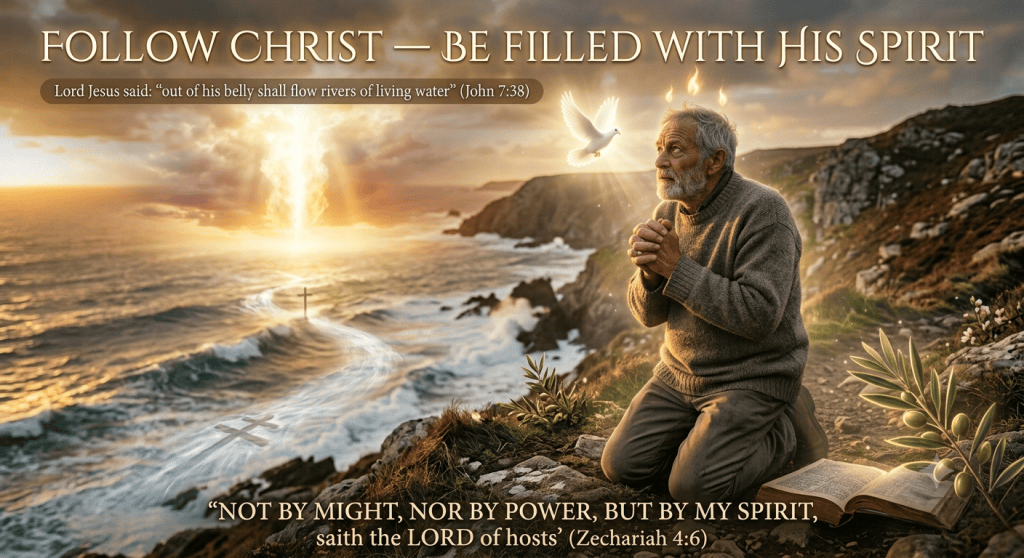
Come before the Lord sincerely. Fast, pray, and search your heart. Confess your sins to God. Ask Him to cleanse you, change you, and fill you with His Spirit. Lord Jesus Himself gave this invitation: “If any man thirst, let him come unto me, and drink” (John 7:37).
And then He gave this extraordinary promise: “He that believeth on me, as the scripture hath said, out of his belly shall flow rivers of living water” (John 7:38).
If your desire is to serve the Lord and reach souls, ask Him to equip you.
Say: “Lord Jesus, I do not want merely to speak about You. I want You to use my life. Cleanse me. Teach me. Lead me. Fill me with Your Holy Spirit. Give me wisdom, courage, love, discernment, and every gift You desire to place within me. Make me a vessel for Your glory.”
Seek the Lord with your whole heart.
Be filled with His Spirit. Walk in His light.
Bear His fruit. Carry His love. Obey His voice.
And let your life become a living testimony that Jesus Christ is Lord.
“Not by might, nor by power, but by my spirit, saith the LORD of hosts” (Zechariah 4:6).
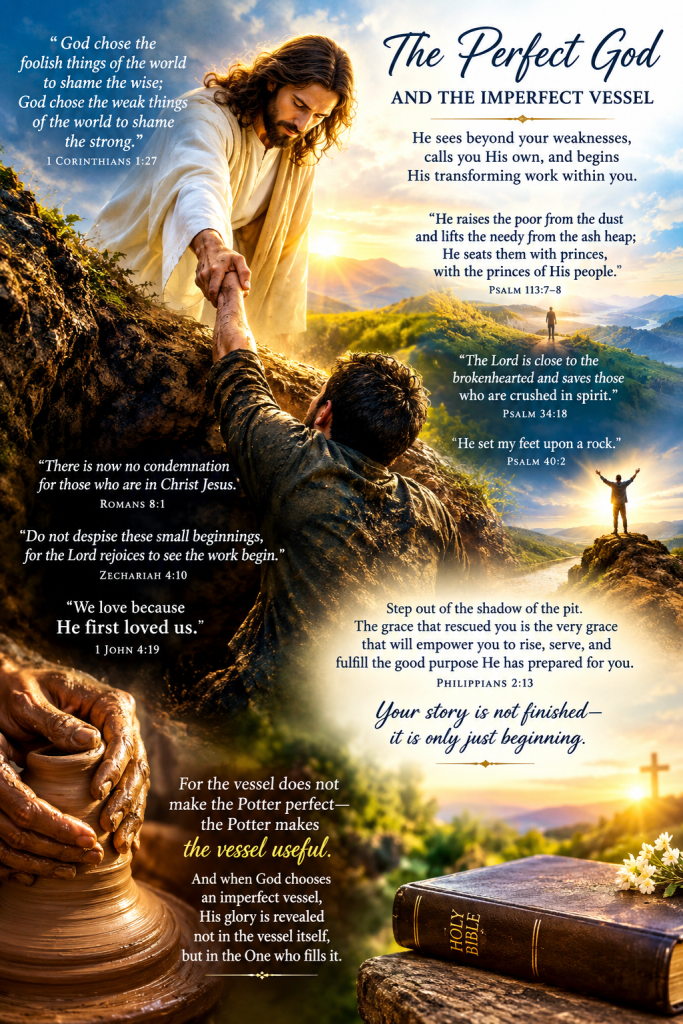
The perfect God, whose throne is established in holiness and light, has chosen the imperfect to serve the All-Perfect One.
As the Apostle Paul writes, “God chose the foolish things of the world to shame the wise; God chose the weak things of the world to shame the strong” (1 Corinthians 1:27).
You may feel inadequate, fragile, and unworthy, yet in His divine mercy, He sees beyond your weaknesses, calls you His own, and begins His transforming work within you.
He is the God who stoops down to the lowest places. Long before you knew how to reach for Him, “He raises the poor from the dust and lifts the needy from the ash heap; He seats them with princes, with the princes of His people” (Psalm 113:7–8).
You may have felt buried beneath the weight of your own limitations, trapped in a pit of pain and despair. Even when your voice failed and you could not cry out, His eyes never left you. “The Lord is close to the brokenhearted and saves those who are crushed in spirit” (Psalm 34:18). He saw every hidden tear, every silent struggle, and reached deep into the mire to pull you out, setting your feet upon a rock (Psalm 40:2).
Within your soul burns a quiet desire to do greater things for Him, to offer a life of purpose, power, and glory to His name. Yet you look back and feel as though you have not done enough. Do not let condemnation weigh heavily on your heart, for “there is now no condemnation for those who are in Christ Jesus” (Romans 8:1). God does not measure your worth by the greatness of your past achievements, but He delights in a heart that turns toward Him in faith and obedience. “Do not despise these small beginnings, for the Lord rejoices to see the work begin” (Zechariah 4:10).
You love Him deeply, yet you often feel that you have not fully expressed that love, held back by fear, hesitation, or the weight of your own unworthiness. But remember this: “We love because He first loved us” (1 John 4:19). Your love for Him, even when expressed through quiet obedience and unspoken longing, is precious before Him. He is not asking you to become flawless before you serve Him; He asks for a willing and surrendered heart.
“For it is God who works in you to will and to act in order to fulfill His good purpose” (Philippians 2:13).
The hands that lifted you from the pit have not released you. The God who found you in your brokenness is the same God who can use your life for His glory.
Do not wait until you feel worthy. Do not wait until you feel strong. Come as you are, surrender what you have, and let Him do through you what you could never accomplish by your own strength.
For the vessel does not make the Potter perfect, but the Potter makes the vessel useful.
And when God chooses an imperfect vessel, His glory is revealed not in the vessel itself, but in the One who fills it.
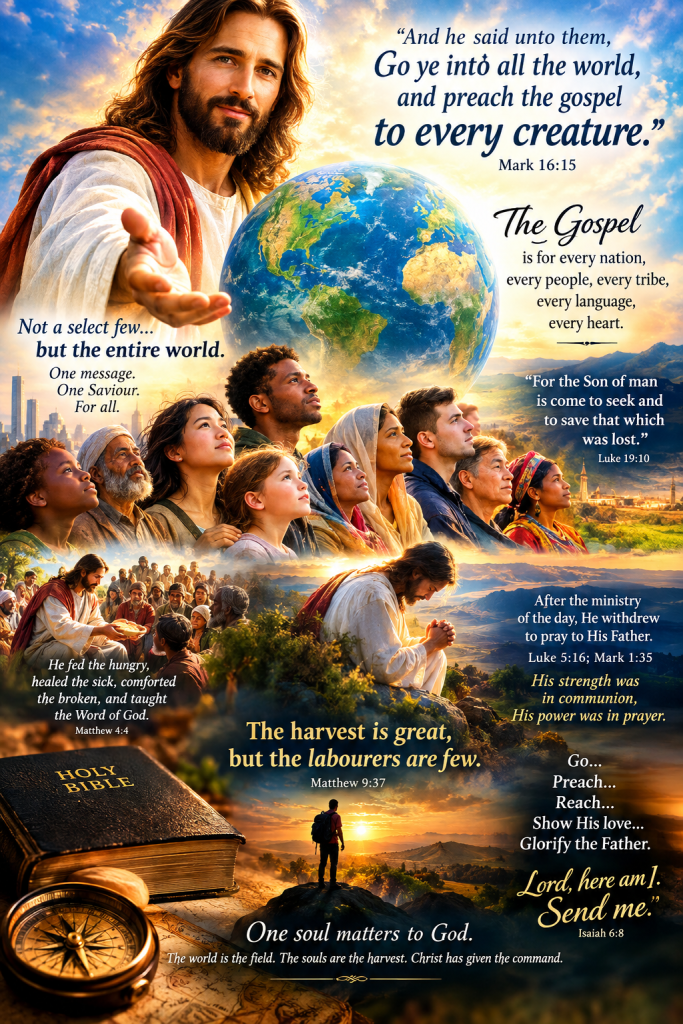
“And he said unto them, Go ye into all the world, and preach the gospel to every creature”
(Mark 16:15).
The mission given by our Lord Jesus Christ is not confined to a particular nation, community, congregation, family, or select group of people. Our vision must reach beyond the boundaries we can see. Our target must be the entire world.
The Gospel is for every creature.
There are souls everywhere who are searching for hope, longing for peace, carrying wounds that nobody can see, and walking through darkness without knowing where to turn. Some may never enter a church. Some may never open a Bible. Some may never hear a sermon from a pulpit.
But they can encounter Christ through a word spoken in love, a life lived in obedience, a helping hand, a testimony, a message, or someone who is willing to carry the Gospel beyond familiar boundaries.
The Lord Jesus did not come into this world merely to reach a comfortable few. He came to seek and to save that which was lost.
“For the Son of man is come to seek and to save that which was lost” (Luke 19:10).
Christ’s eyes were always upon souls
The earthly ministry of our Lord Jesus Christ gives us a pattern that cannot be ignored.
He went among the people. He saw the multitudes. He listened to the broken. He touched the rejected. He welcomed the forgotten. He taught those who were hungry for truth. He comforted those who were grieving. He healed the sick and strengthened the weak.
He did not see people merely according to their social position, wealth, reputation, or status.
He saw souls.
When He looked upon the multitude, He was moved with compassion. “But when he saw the multitudes, he was moved with compassion on them, because they fainted, and were scattered abroad, as sheep having no shepherd” (Matthew 9:36).
When we look at the world, do we see only people or do we see souls that Christ loves?
He fed both body and soul. Lord Jesus cared about people’s physical needs, but He never neglected their spiritual needs.
He fed the hungry, yet He also taught them the Word of God. He healed the sick, yet He called people to repentance and faith. He comforted the brokenhearted, yet He directed them toward the Father.
The Lord Jesus said: “Man shall not live by bread alone, but by every word that proceedeth out of the mouth of God” (Matthew 4:4).
Food can sustain the body for a day. The Word of God can lead a soul toward eternal life.
He glorified the Father. Throughout His earthly ministry, Lord Jesus continually directed attention to His Father. He did not seek His own glory. His life was an offering of obedience.
Whatever work God has placed before us, our ultimate purpose should not be to make our own name great. It should be to glorify His Name.
Our ministry, our words, our gifts, our resources, our time, and even our daily conduct should point people toward Christ.
The hidden strength behind His public ministry was a life of prayer. After ministering to the multitudes, Lord Jesus often withdrew from the crowds to seek His Father. “And he withdrew himself into the wilderness, and prayed” (Luke 5:16).
“And in the morning, rising up a great while before day, he went out, and departed into a solitary place, and there prayed” (Mark 1:35).
The One who had spent the day teaching, healing, comforting, travelling, answering questions, and ministering to people still made time to be alone with the Father. His public strength was connected to His private communion with God.
We cannot effectively carry God’s message to the world while neglecting our own relationship with God. Before we speak to people about the Father, we must learn to spend time speaking with the Father.
The Lord Jesus looked at the multitudes and said:
The harvest is great but the labourers are few.
The world is still full of souls. Our responsibility is not necessarily to stand before thousands.
We may begin with one person. One soul matters to God.
One encouraging word may prevent someone from giving up. One testimony may awaken faith. One act of kindness may open a heart. One Scripture may remain in someone’s mind for years. One person who faithfully shares Christ may become the instrument through which another person encounters the Gospel.
We must therefore never underestimate what God can do through a willing servant.
Let us not make the Gospel smaller than Christ made it.
We must look beyond just our neighborhood, friends, those who already agree with us, or those who are easy to reach.
The Gospel crosses borders, languages, cultures, and social boundaries because the love of Christ is not confined by the boundaries created by humanity.
Are we willing to go?
The world does not merely need more religious words. It needs people whose lives demonstrate that they have encountered Christ.
We are called to go, speak, serve, love, pray, encourage, teach, and testify.
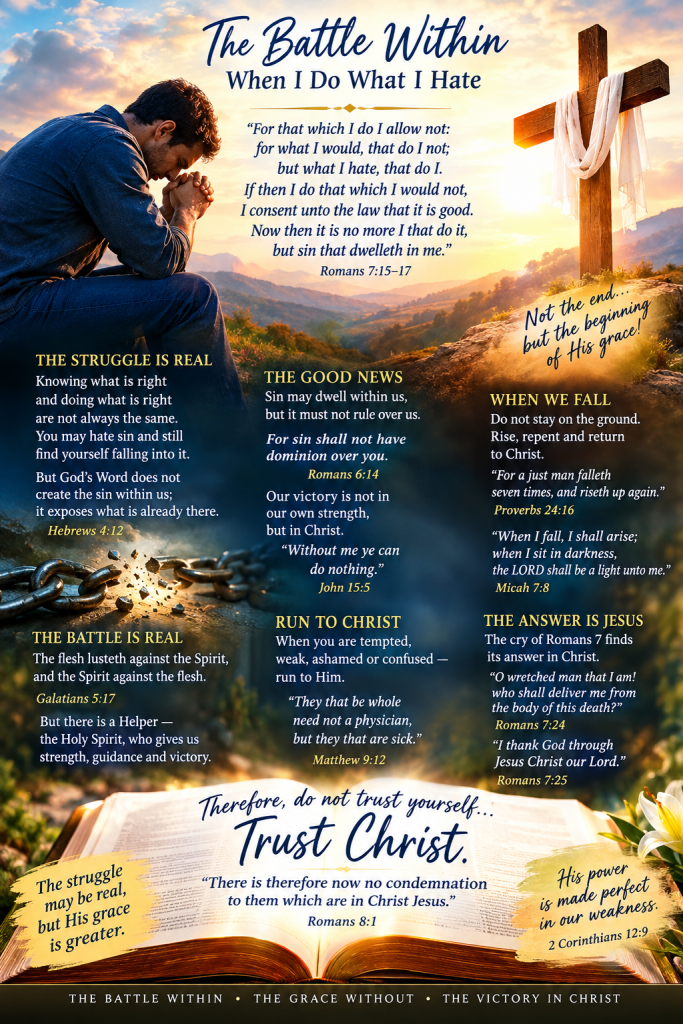
There is a battle that cannot always be seen by human eyes. It is not fought with swords, armies, or earthly weapons. It is fought within the heart of man.
The Apostle Paul speaks with remarkable honesty in Romans 7:15–17: “What I would, that do I not; but what I hate, that do I.”
These words reveal something every believer must understand: knowing the will of God and obeying the will of God are not always the same thing.
A person may know what is right and still struggle to do it. He may hate sin and yet find himself falling into temptation. He may desire holiness and still discover weakness within himself.
The Apostle Paul says: “If then I do that which I would not, I consent unto the law that it is good.”
The problem is not God’s law. God’s commandment is good because God is good. “Wherefore the law is holy, and the commandment holy, and just, and good” (Romans 7:12). God’s Word does not create the sin within us; it exposes what is already there. Hebrews 4:12 declares: “For the word of God is quick, and powerful, and sharper than any twoedged sword.” When God’s Word enters our hearts, it shows us not merely what we want others to see, but who we truly are before God.
The Apostle Paul says: “What I hate, that do I.” He acknowledges his weakness with humility, and that is where spiritual healing begins. He who comes before God and says, “Lord, search me, reveal me, cleanse me, and change me,” has opened his heart to the work of grace. King David prayed: “Search me, O God, and know my heart: try me, and know my thoughts” (Psalm 139:23). True spirituality is bringing our struggles into the presence of God.
The Apostle Paul says: “Sin that dwelleth in me.” In Romans 6:14, he later declares: “For sin shall not have dominion over you.” We are not strong enough to defeat sin. Christ is stronger than the sin that is fighting against us. Lord Jesus said: “Without me ye can do nothing” (John 15:5). Our victory does not come from trusting our own strength. It comes from abiding in Christ.
Are you struggling with sin or making peace with it?
If you have sinned, then you must repent. You must return to Christ. “For a just man falleth seven times, and riseth up again” (Proverbs 24:16). “When I fall, I shall arise; when I sit in darkness, the LORD shall be a light unto me” (Micah 7:8).
You may have been experiencing a painful struggle, making you wonder whether you truly belong to God and why you are still fighting this battle. The Christian life involves warfare. Galatians 5:17 says: “For the flesh lusteth against the Spirit, and the Spirit against the flesh.” But the Holy Spirit works within us, teaching us, correcting us, strengthening us, and leading us toward holiness. Therefore, when you recognize the battle within, do not run away from God, but run toward Him. When you face weakness, temptation, or moments of doubt and shame, turn immediately to Christ for strength.
Do not hide from the Physician. Go to the Physician. Lord Jesus said: “They that be whole need not a physician, but they that are sick” (Matthew 9:12).
The Lord Jesus Christ is more real than our weaknesses. His grace outlasts our failures, His mercy covers our shame, and His power is greater than any temptation. Whenever we stumble, His strong hand is always ready to lift us back up. Therefore, do not trust yourself, but trust the Living Christ.
The Lord told the Apostle Paul: “My grace is sufficient for thee: for my strength is made perfect in weakness” (2 Corinthians 12:9).
Abide in Christ. “There is therefore now no condemnation to them which are in Christ Jesus” (Romans 8:1).
For the battle is not ultimately won by the strength of the man who fights. It is won by the grace of the Christ who lives in him.
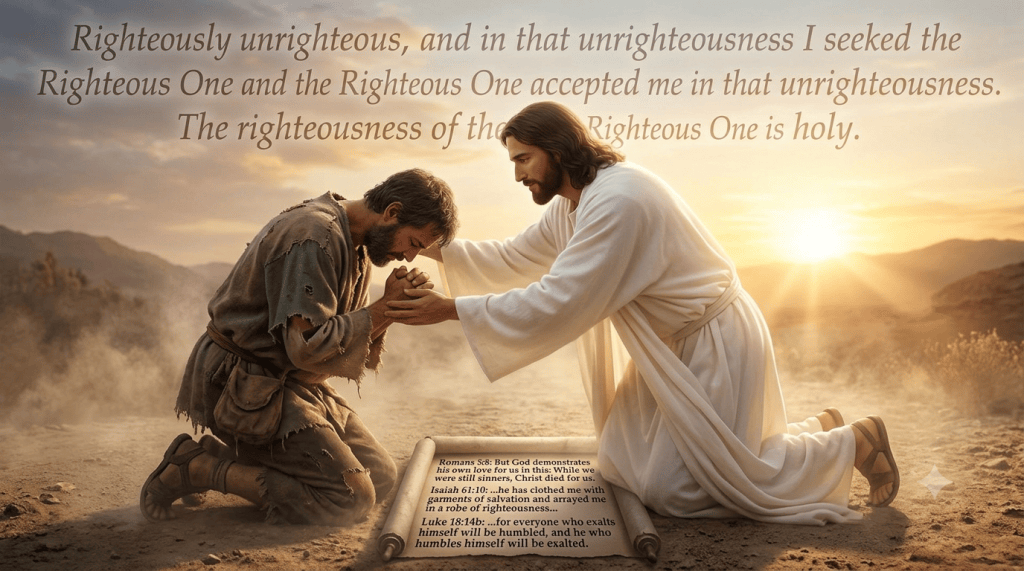
No, not one is good. No one is perfect. All are sinners.
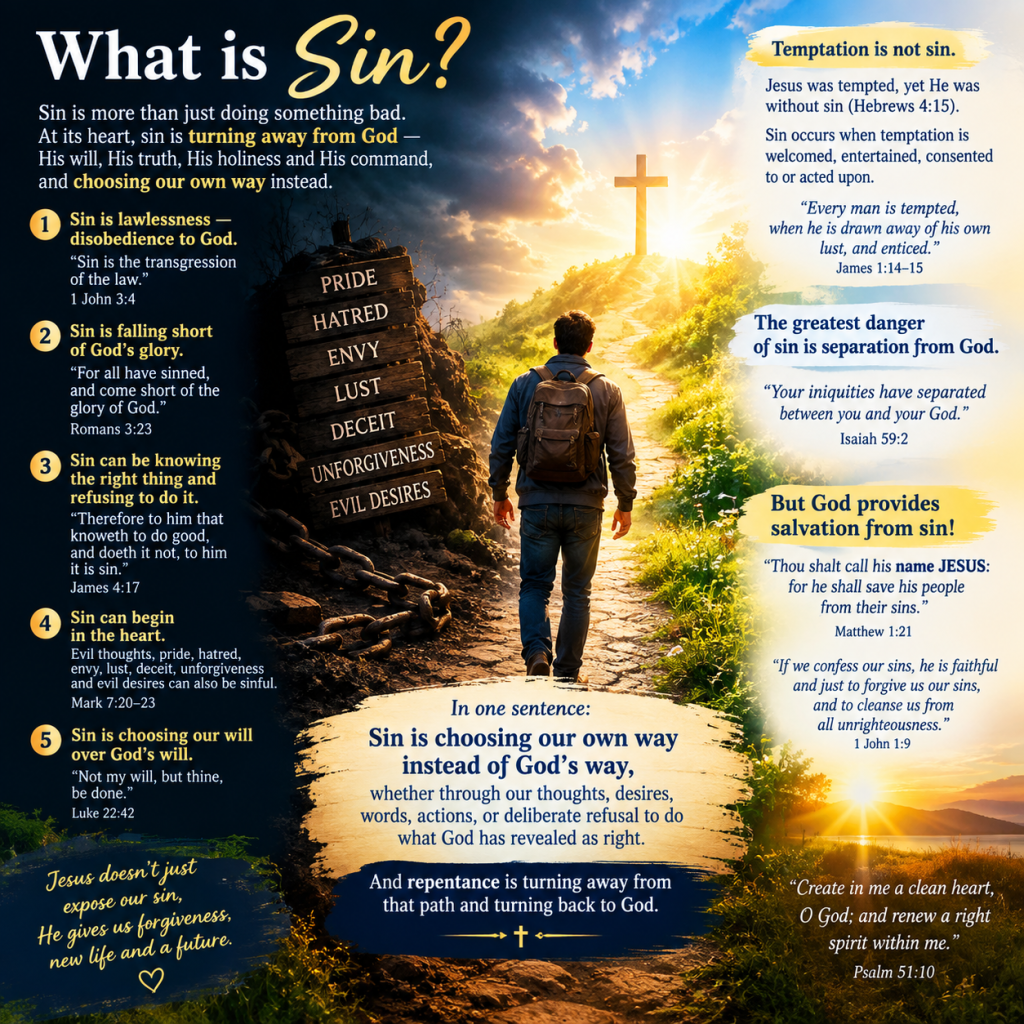
Sin is lawlessness and disobedience to God. “Sin is the transgression of the law” (1 John 3:4). God establishes what is right and holy. When we knowingly reject His command, we sin.
Sin is falling short of God’s glory. “For all have sinned, and come short of the glory of God” (Romans 3:23).
Every time we commit sin, we crucify the Lamb. Sin is not merely breaking a rule; it is failing to live according to the holiness and righteousness God desires. Sin can be knowing the right thing and refusing to do it. “Therefore, to him that knoweth to do good, and doeth it not, to him it is sin” (James 4:17).
Sin can be what we do, but it can also be what we deliberately refuse to do when God has shown us what is right. When we miss the prayer hour and fail to wait at His feet, we sin.
Sin can begin in the heart. The Lord Jesus taught that evil actions proceed from within the human heart (Mark 7:20–23). That means sin is not restricted to outward actions. Pride, hatred, envy, lust, deceit, unforgiveness, and evil desires can also be sinful.
Sin is choosing our will over God’s will. Our Lord Jesus prays: “Not my will, but thine, be done” (Luke 22:42). A person is considered good if he loves God, trusts Him, and submits his will to His.
The Lord Jesus was tempted, yet He was without sin (Hebrews 4:15). Sin occurs when temptation is welcomed, entertained, consented to, or acted upon. “Every man is tempted, when he is drawn away of his own lust, and enticed” (James 1:14).
Sin separates you from God: “Your iniquities have separated between you and your God” (Isaiah 59:2).
God does not merely expose sin; He provides salvation from sin through Jesus Christ. “Thou shalt call his name JESUS: for he shall save his people from their sins” (Matthew 1:21).
And: “If we confess our sins, he is faithful and just to forgive us our sins, and to cleanse us from all unrighteousness” (1 John 1:9).
Sin is choosing our own way instead of God’s way, whether through our thoughts, desires, words, actions, or deliberate refusal to do what God has revealed as right. And repentance is turning away from that path and turning back to God.
If one commits sin repeatedly, God will surely bring punishment. He will try to correct you, speak to you in your mind, and convict you that you are wrong; but if you repeatedly refuse to pay heed, you are inviting disaster into your life.
“He that overcometh shall inherit all things; and I will be his God, and he shall be my son. But the fearful, and unbelieving, and the abominable, and murderers, and whoremongers, and sorcerers, and idolaters, and all liars, shall have their part in the lake which burneth with fire and brimstone: which is the second death” (Revelation 21:7, 8).
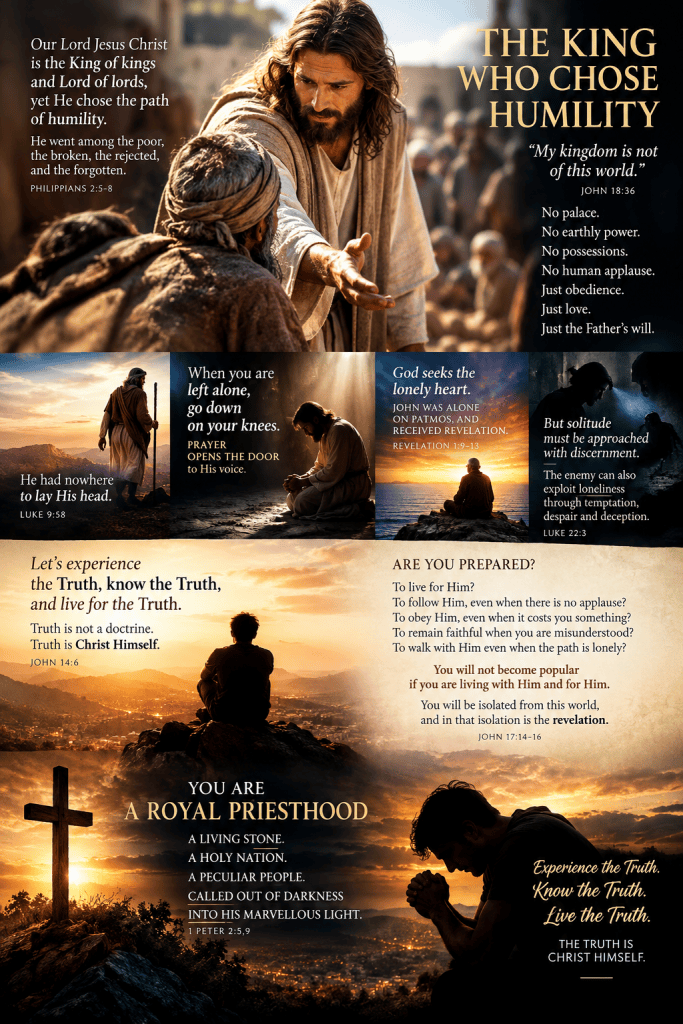
“Ye also, as lively stones, are built up a spiritual house, an holy priesthood, to offer up spiritual sacrifices, acceptable to God by Jesus Christ.” (1 Peter 2:5)
“But ye are a chosen generation, a royal priesthood, an holy nation, a peculiar people; that ye should shew forth the praises of him who hath called you out of darkness into his marvellous light.” (1 Peter 2:9)
We belong to a King who did not come to live as earthly kings live.
Our Lord Jesus Christ is the King of kings and Lord of lords, yet He chose the path of humility.
He went among the poor, the broken, the rejected, and the forgotten.
He did not build His kingdom through earthly status, political power, possessions, or human applause.
Though the Lord Jesus Christ deserved all the royal titles, He did not claim any. When people tried to force Him to be an earthly king or political liberator, He withdrew from them (John 6:15).
He consistently stated, “My kingdom is not of this world.” He did not live in palaces or accumulate material wealth. In Luke 9:58 the The Lord said, “Foxes have holes and birds of the air have nests, but the Son of Man has no place to lay his head.”
The Lord Jesus Christ lived a humble life among the marginalized and poor, identifying completely with their daily struggles and lack of worldly status.
He completely surrendered to Yahweh His Father to do His perfect will, showing complete submission to Him to accomplish His mission.
Our transformation must not be superficial, but total. Our King expects a silent submission; it is in silence that we hear His whisper. Even when you are troubled amidst a crowd, He may call you in a voice audible to you alone.
God seeks the heart that feels lonely, but Satan also prefers the lonely heart.
The Apostle John was alone on the island of Patmos when God sought his heart. His solitude became the setting in which he received the revelation of Jesus Christ (Revelation 1:9–13). But solitude must be approached with discernment. The enemy can also exploit loneliness through temptation, despair, and deception. Judas became vulnerable to the influence of Satan (Luke 22:3). Therefore, when you find yourself alone, do not surrender your heart to darkness.
When you are left alone, go down on your knees; that humble gesture will make you supernatural.
Let’s experience the Truth, know the Truth, and live for the Truth. Truth is He who has chosen you to reveal the Truth.
Spirituality is incredibly vast. To truly understand Him, we must become one with Him; He reveals His Truth only to those who love Him.
Do you love Him?
Are you prepared to live for Him?
You will not become popular if you are living with Him and for Him.
You will be isolated from this world, and in that isolation is the revelation.