Tag: LORD JESUS CHRIST.

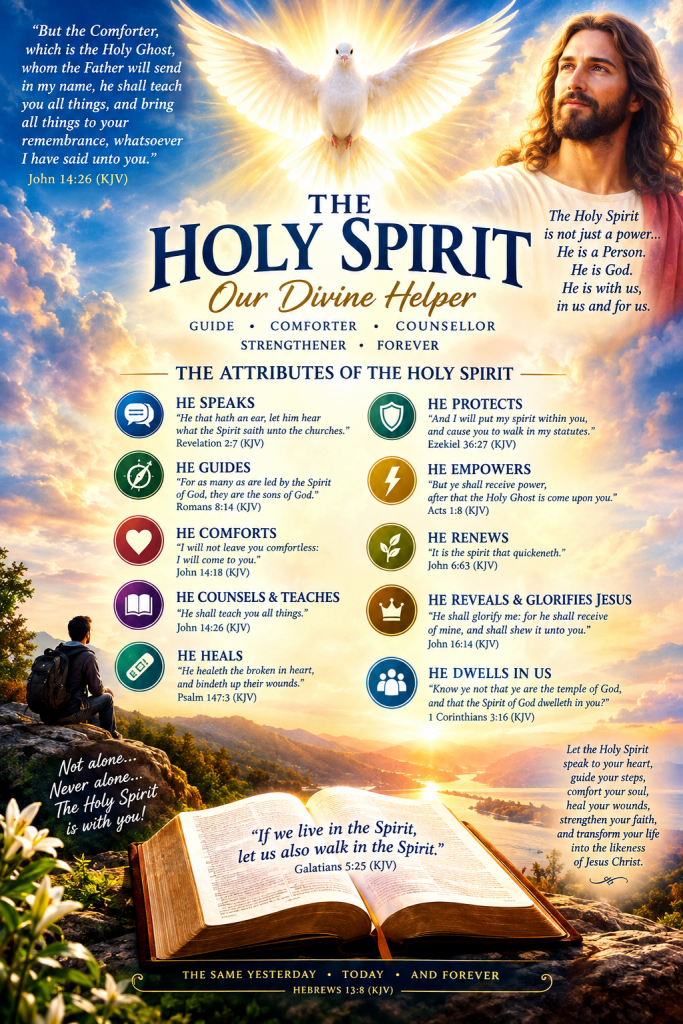
  • THE HOLY SPIRIT — OUR DIVINE COMFORTER, GUIDE, COUNSELLOR, AND EVERLASTING HELPER

    “But the Comforter, which is the Holy Ghost, whom the Father will send in my name, he shall teach you all things, and bring all things to your remembrance, whatsoever I have said unto you”(John 14:26).

    Who Is the Holy Spirit?

    The Holy Spirit is the Spirit of God, the third Person of the Holy Trinity: Father, Son, and Holy Spirit. He is not an impersonal force, an invisible energy, or merely a feeling that comes upon us. He is divine, personal, holy, and active in the lives of those who belong to God.

    From the very beginning of creation to the glorious fulfilment of God’s purposes, the Holy Spirit is at work. He gives life, reveals truth, convicts the heart, teaches the Word, strengthens the weak, comforts the sorrowful, and empowers believers to live according to the will of God.

    The Lord Jesus did not promise His disciples that they would never experience sorrow, uncertainty, temptation, or difficulty. He promised them the Holy Spirit, the divine Helper who would remain with them.

    “And I will pray the Father, and he shall give you another Comforter, that he may abide with you for ever” (John 14:16).

    What a glorious promise! We may sometimes feel alone, but we are never beyond the reach of God’s presence. The Holy Spirit works within us, reminding us of the words of Christ and helping us walk in faith, obedience, and holiness.

    The Holy Spirit speaks: “He that hath an ear, let him hear what the Spirit saith unto the churches” (Revelation 2:7).

    In Scripture, He speaks through God’s revealed Word, directs God’s servants, brings truth to remembrance, and calls people to obedience.

    In Acts 13:2, the Holy Spirit said, “Separate me Barnabas and Saul for the work whereunto I have called them.”

    His voice does not lead us away from Christ or contradict the truth of Scripture. Read His Word prayerfully, remain humble, and be willing to obey when Scripture makes His will clear. The heart that listens to God must also be willing to follow Him.

    The Holy Spirit guides us: “For as many as are led by the Spirit of God, they are the sons of God” (Romans 8:14).

    Life is filled with decisions, crossroads, uncertainties, and moments when we do not know which direction to take. We may understand our circumstances only partially, but God sees the beginning and the end. The Holy Spirit guides us into truth, teaches us to discern right from wrong, and helps us apply God’s Word to our daily lives.

    The Lord Jesus said: “Howbeit when he, the Spirit of truth, is come, he will guide you into all truth” (John 16:13).

    His guidance calls us to prayer, biblical wisdom, discernment, and obedience. When you do not know what lies ahead, trust God enough to take the next faithful step. You may not see the whole road, but you can seek the One who leads you.

    The Holy Spirit comforts us: “I will not leave you comfortless: I will come to you” (John 14:18).

    There are wounds that words cannot heal, tears that we hide from others, and sorrows that we struggle to explain. Sometimes even the people who love us cannot fully understand the pain we carry. But God knows. The Holy Spirit is our divine Comforter. He reminds us of God’s promises, strengthens our hearts, and helps us endure seasons of grief, loneliness, disappointment, and suffering. Romans 8:26 tells us that the Spirit helps our infirmities and intercedes for us when we do not know what we should pray for as we ought. You may not always receive an immediate answer to your pain, and your circumstances may not change overnight. Yet you can bring your sorrow before God and ask the Holy Spirit to sustain you through it. When human words fail, we can still turn to the God who knows our hearts.

    The Holy Spirit counsels and teaches us: “But the Comforter, which is the Holy Ghost, whom the Father will send in my name, he shall teach you all things, and bring all things to your remembrance, whatsoever I have said unto you”(John 14:26).

    The Holy Spirit is our divine Teacher. He helps us understand the truth of God’s Word and reminds us of the teachings of the Lord Jesus. He corrects our wrong thinking, exposes the deception of sin, and teaches us to see our lives through the light of God’s truth. A wise counsellor does not simply tell us what we want to hear; godly counsel leads us towards what is right. The Holy Spirit directs us towards Christlike character, humility, repentance, forgiveness, and obedience. When pride rises within us, He reminds us to be humble. When bitterness takes root, God’s truth calls us to forgive. When temptation presents itself, the Word of God reminds us to choose holiness. Let us never seek the Spirit’s counsel merely to confirm our own desires. Let us seek Him with surrendered hearts, willing to be corrected and transformed.

    The Holy Spirit heals and restores: “He healeth the broken in heart, and bindeth up their wounds” (Psalm 147:3).

    God is the healer of the brokenhearted. Through the Holy Spirit, God works in human lives to bring conviction, renewal, comfort, strength, and restoration. The Spirit helps us confront the wounds of our past, repent of our sins, release bitterness, and grow in the grace of Christ. The Holy Spirit empowers believers in the ministry of healing, whether by restoring the body, strengthening the soul to endure suffering, or granting the courage to seek help. Whatever our circumstances, we can entrust ourselves to the mercy and wisdom of God.

    The Holy Spirit protects and strengthens us: “And I will put my spirit within you, and cause you to walk in my statutes” (Ezekiel 36:27).

    The Holy Spirit strengthens believers to resist temptation, stand firm in faith, and persevere through spiritual struggles. He reminds us of God’s truth when deception surrounds us. He empowers us to reject sin and helps us recognise the difference between the works of the flesh and the fruit of the Spirit. Ephesians 6:10–18 teaches us to put on the whole armour of God and to stand against spiritual evil. However, the Spirit’s protection does not mean that Christians will never face danger, persecution, illness, or hardship. Rather, we can trust God’s presence and strength even in the midst of trials.

    Do not depend only upon your own strength. Pray, remain grounded in Scripture, resist evil, and seek the wisdom of God. The One who strengthens your faith can help you stand even when the world around you seems uncertain.

    The Holy Spirit convicts us of sin: “And when he is come, he will reprove the world of sin, and of righteousness, and of judgment” (John 16:8).

    The Holy Spirit reveals our need for repentance and directs us towards the righteousness of Christ. When we have acted wrongly, He brings God’s truth to bear upon our conscience. He calls us to acknowledge our sin, turn away from it, and seek God’s forgiveness. Conviction is an invitation to return to God; it is not a reason to hide from Him. First John 1:9 promises that when we confess our sins, God is faithful and just to forgive us and cleanse us from all unrighteousness. Do not harden your heart when God’s Word exposes something that must change. Humble yourself, seek forgiveness, and allow the Lord to transform you.

    The Holy Spirit intercedes for us: “The Spirit itself maketh intercession for us with groanings which cannot be uttered” (Romans 8:26).

    There are moments when our hearts are so burdened that we cannot find the words to pray. We may sit before God in silence, carrying grief, confusion, or a longing that we cannot express. Romans 8 reminds us that our weakness does not place us beyond God’s help. The Holy Spirit helps us in our infirmities and intercedes according to the will of God. Prayer is not dependent upon our ability to speak eloquently. Come before God honestly. You do not need to impress Him with beautiful words. Bring Him your tears, your questions, your repentance, your gratitude, and your deepest concerns.

    The Holy Spirit empowers us: “But ye shall receive power, after that the Holy Ghost is come upon you: and ye shall be witnesses unto me” (Acts 1:8).

    The Holy Spirit empowers believers to bear witness to the Lord Jesus Christ. He gives courage to speak the truth, strength to endure opposition, and grace to serve others. He distributes spiritual gifts according to God’s purposes, equipping the Church for ministry and the building up of the body of Christ (1 Corinthians 12:4–11). The Spirit empowers us to glorify Lord Jesus, serve humbly, love sacrificially, and proclaim the Gospel faithfully. The evidence of His work is not merely an outward display of spiritual enthusiasm. It also includes a transformed life that increasingly reflects the character of Christ.

    The Holy Spirit produces His fruit in us: “But the fruit of the Spirit is love, joy, peace, longsuffering, gentleness, goodness, faith, meekness, temperance” (Galatians 5:22–23).

    The Holy Spirit does more than give us strength for a particular task. He works within us to transform who we are. He teaches us to love when hatred seems easier, to remain patient when circumstances test us, to speak gently when anger rises, and to pursue peace when conflict surrounds us. The fruit of the Spirit reveals the character God desires to cultivate in His people. Spiritual maturity is not measured simply by how much we know, how eloquently we speak, or how many spiritual experiences we describe. It is also revealed through the love we demonstrate, the forgiveness we offer, the humility we practise, and the holiness we pursue. Let us ask not only for the gifts of the Spirit but also for the grace to bear His fruit.

    The Holy Spirit gives life and renews us: “It is the spirit that quickeneth; the flesh profiteth nothing” (John 6:63).

    The Holy Spirit is active in the work of spiritual renewal. The Lord Jesus taught Nicodemus that a person must be born of the Spirit to enter the kingdom of God (John 3:5–8). Through the Spirit’s work, we are brought into new life in Christ, renewed in our minds, and enabled to grow in holiness. When we have become spiritually weary, we can pray for renewal. When our love has grown cold, we can return to Christ. When sin has entangled us, we can seek God’s forgiveness and the Spirit’s help to walk in newness of life. The Christian life is not merely an attempt to improve ourselves through human effort. It is a life of dependence upon God’s grace and the transforming work of His Spirit.

    The Holy Spirit reveals and glorifies the Lord Jesus Christ: “He shall glorify me: for he shall receive of mine, and shall shew it unto you” (John 16:14).

    One of the most important works of the Holy Spirit is to glorify the Lord Jesus Christ. The Spirit does not lead us away from the Lord Jesus. He reveals the truth of Christ, deepens our understanding of His Word, and transforms us to become more like Him. The Holy Spirit reminds us of the significance of Christ’s sacrifice, the greatness of His resurrection, and the hope we have through Him. A genuine work of the Holy Spirit leads us towards greater love for Jesus, deeper reverence for God’s Word, and a life that bears witness to the Gospel. Let Christ remain at the centre of your worship, your prayer, your service, and your life.

    The Holy Spirit dwells in believers: “Know ye not that ye are the temple of God, and that the Spirit of God dwelleth in you?” (1 Corinthians 3:16).

    We should therefore seek to live in a manner worthy of the One whose presence has been given to us. The presence of the Holy Spirit is a precious gift. Our lives are not meant to be ruled by selfish desires, bitterness, dishonesty, or impurity. We are called to honour God in our bodies, thoughts, words, and actions. Make room for prayer. Meditate upon the Scriptures. Practise obedience. Pursue peace with others. Turn away from what dishonours God. The Spirit’s indwelling presence is not permission to live carelessly; it is a call to live as people who belong to Christ.

    The Holy Spirit gives wisdom and discernment: “For to one is given by the Spirit the word of wisdom; to another the word of knowledge by the same Spirit” (1 Corinthians 12:8).

    The Holy Spirit equips God’s people with wisdom and discernment for the situations they encounter. He helps us distinguish truth from error, recognise the dangers of temptation, and respond to others with godly understanding. James 1:5 encourages those who lack wisdom to ask God, who gives generously. Ask the Lord to make you wise not only in what you believe, but also in what you say, how you act, and how you treat others.

    The Holy Spirit unites us in love and fellowship: Endeavouring to keep the unity of the Spirit in the bond of peace” (Ephesians 4:3).

    The Holy Spirit brings believers into the fellowship of Christ’s body and calls them to live in unity, love, and peace. He teaches us to bear with one another, forgive one another, and serve one another with humility. Unity does not mean that every Christian must agree on every matter. It means that we seek to honour Christ, hold fast to the truth, and treat one another with grace rather than pride and hostility. A heart being transformed by the Spirit will increasingly seek reconciliation, show compassion, and pursue the good of others. Where the Spirit’s fruit grows, love becomes visible.

    The Holy Spirit is our seal and assurance: “And grieve not the holy Spirit of God, whereby ye are sealed unto the day of redemption” (Ephesians 4:30).

    The Holy Spirit is associated with the sealing of believers, marking them as belonging to God and pointing towards the promised redemption. This gives Christians a profound reason for hope. Our salvation rests upon the grace of God through Jesus Christ, not upon our ability to earn His favour. The Spirit’s presence reminds us that we belong to the Lord and are called to live faithfully as His people. Therefore, do not treat the grace of God lightly. Walk in repentance, trust in Christ, and seek to honour the One who has called you to Himself.

    The Holy Spirit can be grieved: “And grieve not the holy Spirit of God” (Ephesians 4:30).

    Because the Holy Spirit is personal, Scripture warns believers not to grieve Him. Ephesians 4 places this warning in the context of falsehood, corrupt speech, bitterness, wrath, anger, and malice. These are not small matters to God. They damage our relationships and contradict the character of Christ.

    We must therefore examine our hearts. Are we harbouring resentment? Are our words building people up or tearing them down? Are we making room for dishonesty or refusing to forgive?

    When we recognise our failures, let us not hide behind pride. Let us repent, seek God’s forgiveness, and return to a life of obedience. The Spirit who convicts us also helps us grow in holiness.

    The Holy Spirit is our ever-present Helper in every season: “Likewise the Spirit also helpeth our infirmities” (Romans 8:26).

    In joy, we can thank Him. In sorrow, we can seek His comfort. In uncertainty, we can ask for wisdom. In temptation, we can seek strength to resist. In weakness, we can pray for His help. In service, we can depend upon His power.

    The Holy Spirit is not confined to a church building or a particular hour of prayer. The Christian life is a life of walking with God every day.

    Yet we must remember that His work is not a promise that every desire will be fulfilled or every difficulty immediately removed. He works according to God’s wisdom and purpose, leading us to trust Christ in all circumstances.

    Whatever season you are passing through, turn to God in faith. Let His Word shape your heart, let prayer strengthen your relationship with Him, and let the Spirit lead you towards the character of Jesus.

    Walk in the Spirit

    The Holy Spirit speaks, guides, comforts, teaches, convicts, strengthens, empowers, renews, and produces His fruit in those who belong to Christ. He helps us in our weakness, directs us towards truth, and glorifies the Lord Jesus. But let us never seek only what the Holy Spirit can do for us. Let us seek to know God more deeply, love Christ more faithfully, and become more obedient to His Word.

    The greatest evidence of the Spirit’s transforming work is not merely what we say about Him, but how our lives increasingly reflect the love, holiness, humility, and truth of the Lord Jesus Christ.

    Do not grieve the Holy Spirit. Do not resist His call to repentance. Do not ignore the truth of God’s Word. Instead, pray for wisdom, walk in obedience, cultivate the fruit of the Spirit, and remain steadfast in Christ. May our hearts become willing vessels, our lives become living testimonies, and our words bring glory to the name of Jesus.

    Holy Spirit, teach us to hear the truth, give us grace to obey, strengthen us in our weakness, comfort us in our sorrow, and transform us into the likeness of Jesus Christ. Lead us in the way of righteousness, fill us with Your love, and help us glorify our Lord in everything we do. Amen.

    “If we live in the Spirit, let us also walk in the Spirit” (Galatians 5:25).

  • THE KING IS COMING

    “He which testifieth these things saith, Surely I come quickly. Amen. Even so, come, Lord Jesus”

    (Revelation 22:20).

    The Bible closes with a promise from the lips of the Lord Jesus Himself: “Surely I come quickly.”

    These are the words of the risen Christ, the King of kings and Lord of lords, speaking to His Church and reminding us that history is moving toward a glorious conclusion, the return of the King.

    The Lord Jesus came once in humility. He will come again in glory. He came first as the Lamb. He will come again as the King. He came first to bear the crown of thorns. He will come again wearing the crown of glory. He came first to save sinners. He will come again to gather His redeemed people to Himself.

    As Scripture declares: “Behold, he cometh with clouds; and every eye shall see him” (Revelation 1:7).

    When the Lord Jesus says, “Surely,” there is no uncertainty in His promise. Heaven and earth may pass away, but the word of Christ will never fail.

    The Lord Jesus said: “Heaven and earth shall pass away, but my words shall not pass away” (Matthew 24:35).

    His promise is more certain than tomorrow’s sunrise. More certain than anything we can see.

    The King is coming. The word quickly reminds us that when God’s appointed moment arrives, His coming will not be delayed.

    The Apostle Peter reminds us that the apparent delay is not because God has forgotten His promise:

    “The Lord is not slack concerning his promise, as some men count slackness” (2 Peter 3:9).

    God is patient because He desires people to turn to Him. Therefore, while we wait, we must not become spiritually sleepy.

    The Lord Jesus warned: “Watch therefore: for ye know not what hour your Lord doth come” (Matthew 24:42).

    The question is not simply, “When will Jesus return?” The deeper question is: “Will He find me ready when He comes?”

    The Bride must be ready. The Church is described as the bride awaiting her Bridegroom.

    A bride does not prepare because she doubts that the bridegroom is coming. She prepares because she knows he is coming. Likewise, we do not pursue holiness because we are trying to earn Christ’s love.

    We pursue holiness because we love the One who is coming for us.

    Scripture says: “Let us be glad and rejoice, and give honour to him: for the marriage of the Lamb is come, and his wife hath made herself ready” (Revelation 19:7).

    Let our lamps be burning. Let our hearts be awake. Let our garments be clean. Let our faith be alive. Let our love remain burning. Let our eyes remain fixed upon Jesus.

    Do not let the world put you to sleep.

    The world can make us so occupied with temporary things that we forget eternal things.

    We can become consumed with possessions, success, recognition, pleasures, worries, disappointments and the cares of tomorrow.

    But everything around us is temporary.

    The Lord Jesus is eternal.

    Your house is temporary. Your possessions are temporary. Your earthly position is temporary.

    Your body is temporary.

    But Christ is eternal, His Word is eternal, and the life He promises is eternal.

    The Apostle Paul therefore reminds us:

    “Set your affection on things above, not on things on the earth” (Colossians 3:2).

    Live here but remember that you belong there.

    Walk on earth but keep your eyes on heaven.

    Work faithfully but remember your eternal reward. Love people but lead them toward Christ. And while you wait for His coming, do not waste your waiting.

    What a beautiful way for Scripture to end.

    The Lord Jesus says: “Surely I come quickly.”

    And the response of His people is: “Amen. Even so, come, Lord Jesus.”

    This is not the cry of people who are afraid of Christ’s return. It is the cry of people who love Him.The heart that truly knows Lord Jesus longs to see Him. One day, our waiting will end when faith and prayer become the living presence of the unseen One we have loved, and we finally behold Him face-to-face. And when that glorious moment comes, every earthly sorrow will seem small in the presence of His glory.

    There will be no more death. No more crying. No more pain. No more separation.

    For: “God shall wipe away all tears from their eyes”(Revelation 21:4).

    ARE YOU READY?

    The Lord Jesus is coming. Do not be found unprepared. Come to Christ while there is still time. Watch. Pray. Remain faithful.

    One day, we will see our King.

    And the cry of the redeemed should be:

    “Even so, come, Lord Jesus.”

    When the world grows darker, remember: The King is coming.

    When you feel forgotten, remember: The King is coming.

    When righteousness seems to be defeated, remember: The King is coming.

    When your heart is weary, remember: The King is coming.

    When you are tempted to give up, lift your eyes toward heaven and remember the promise: “Surely I come quickly.”

    And let your soul answer: “Amen. Even so, come, Lord Jesus.”

    We do not know the day. We do not know the hour.

    But we know the One who is coming. His name is Jesus. He is our Saviour. He is our Shepherd. He is our Bridegroom. He is our High Priest. He is our King.

    Let us live every day as though we are expecting the sound of the trumpet.

    As we wait faithfully for the return of Jesus, let us keep our hearts pure, love one another, and stay ready with our spiritual lamps burning.

    MARANATHA — COME, LORD JESUS!

  • THE LIVING TABERNACLE

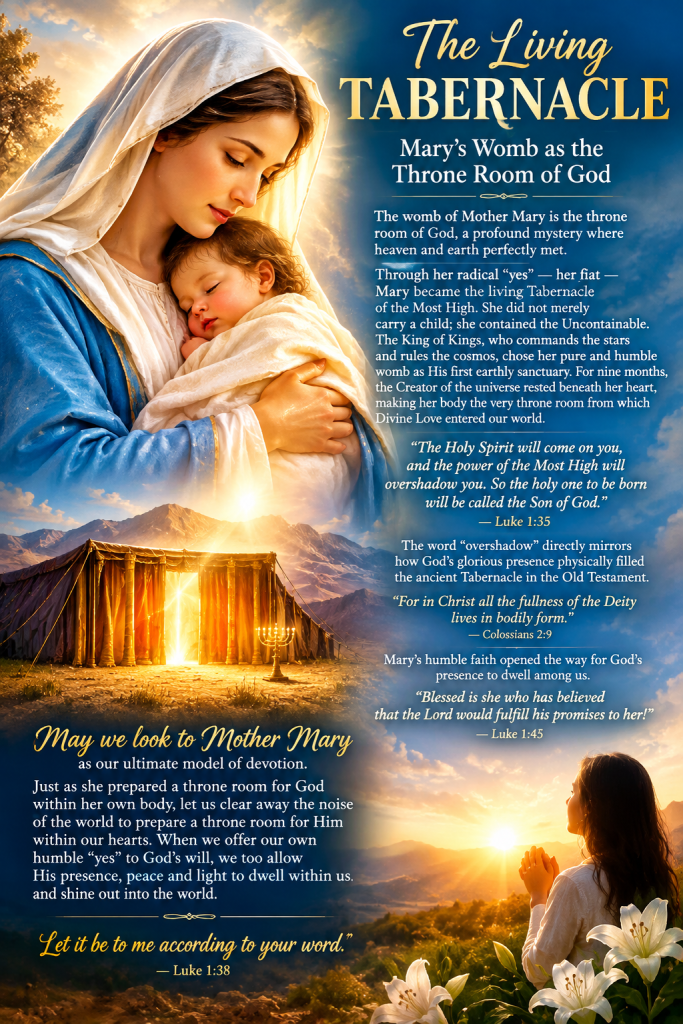
    The Living Tabernacle: Mary’s Womb as the Throne Room of God

    “For with God nothing shall be impossible” ( Luke 1:37).

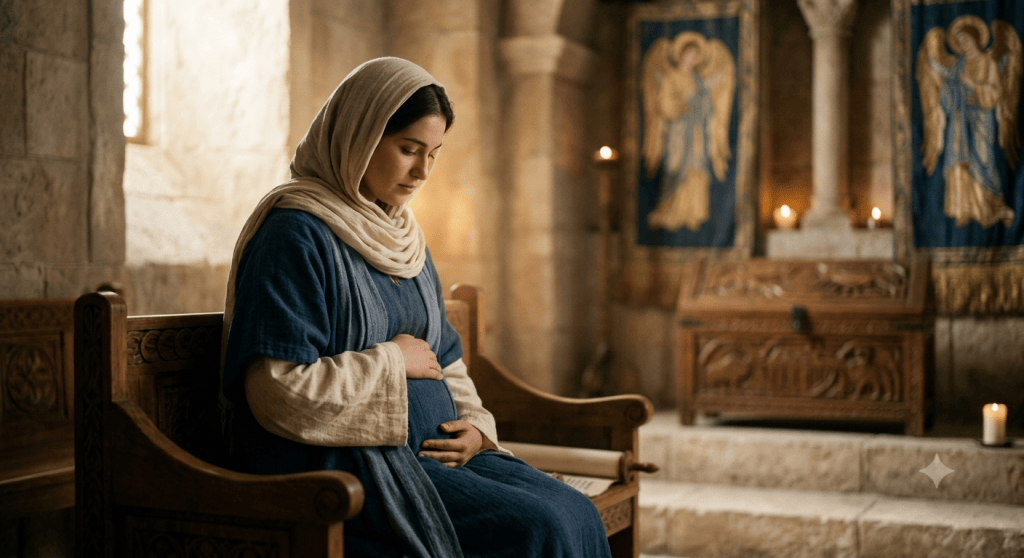
    The Womb of Mother Mary is the throne room of God, a profound mystery where heaven and earth perfectly met.

    Through her radical “yes” and her fiat, Mary became the living Tabernacle of the Most High. She did not merely carry a child; she contained the Uncontainable.

    The King of Kings, who commands the stars and rules the cosmos, chose her pure and humble womb as His first earthly sanctuary. For nine months, the Creator of the universe rested beneath her heart, making her body the very throne room from which Divine Love entered our world.

    This reality fulfills the beautiful announcement given to her by the Angel Gabriel:

    “The Holy Spirit will come on you, and the power of the Most High will overshadow you. So the holy one to be born will be called the Son of God” (Luke 1:35).

    The word “overshadow” directly mirrors how God’s glorious presence physically filled the ancient Tabernacle in the Old Testament. In Mary, God came to dwell not in a tent, but in human flesh:

    “For in Christ all the fullness of the Deity lives in bodily form” (Colossians 2:9).

    This sacred truth reminds us of the incredible dignity of the human person and the power of surrender. God did not choose a grand, earthly palace of marble and gold for His throne; He chose the quiet, hidden, and faithful womb of a humble young woman, prompted by her deep faith:

    “Blessed is she who has believed that the Lord would fulfill his promises to her!” ( Like 1:45)

    May we look to Mother Mary as our ultimate model of devotion. Just as she prepared a throne room for God within her own body, let us clear away the noise of the world to prepare a throne room for Him within our hearts. When we offer our own humble “yes” to God’s will, we too allow His presence, peace, and light to dwell within us and shine out into the world.

  • THE MIND OF CHRIST

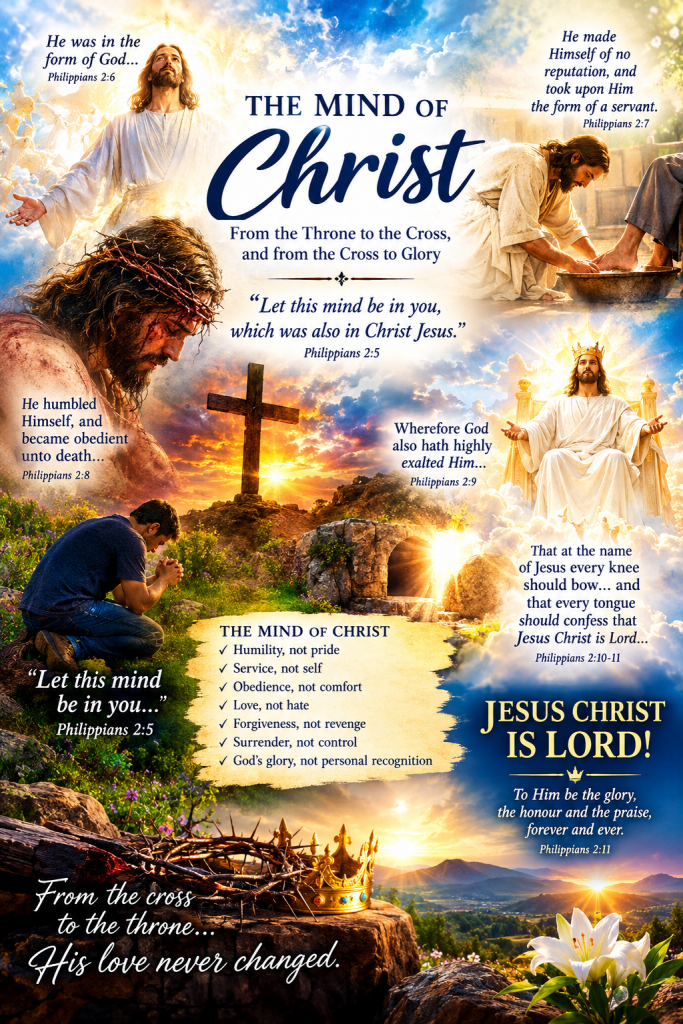
    THE MIND OF CHRIST — FROM THE THRONE TO THE CROSS, AND FROM THE CROSS TO GLORY.

    “Let this mind be in you, which was also in Christ Jesus” (Philippians 2:5).

    There are moments when Scripture does not merely teach us something, it brings us face to face with the heart of God.

    Philippians 2:5–11  reveals the heart of Christ: how the One who was above all chose to humble Himself, how the Lord of glory became a servant, how the sinless One embraced the cross, and how the Father exalted Him above every name.

    And then Scripture gives us a command:

    “Let this mind be in you, which was also in Christ Jesus.”

    The deeper question is: Am I allowing the mind of Christ to shape my life?

    The Apostle Paul tells us that Christ Jesus, “being in the form of God, thought it not robbery to be equal with God” (Philippians 2:6).

    The Lord Jesus did not begin His existence in Bethlehem, Bethlehem was not the beginning of Christ. He came from glory. The One who lay in a manger was the One through whom all things were created.

    The Apostle John declares: “In the beginning was the Word, and the Word was with God, and the Word was God” (John 1:1).

    And: “All things were made by him; and without him was not any thing made that was made” (John 1:3).

    The hands that created the heavens became the hands that were pierced by nails.

    The One who spoke light into existence allowed Himself to enter the darkness of the cross.

    The One before whom angels bow came among humanity as a servant.

    This is the depth of Christ’s love.

    Philippians 2:7 says: “But made himself of no reputation, and took upon him the form of a servant.”

    The world teaches us to seek recognition. Christ teaches us to seek obedience.

    The world says: “Make yourself known.” Christ says: “Humble yourself.”

    The world measures greatness by position, possessions, authority and recognition.

    The Lord Jesus revealed a different kind of greatness. True greatness is found in humble service. He had every right to glory, yet He willingly descended. He had every right to be served, yet He came to serve. The Lord Jesus Himself said: “The Son of man came not to be ministered unto, but to minister, and to give his life a ransom for many” (Mark 10:45).

    That is the mind of Christ.

    Philippians 2:8 says: “And being found in fashion as a man, he humbled himself.” He humbled Himself. Nobody forced Him. Love led Him. He knew what awaited Him. He knew about rejection. He knew about betrayal. He knew about the scourging. He knew about the crown of thorns. He knew about the nails. He knew about Calvary. And yet He continued.

    Why? Because He loved us.

    “Greater love hath no man than this, that a man lay down his life for his friends” (John 15:13).

    At the cross, we see the terrible seriousness of sin, but we also see the immeasurable greatness of God’s love. The cross says to the sinner: “Your sin is serious.” But the cross also says: “You are loved.”

    Philippians 2:8 continues: “He humbled himself, and became obedient unto death, even the death of the cross.”

    The Lord Jesus’ humility was not merely an attitude. It became obedience. He did not simply speak about surrender. He lived it. He did not stop when obedience became painful. He continued all the way to the cross. This is something every follower of Christ must understand. While obedience can be easy, following God sometimes costs us everything by requiring the surrender of our plans, pride, desires, comfort, and reputation.

    But the example of Christ stands before us: Obedience to God must be greater than our desire for comfort. The Lord Jesus Christ prayed in Gethsemane “Not my will, but thine, be done” (Luke 22:42).

    That is the cry of a surrendered heart.

    The Cross was not the end. Human eyes could look at Calvary and see defeat. But heaven saw obedience. The grave appeared to be the end. But resurrection was coming. The cross looked like humiliation. But exaltation was coming.

    Philippians 2:9 declares: “Wherefore God also hath highly exalted him, and given him a name which is above every name.”

    There is a divine principle here: Humility comes before exaltation. The Lord Jesus descended willingly and the Father exalted Him. The world may not recognize humble obedience. People may overlook the servant. Others may never see the sacrifices made in secret. But God sees. And what God sees, God remembers.

    The Lord Jesus taught: “Whosoever shall humble himself shall be exalted” (Matthew 23:12).

    Philippians 2:10–11 gives us one of the most majestic declarations in Scripture: “That at the name of Jesus every knee should bow, of things in heaven, and things in earth, and things under the earth; And that every tongue should confess that Jesus Christ is Lord, to the glory of God the Father.”

    One day, every knee will bow. Every tongue will confess. Kings will bow. Nations will bow. The powerful will bow. The forgotten will bow. The rich will bow. The poor will bow. Every human authority will bow. Every earthly kingdom will bow. Because there is only one eternal King.

    Jesus Christ is Lord.

    The world may reject Him today. Some may mock His name. Some may ignore Him. Some may deny Him. But His rejection by men cannot diminish His glory. Jesus is still Lord. His throne cannot be shaken. His kingdom cannot be destroyed. His name cannot be erased. His glory cannot be diminished.

    The Apostle Paul begins this passage with: “Let this mind be in you, which was also in Christ Jesus.”

    We are not merely being asked to admire the Lord Jesus. We are being called to follow Him. To have His mind. To walk in His humility. To serve as He served. To forgive as He forgave. To love as He loved. To obey as He obeyed. To surrender as He surrendered. To put God before self.

    The Christian life is not simply saying: “Jesus is Lord.” It is allowing the Lord Jesus to become the pattern of our lives.

    When you feel the need to be recognized, look at Christ. When you are tempted to repay an insult, look at Christ. When obedience becomes difficult, look at Christ. When serving others feels beneath you, look at Christ. When you want to exalt yourself, look at Christ. When you are suffering for doing what is right, look at Christ. When you feel forgotten, look at Christ.

    He descended before He was exalted. He served before He was glorified. He suffered before He was crowned. He obeyed before the Father highly exalted Him.

    The Apostle Paul in Philippians 2:5–11 takes us on a breathtaking journey: From deity to humanity. From glory to humility. From being served to serving. From obedience to suffering. From suffering to the cross. From the cross to resurrection. From resurrection to exaltation. From exaltation to everlasting Lordship.

    And at the centre of it all stands one glorious name: JESUS.

    He is not merely a teacher. He is not merely a prophet. He is not merely an example. He is Lord. The One who humbled Himself will reign forever. The One who wore the crown of thorns will wear the crown of glory. The One who was rejected by men will be confessed by every tongue. The One whose hands were pierced will rule with all authority.

    Do others see the humble, loving, forgiving, compassionate, and obedient heart of Christ reflected in our lives, pointing to God’s glory rather than our own recognition? Because Christianity is not merely about carrying the name Christian. It is about carrying the character of Christ. We can possess outward religious practice and knowledge while remaining inwardly unchanged and disobedient to God.

    But the  Apostle Paul says: “Let this mind be in you.” Let Christ’s mind, heart, humility, obedience, and love shape your thoughts, desires, relationships, decisions, and actions.

    Philippians chapter 2, begins with humility, but it ends with glory. And this gives hope to every faithful servant of God. Your obedience is not wasted. Your tears are not wasted. Your prayers are not wasted. Your sacrifices are not wasted. Your quiet service is not wasted. Your faithfulness when nobody notices is not wasted. God sees. Keep walking. Keep serving. Keep obeying. Keep your eyes upon Jesus. Because the Christ who humbled Himself is the Christ who has been highly exalted.

    And the day is coming when every knee shall bow and every tongue shall confess:

    JESUS CHRIST IS LORD!

    A PRAYER

    The Lord Jesus,

    Give us the mind that was in You. Remove pride from our hearts and teach us humility. Take away our desire for recognition and give us a servant’s heart. When obedience becomes difficult, strengthen us. When suffering comes, keep our eyes upon You. When we are tempted to exalt ourselves, remind us of Calvary. Teach us to love, forgive, serve and obey. Let our lives bring glory to Your holy name. And may everything within us ultimately declare what heaven itself declares: Jesus Christ is Lord.

    To Him be the glory, the honour and the praise, forever and ever. Amen.

  • THE GOD OF THE IMMEASURABLE

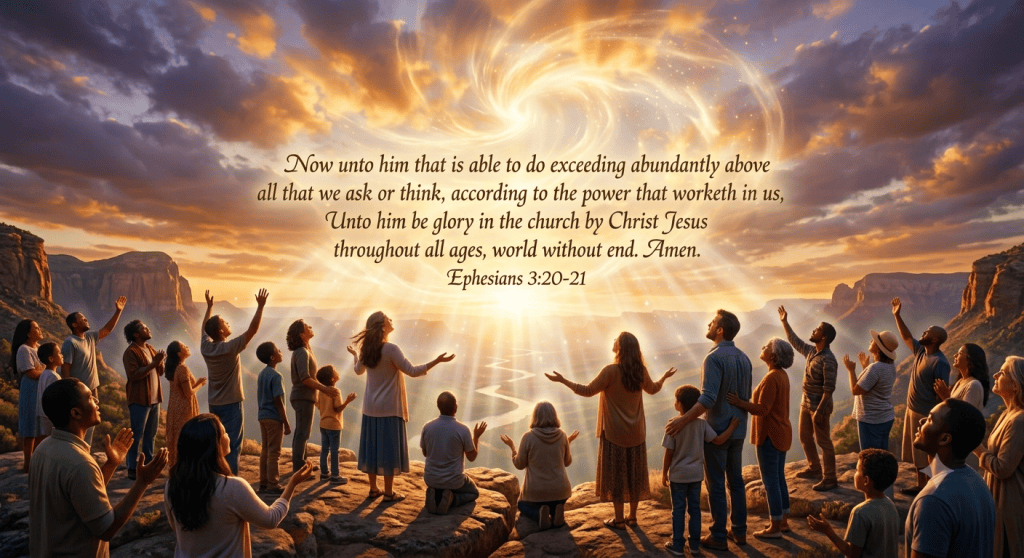
    “Now unto him that is able to do exceeding abundantly above all that we ask or think, according to the power that worketh in us,
    Unto him be glory in the church by Christ Jesus throughout all ages, world without end. Amen” (Ephesians 3:20, 21).

    The Apostle Paul emphasizes that God’s capacity to act far exceeds human comprehension. Whatever you pray for or even dream up, God’s ability to respond surpasses it. Human expectations are limited by a finite perspective, but divine resources and willingness are infinite.

    This infinite power is not distant or remote; it operates actively within the life of the believer. The same power that raised Christ from the dead is at work within believers, changing hearts, renewing minds, and granting spiritual endurance.

    God chooses to manifest His immense strength through human vessels.

    God’s glory is made visible in Christ Jesus. The Lord Jesus is the ultimate manifestation of God’s character, love, and redemption. And in the Church, the collective body of believers reflects God’s wisdom and power to the world, when living out unity, love, and faith.

    God’s glory extends through every generation of believers. The ultimate purpose of creation and salvation is an unending cycle of praise and glory to God throughout eternity.

    Trust God beyond personal limitations. Prayer is not about convincing God to act within human expectations, but aligning with an all-powerful God who is already at work internally to accomplish far more than human imagination can fathom.

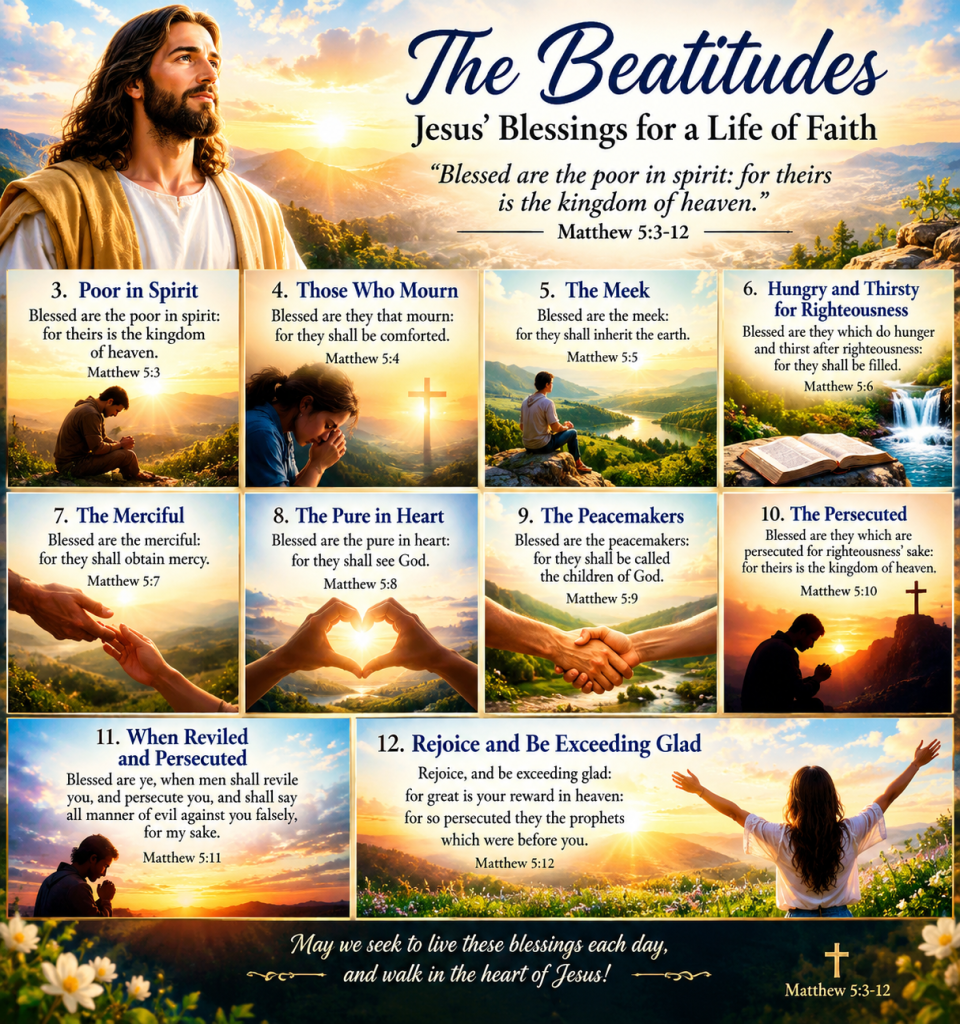
  • THE BEATITUDES — WALKING IN THE HEART OF CHRIST

    1. “Blessed are the poor in spirit: for theirs is the kingdom of heaven” (Matthew 5:3).

    To be poor in spirit means to recognize our complete dependence upon God. It is humility before Him, knowing that we need His grace and cannot rely on ourselves.

    2. “Blessed are they that mourn: for they shall be comforted” (Matthew 5:4).

    This speaks of those who grieve deeply, including sorrow over sin and the brokenness of the world. God promises His comfort to the hurting and repentant heart.

    3. “Blessed are the meek: for they shall inherit the earth” (Matthew 5:5).

    Meekness is not weakness. It is strength brought under God’s control responding with gentleness, humility, and self-control rather than pride or revenge.

    4. “Blessed are they which do hunger and thirst after righteousness: for they shall be filled” (Matthew 5:6).

    Just as the body longs for food and water, the believer should deeply desire to live rightly before God. Jesus promises that those who genuinely seek righteousness will be spiritually satisfied.

    5. “Blessed are the merciful: for they shall obtain mercy” (Matthew 5:7).

    Mercy means showing compassion, forgiveness, and kindness to others, especially when they have fallen short. Those who extend mercy reflect God’s own merciful character.

    6. “Blessed are the pure in heart: for they shall see God” (Matthew 5:8).

    A pure heart seeks God sincerely, without hypocrisy or divided devotion. Lord Jesus points us toward an inner life that is clean, sincere, and devoted to Him.

    7. “Blessed are the peacemakers: for they shall be called the children of God” (Matthew 5:9).

    Peacemakers do more than avoid conflict. They actively seek reconciliation, forgiveness, and harmony. They reflect the character of God, who calls people into peace with Himself and one another.

    8. “Blessed are they which are persecuted for righteousness’ sake: for theirs is the kingdom of heaven” (Matthew 5:10).

    Following righteousness can sometimes bring rejection or suffering. Lord Jesus reminds His followers that faithfulness to God has eternal significance, even when it is costly.

    9. “Blessed are ye, when men shall revile you, and persecute you” (Matthew 5:11).

    When people insult, falsely accuse, or mistreat believers because of their faith in Christ, Lord Jesus tells them not to abandon Him. Their identity and reward are found in Him, not in human approval.

    10. “Rejoice, and be exceeding glad: for great is your reward in heaven” (Matthew 5:12).

    Lord Jesus calls His followers to rejoice even in suffering for His sake. The focus shifts from present hardship to the eternal reward with God. The prophets before them also endured persecution for their faithfulness.

    The Beatitudes describe a Christ-centered way of living that reflects His heart. Starting with humility, recognizing our need for God, they guide us to be gentle, merciful, pure, and peaceful, finding joy and comfort in Him even through trials.

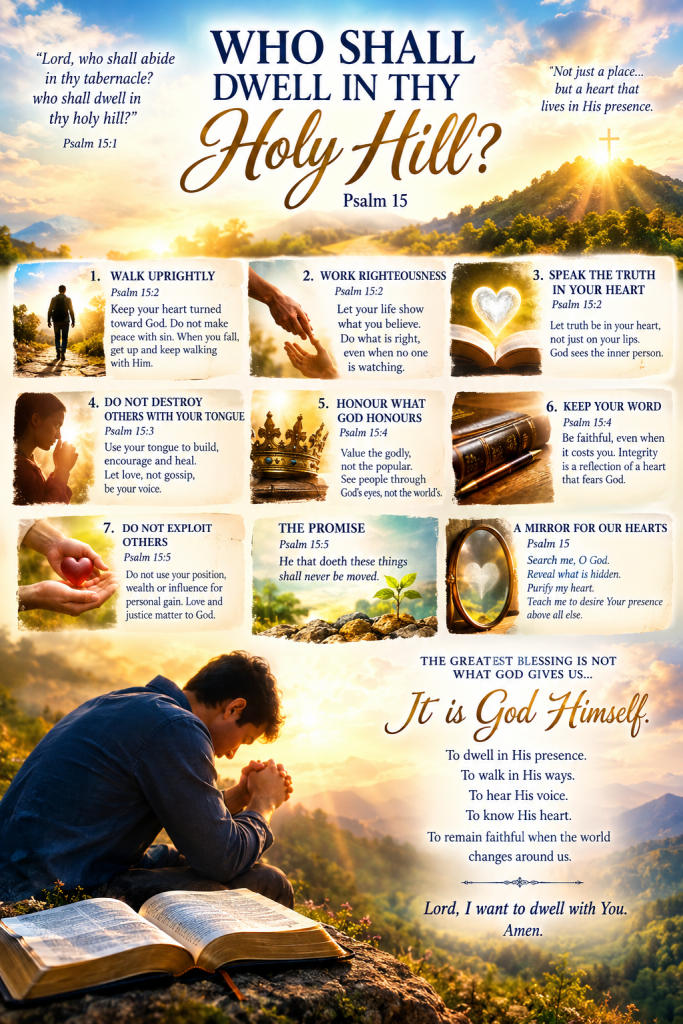
  • WHO SHALL DWELL IN THY HOLY HILL?

    “LORD, who shall abide in thy tabernacle? who shall dwell in thy holy hill?” (Psalm 15:1)

    King David is not asking about a physical address. He is asking about fellowship with the living God.

    Who can come near Him?

    Who can remain in His presence?

    What kind of life does God desire from those who call upon His name?

    “He that walketh uprightly” (Psalm 15:2).

    God is concerned not merely with what we say, but with how we walk.

    To walk uprightly does not mean that a person has never fallen. It means that his heart is turned toward God and that he desires to walk in truth.

    The upright person does not deliberately make peace with sin. When he discovers sin in his heart, he brings it before God. When he is corrected, he listens. When he falls, he gets up.

    King David continues: “and worketh righteousness…” (Psalm 15:2)

    Righteousness is not merely something we profess with our lips. It must become visible in our lives.

    True faith means doing what is right even when no one is watching, because we live and walk before God, not for human applause. 

    God desires truth not only on our lips but within our hearts. He desires a heart without deception, a heart that does not need to maintain one appearance before people and another before God.

    “He that backbiteth not with his tongue, nor doeth evil to his neighbour, nor taketh up a reproach against his neighbour” (Psalm 15:3).

    A person can worship God with his lips and yet wound another person with those same lips.

    Words hold the ultimate power to either build lives up or tear them down.

    King David says:

    “In whose eyes a vile person is contemned; but he honoureth them that fear the LORD” (Psalm 15:4).

    We  often admire people because of wealth, power, influence, appearance, status, or popularity.

    But God looks differently.

    The person who fears the Lord may have little recognition in this world and yet be precious in the sight of God.

    “He that sweareth to his own hurt, and changeth not” (Psalm 15:4)

    God desires people whose word can be trusted.

    This is integrity. A person of integrity does not keep his promise only when it is comfortable. He who walks with God learns that faithfulness is more valuable than convenience.

    “He that putteth not out his money to usury, nor taketh reward against the innocent” (Psalm 15:5).

    God cares about how we treat those who are vulnerable.

    Our relationship with God cannot be separated from our relationship with people. A heart that truly desires God’s presence must learn to love righteousness and reject exploitation.

    “He that doeth these things shall never be moved”(Psalm 15:5).

    The world, people, and circumstances constantly change, and earthly possessions or approval easily disappear. However, someone who builds their life upon God and walks in His ways gains a foundation that external shifts cannot take away.

    Ultimately, the greatest blessing we can experience is God Himself. While the world around us remains in constant flux, true peace is found in dwelling in His presence and walking in His ways. By taking the time to hear His voice and deeply know His heart, we gain the spiritual strength needed to remain faithful through every season of change.

  • THE UNSHAKABLE REIGN

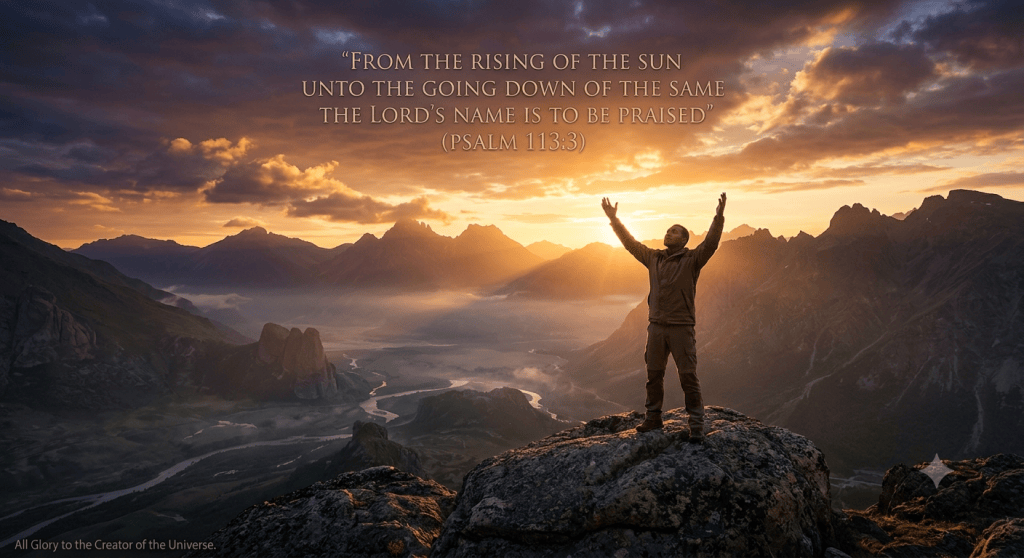
    “From the rising of the sun unto the going down of the same the LORD’s name is to be praised”(Psalm 113:3).

    Earthly power has an expiration date. Presidents, prime ministers, kings, and emperors wield a borrowed authority that is bound by borders, broken by time, and cut short by the grave. When human leaders receive honor, it is merely for an office they temporarily occupy.

    The Creator’s claim to glory knows no such limits. His praise spans “from the rising of the sun unto the going down of the same”, stretching across every timezone and filling every corner of space without pause.

    While human rulers beg for the support of citizens, lean on advisors, and fight over resources to keep their thrones, God’s authority is absolute and underived. Everything in this universe needs a cause, a fuel, or a maker to exist. But God exists from everlasting to everlasting (Psalm 90:2). He is uncaused. He relies on nothing.

    He is not measured by a standard of goodness or truth, He is the source and definition of them. He guards strict justice while holding out deep mercy, patience, and grace to His creation. From the smallest subatomic particle to the largest spinning galaxy, all things hang in continuous, breathless dependence upon Him.

    Earthly empires rise and fall like the tide, but the Kingdom of God remains unshaken. In a world of shifting allegiances and fragile leadership, human power is ultimately eclipsed by the One who needs no throne, fears no successor, and answers to no court. To Him alone belongs the honor that never fades.

    “Now unto the King eternal, immortal, invisible, the only wise God, be honour and glory for ever and ever. Amen” (1 Timothy 1:17).

    “The LORD shall reign for ever, even thy God, O Zion, unto all generations. Praise ye the LORD”(Psalm 146:10).

  • A HEART THAT PRAYS

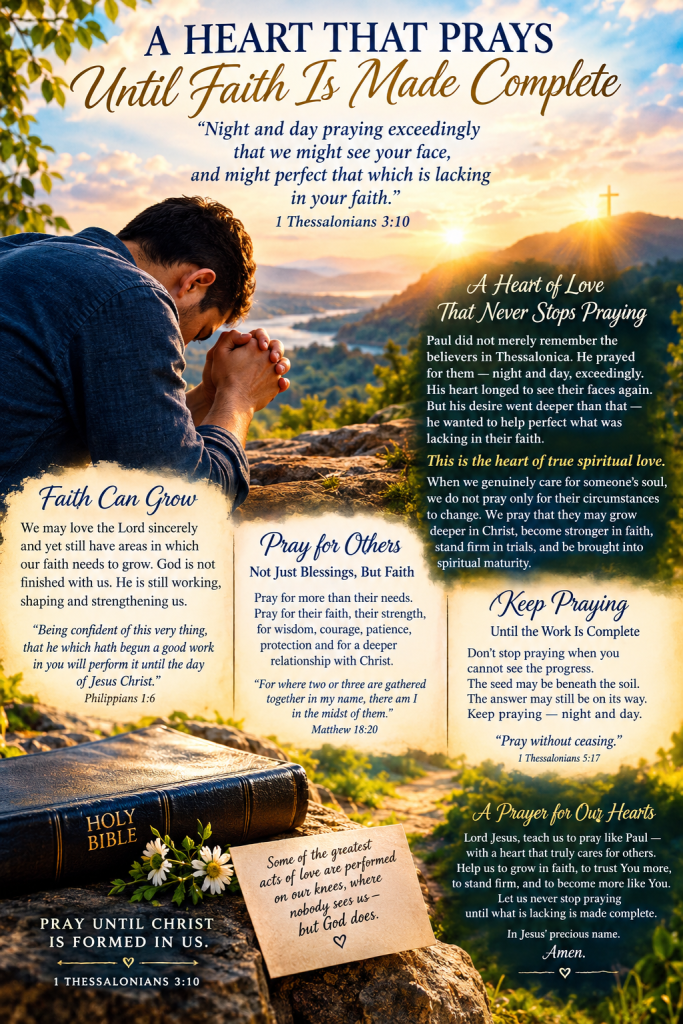
    “Night and day praying exceedingly that we might see your face, and might perfect that which is lacking in your faith” (1 Thessalonians 3:10).

    The Apostle Paul prayed for the believers night and day, exceedingly. His heart longed to see their faces again. But his desire went deeper than simply meeting them. He wanted to help perfect what was lacking in their faith.

    When we genuinely care for someone’s soul, we do not pray only for their comfort, prosperity, success, or happiness. We pray that they may grow deeper in Christ, become stronger in faith, stand firm in trials, and be brought into spiritual maturity.

    Even with sincere love for God, our faith grows gradually through our doubts, fears, and delayed answers, and He remains patient with us instead of abandoning us.

    The Apostle Paul’s prayers were not casual, as he prayed exceedingly night and day. They were not quickly spoken and forgotten; instead, the spiritual condition of these souls had become a true burden upon his heart.

    We bring our loved ones before God’s throne of grace. We pray when the world is awake, and we pray when the world is asleep. We pray when we have answers, and we pray when we have none.

    When our hands cannot reach someone, our prayers still can. Distance cannot stop prayer. Silence cannot stop prayer. Closed doors cannot stop prayer. Even when we cannot see the work God is doing, we can still kneel before Him and ask Him to keep going.

    Christianity is a relationship, a life being transformed by Christ.

    Are you growing closer to Jesus, is your faith becoming stronger, are you standing when the storm comes, and is Christ being formed in you?

    Perhaps you notice shortcomings in your life, wish your faith were stronger, face ongoing battles, or still struggle to trust God in certain areas.

    Do not despair. God is still working.

    “Being confident of this very thing, that he which hath begun a good work in you will perform it until the day of Jesus Christ” (Philippians 1:6).

    The same God who began the work is able to continue it because your weaknesses and unfinished places do not surprise or frighten Him, and your journey is not over as He still wants to teach you, strengthen you, and lead you into deeper faith.

    The greatest blessing is becoming more like Christ.

    God often works through one believer to strengthen another.

    Never underestimate the power of your words, presence, and silent prayers to become God’s instrument in bringing someone safely through a storm.

    Keep praying through every struggle, wandering, weak faith, unchanged circumstance, or silent heaven because prayer is trusting God rather than our own ability to change someone.

    Prayer is trusting God to do what we cannot do.

    And sometimes the answer to our prayer begins long before we can see

    As followers of the Lord Jesus Christ, we are called to trust Him, obey Him, endure with Him, walk with Him, and become more like Him.

    Pray as the Apostle Paul prayed with a heart that truly cares for the souls of others.

    When we cannot do anything else for someone, let us remember that we can always pray.

    Some of the greatest acts of love are performed on our knees, where nobody sees us but God does.

    “Night and day praying exceedingly” (Thessalonians 3:10).

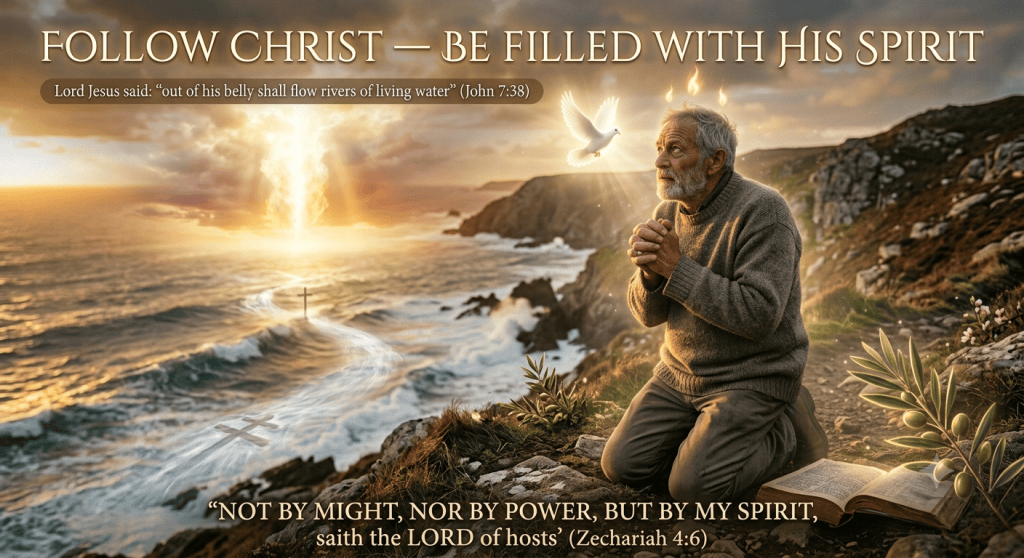
  • FOLLOW CHRIST — BE FILLED WITH HIS SPIRIT

    Christians are called to follow Christ not merely in name, but in life, in obedience, in holiness, and in the power of the Holy Spirit.

    The Lord Jesus Himself was baptized in water, and the Holy Spirit descended upon Him. The Scripture says: “And the Holy Ghost descended in a bodily shape like a dove upon him” (Luke 3:22).

    If we call ourselves followers of Christ, we must earnestly seek to walk in the footsteps of Christ.

    When Israel passed through the Red Sea, the Apostle Paul described it as a figure of baptism: “And were all baptized unto Moses in the cloud and in the sea” (1 Corinthians 10:2).

    Their passage through the waters marked a separation from the life they had known in Egypt. They were moving forward into a new journey under the leadership of God.

    Then God manifested His presence among them. At Mount Sinai, the glory and fire of the Lord were revealed. And throughout their wilderness journey, God did not leave His people without direction: “And the LORD went before them by day in a pillar of a cloud, to lead them the way; and by night in a pillar of fire, to give them light” (Exodus 13:21)

    Cloud by day. Fire by night.

    God did not merely bring His people out, He desired to lead them.

    In the same way, receiving the Holy Spirit is not merely about having an experience. The Holy Spirit comes to dwell in you, to teach, guide, comfort, convict, strengthen, and lead you into the truth.

    The Lord Jesus said: “And I will pray the Father, and he shall give you another Comforter, that he may abide with you for ever” (John 14:16).

    And in John 16:13: “Howbeit when he, the Spirit of truth, is come, he will guide you into all truth.”

    The Holy Spirit is the Spirit of God.

    The Apostle Paul writes: “Now if any man have not the Spirit of Christ, he is none of his.” (Romans 8:9).

    If you are not filled with the Spirit of God, you don’t belong to Him.

    Water baptism has profound biblical meaning. It testifies to repentance, identification with Christ, the death of the old life, and the beginning of a new life: “Therefore we are buried with him by baptism into death: that like as Christ was raised up from the dead by the glory of the Father, even so we also should walk in newness of life” (Romans 6:4).

    The old life must die, and the new life must be lived in Christ. The Holy Spirit is central to that new life.

    The Lord Jesus declared: “Except a man be born of water and of the Spirit, he cannot enter into the kingdom of God” (John 3:5).

    The new birth is the work of God within the heart.

    On the Day of Pentecost, the promise of the Father was manifested with extraordinary power: “And there appeared unto them cloven tongues like as of fire, and it sat upon each of them. And they were all filled with the Holy Ghost” (Acts 2:3–4).

    They were filled with the Holy Spirit, and they began to speak with other tongues as the Spirit gave them utterance.

    Tongues are one of the spiritual gifts mentioned by the Apostle Paul among the manifestations of the Spirit (1 Corinthians 12:8–10). The Holy Spirit gives different gifts to different believers according to His will (1 Corinthians 12:11).

    Therefore, we should not measure the presence of the Holy Spirit merely by one particular manifestation.

    God looks deeper than our outward actions. “For man looketh on the outward appearance, but the LORD looketh on the heart” (1 Samuel 16:7).

    Therefore, do not be satisfied with water baptism alone.

    Do not be satisfied merely because you were baptized as a child. A ceremony cannot substitute for a surrendered heart.

    A person may pass through religious ceremonies and still wander far from God. Israel itself passed through the sea, witnessed God’s mighty works, and yet many later fell into disobedience and unbelief. Apostle Paul warns us to learn from their example (1 Corinthians 10:1–12).

    So let us examine ourselves. Have we truly repented? Have we surrendered our lives to Christ? Are we walking in obedience, seeking the Holy Spirit, and  allowing the Spirit of God to lead us?

    The Scripture says: “As many as are led by the Spirit of God, they are the sons of God” (Romans 8:14). 

    Repentance must be more than words.

    True repentance turns the heart toward God. “Repent ye therefore, and be converted, that your sins may be blotted out” (Acts 3:19).

    Come before the Lord sincerely. Fast, pray, and search your heart. Confess your sins to God. Ask Him to cleanse you, change you, and fill you with His Spirit. Lord Jesus Himself gave this invitation: “If any man thirst, let him come unto me, and drink” (John 7:37).

    And then He gave this extraordinary promise: “He that believeth on me, as the scripture hath said, out of his belly shall flow rivers of living water” (John 7:38).

    If your desire is to serve the Lord and reach souls, ask Him to equip you.

    Say: “Lord Jesus, I do not want merely to speak about You. I want You to use my life. Cleanse me. Teach me. Lead me. Fill me with Your Holy Spirit. Give me wisdom, courage, love, discernment, and every gift You desire to place within me. Make me a vessel for Your glory.”

    Seek the Lord with your whole heart.

    Be filled with His Spirit. Walk in His light.

    Bear His fruit. Carry His love. Obey His voice.

    And let your life become a living testimony that Jesus Christ is Lord.

    “Not by might, nor by power, but by my spirit, saith the LORD of hosts” (Zechariah 4:6).