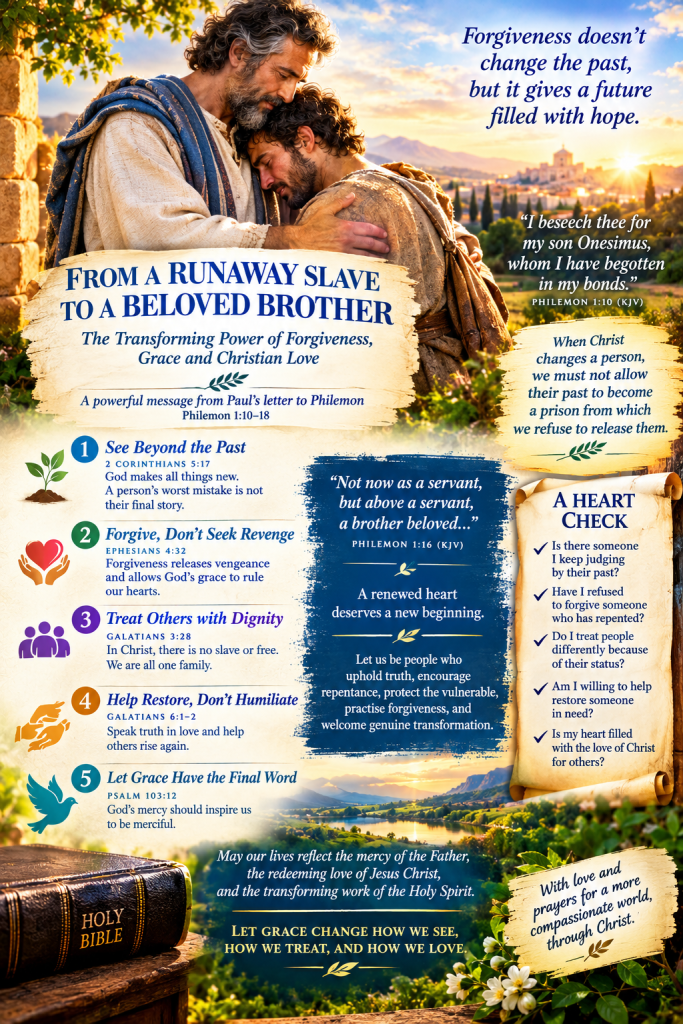
The Apostle Paul wrote to Philemon, it is a message about forgiveness, restoration, dignity, brotherhood, and the transforming power of the Gospel.
The Gospel challenges worldly pride by establishing that all people are equal and deeply valued in Christ,
Onesimus, a man who had been separated from Philemon and was now connected with Paul during his imprisonment. Onesimus had become a Christian through Paul’s ministry. Paul sends him back to Philemon with a heartfelt appeal: receive him differently not merely according to his past, but in the light of what Christ has done in his life.
“I beseech thee for my son Onesimus, whom I have begotten in my bonds” (Philemon 1:10).
The Apostle Paul introduces Onesimus has his own son. In his letter to Philemon, Paul urges him to welcome his runaway servant, Onesimus, not as property, but as an equal, beloved brother in faith.
By offering to personally pay any debts Onesimus owes, the Apostle Paul mirrors the redeeming, sacrificial love of Jesus Christ. Ultimately, true Christian love goes beyond judging the faults of others, it actively seeks to restore, protect dignity, and guide others toward healing.
True Christian fellowship requires gentle restoration rather than permanent condemnation.
“Be kindly affectioned one to another with brotherly love; in honour preferring one another.” (Romans 12: 10)
We must never allow worldly status to become more important than the love, dignity, and spiritual unity that we are called to share in Christ.
The greatest test of Christian love is how we treat those who have wronged us.
A person’s past may explain where they have been, but it does not have to determine where they can go with God. Let us never forget: the grace that rescued us is the same grace that can transform another person.
The letter does not tell us explicitly how Philemon ultimately responded, but Paul’s appeal leaves us with a lasting challenge: will we allow the love of Christ to change the way we receive people who have a troubled past?

