“For all flesh is as grass, and all the glory of man as the flower of grass. The grass withereth, and the flower thereof falleth away: But the word of the Lord endureth for ever. And this is the word which by the gospel is preached unto you” (1 Peter 1:24, 25).
The Apostle Peter compares human existence to wild grass, and human glory, such as achievements, wealth, status, beauty, and strength, to the delicate flowers of the field. Just as green grass dries up and vibrant flowers wither under the sun, earthly lives and accomplishments are fleeting.
In contrast to human frailty, the message declared by God endures forever. Earthly circumstances, empires, and cultural trends come and go, but God’s truth remains unshakable.
The Apostle Peter emphasises that this eternal Word is the very Gospel that has been preached: the good news of hope, salvation, and eternal life through the Lord Jesus Christ.
We live in a world driven by temporary things. We invest vast amounts of time and energy into building earthly security, seeking praise, and accumulating possessions. While these things have their place, the Apostle Peter reminds us that they carry an expiration date.
When trials come or life shifts unexpectedly, reliance on fleeting things leaves us hollow. However, when you build your life around God’s truth and promises, you gain a foundation that cannot be shaken.
Recognize that worldly success and hardships are temporary; do not let earthly worries overwhelm your eternal hope.
Ground your identity in God’s promises rather than shifting human opinions or circumstances.
Live for what lasts: investing in your faith, sharing the Gospel, and loving others with an enduring purpose.
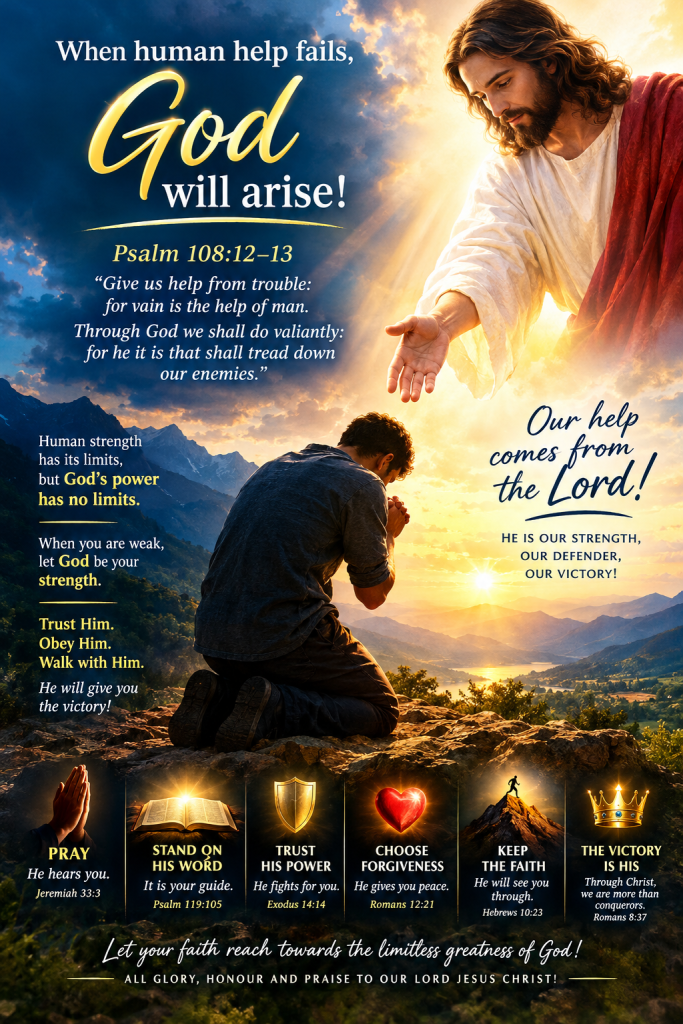
“Give us help from trouble: for vain is the help of man. Through God we shall do valiantly: for he it is that shall tread down our enemies”
(Psalm 108: 12, 13).
Human strength has its limits, but God’s power has none. There are battles in life that cannot be won by human wisdom, influence, wealth, authority, or physical might. There are moments when every door seems closed, every familiar help disappears, and the heart cries out, ‘Lord, where shall I turn?’“
It is precisely in such moments that we must remember who our God is!
Sometimes, we exhaust ourselves trying to solve every problem with our own understanding. We run from one person to another, seek advice from every direction, and struggle to control circumstances that are beyond our power. Yet, in the midst of all our efforts, we forget to kneel before the One who holds our lives in His hands.
When trouble comes, do not allow fear to silence your prayers. When tears fill your eyes, let your heart continue to seek Him. When you cannot see a way forward, remember that your inability to see the way does not mean God has no way.
“Call unto me, and I will answer thee, and shew thee great and mighty things, which thou knowest not” (Jeremiah 33:3).
The Lord who opened the Red Sea before the Israelites is still able to make a way where there appears to be no way.
“It is better to trust in the LORD than to put confidence in man” (Psalm 118:8).
When David stood before Goliath, he did not depend upon the size of his weapon or the strength of his armour. He declared that the battle belonged to the Lord.
“For the battle is the LORD’S” (1 Samuel 17:47)
In every season of weakness, confusion, fear, trouble, or uncertainty, turn to Christ and remain faithful to His wisdom, promises, and sovereign care. And when you do not know what tomorrow holds, remain faithful to the One who holds tomorrow.
“I can do all things through Christ which strengtheneth me” (Philippians 4:13).
When you continue trusting God through suffering, you testify that your hope rests in something greater than your present circumstances.
Through Christ, we can stand firm, endure faithfully, and live courageously for the glory of God. Stand upon His Word. Walk in His ways. Seek His face. Depend upon His grace.
“Touch not mine anointed, and do my prophets no harm”(Psalm 105:15).
When God calls you His “anointed,” it means He has set you apart, placed His mark of ownership upon you, and taken total responsibility for your life, your calling, and your defense.
In a world that can often feel overwhelming, hostile, or uncertain, Psalm 105:15 stands as a bold declaration from the God of the universe: You belong to Him. When you walk in faith and live according to God’s purpose, your life is not at the mercy of human opposition, malice, or circumstance. God Himself draws a line around your life and declares, “Do not touch.”
Being anointed does not mean life will be free from struggles or opposition. The patriarchs faced famines, strange lands, and dangerous rulers. However, opposition never meant defeat; it was proof that God’s presence was actively preserving them. Whenever forces rise against you, remember that the God who called you is the same God who fights for you.
Abraham and his descendants had no military power, yet kings bowed to the God who guarded them. You do not need to fight every battle in your own strength or harbor bitterness toward those who seek to harm you. Stand firm in peace, knowing that God holds your life, your family, and your future securely in His hands.
A Prayer of Confidence:
Heavenly Father, thank You for marking my life with Your purpose and surrounding me with Your divine protection. Help me walk with courage, knowing that no weapon formed against me shall stand, and that You are my ultimate defender. In Jesus’ name, Amen.
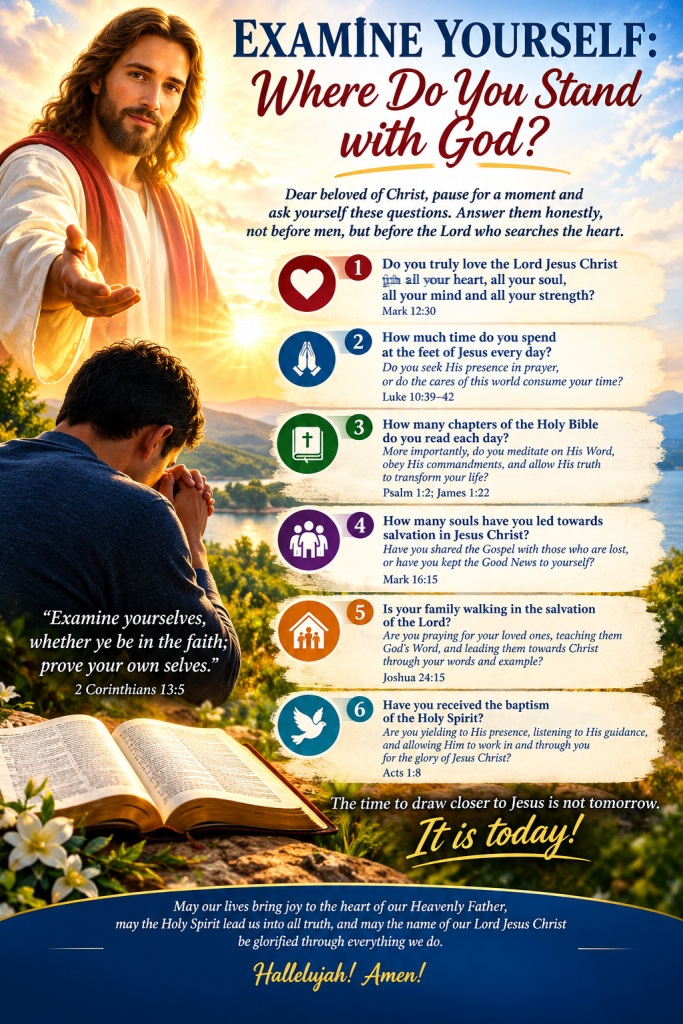
Dear beloved of Christ, pause for a moment and ask yourself these questions. Answer them honestly, not before men, but before the Lord who searches the heart.
Do you truly love the Lord Jesus Christ with all your heart, all your soul, all your mind, and all your strength? (Mark 12:30)
How much time do you spend at the feet of Lord Jesus every day? Do you seek His presence in prayer, or do the cares of this world consume your time? (Luke 10:39–42)
How many chapters of the Holy Bible do you read each day? More importantly, do you meditate on His Word, obey His commandments, and allow His truth to transform your life? (Psalm 1:2; James 1:22)
How many souls have you led towards salvation in the Lord Jesus Christ? Have you shared the Gospel with those who are lost, or have you kept the Good News to yourself? (Mark 16:15)
Is your family walking in the salvation of the Lord? Are you praying for your loved ones, teaching them God’s Word, and leading them towards Christ through your words and example? (Joshua 24:15)
Have you received the baptism of the Holy Spirit? Are you yielding to His presence, listening to His guidance, and allowing Him to work in and through you for the glory of Jesus Christ? (Acts 1:8)
These questions are an invitation to examine your heart before God.
You may read many chapters, yet fail to practise what you read. You may spend hours in prayer, yet struggle to love your neighbour. You may preach to multitudes, yet neglect the people God has placed beside you.
The Lord desires a heart that loves Him, obeys His Word, walks in holiness, bears the fruit of the Holy Spirit, and reflects the character of Lord Jesus Christ.
Let us remember the words of Scripture:
“Examine yourselves, whether ye be in the faith; prove your own selves” (2 Corinthians 13:5).
Today, let each one of us come before the Lord with humility and sincerity. Where we have grown cold, let us return to our first love. Where we have neglected prayer, let us draw near to Him. Where we have failed to share His love, let us become His witnesses. Where our hearts need cleansing, let us repent and receive His mercy.
The time to draw closer to Jesus is not tomorrow. It is today.
May our lives bring joy to the heart of our Heavenly Father, may the Holy Spirit lead us into all truth, and may the name of our Lord Jesus Christ be glorified through everything we do.
None of us can stand before God and claim perfection. We try so hard to patch over our mistakes, clean up our past, and present a flawless face to the world, yet down deep, we know the truth. Our hearts are imperfect, prone to stumbles, and forever in need of grace.
Proverbs 20:9 isn’t meant to bring us shame; it’s meant to bring us freedom.
When we stop pretending we can save ourselves, we open the door for God’s unconditional mercy to step in.
True peace doesn’t come from proving we are spotless, it comes from laying our weary hearts at the altar, bathed in light, and trusting in the One who loves us exactly as we are.
You don’t have to carry the heavy burden of trying to be perfect today. Let His grace be enough.
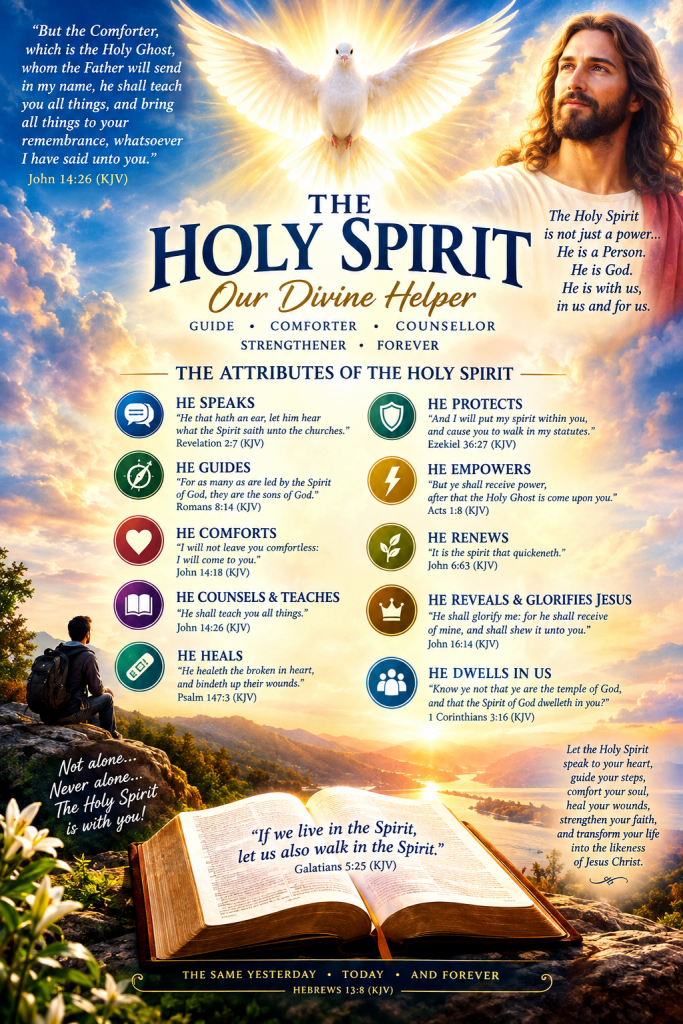
“But the Comforter, which is the Holy Ghost, whom the Father will send in my name, he shall teach you all things, and bring all things to your remembrance, whatsoever I have said unto you”(John 14:26).
Who Is the Holy Spirit?
The Holy Spirit is the Spirit of God, the third Person of the Holy Trinity: Father, Son, and Holy Spirit. He is not an impersonal force, an invisible energy, or merely a feeling that comes upon us. He is divine, personal, holy, and active in the lives of those who belong to God.
From the very beginning of creation to the glorious fulfilment of God’s purposes, the Holy Spirit is at work. He gives life, reveals truth, convicts the heart, teaches the Word, strengthens the weak, comforts the sorrowful, and empowers believers to live according to the will of God.
The Lord Jesus did not promise His disciples that they would never experience sorrow, uncertainty, temptation, or difficulty. He promised them the Holy Spirit, the divine Helper who would remain with them.
“And I will pray the Father, and he shall give you another Comforter, that he may abide with you for ever” (John 14:16).
What a glorious promise! We may sometimes feel alone, but we are never beyond the reach of God’s presence. The Holy Spirit works within us, reminding us of the words of Christ and helping us walk in faith, obedience, and holiness.
The Holy Spirit speaks: “He that hath an ear, let him hear what the Spirit saith unto the churches” (Revelation 2:7).
In Scripture, He speaks through God’s revealed Word, directs God’s servants, brings truth to remembrance, and calls people to obedience.
In Acts 13:2, the Holy Spirit said, “Separate me Barnabas and Saul for the work whereunto I have called them.”
His voice does not lead us away from Christ or contradict the truth of Scripture. Read His Word prayerfully, remain humble, and be willing to obey when Scripture makes His will clear. The heart that listens to God must also be willing to follow Him.
The Holy Spirit guides us: “For as many as are led by the Spirit of God, they are the sons of God” (Romans 8:14).
Life is filled with decisions, crossroads, uncertainties, and moments when we do not know which direction to take. We may understand our circumstances only partially, but God sees the beginning and the end. The Holy Spirit guides us into truth, teaches us to discern right from wrong, and helps us apply God’s Word to our daily lives.
The Lord Jesus said: “Howbeit when he, the Spirit of truth, is come, he will guide you into all truth” (John 16:13).
His guidance calls us to prayer, biblical wisdom, discernment, and obedience. When you do not know what lies ahead, trust God enough to take the next faithful step. You may not see the whole road, but you can seek the One who leads you.
The Holy Spirit comforts us: “I will not leave you comfortless: I will come to you” (John 14:18).
There are wounds that words cannot heal, tears that we hide from others, and sorrows that we struggle to explain. Sometimes even the people who love us cannot fully understand the pain we carry. But God knows. The Holy Spirit is our divine Comforter. He reminds us of God’s promises, strengthens our hearts, and helps us endure seasons of grief, loneliness, disappointment, and suffering. Romans 8:26 tells us that the Spirit helps our infirmities and intercedes for us when we do not know what we should pray for as we ought. You may not always receive an immediate answer to your pain, and your circumstances may not change overnight. Yet you can bring your sorrow before God and ask the Holy Spirit to sustain you through it. When human words fail, we can still turn to the God who knows our hearts.
The Holy Spirit counsels and teaches us: “But the Comforter, which is the Holy Ghost, whom the Father will send in my name, he shall teach you all things, and bring all things to your remembrance, whatsoever I have said unto you”(John 14:26).
The Holy Spirit is our divine Teacher. He helps us understand the truth of God’s Word and reminds us of the teachings of the Lord Jesus. He corrects our wrong thinking, exposes the deception of sin, and teaches us to see our lives through the light of God’s truth. A wise counsellor does not simply tell us what we want to hear; godly counsel leads us towards what is right. The Holy Spirit directs us towards Christlike character, humility, repentance, forgiveness, and obedience. When pride rises within us, He reminds us to be humble. When bitterness takes root, God’s truth calls us to forgive. When temptation presents itself, the Word of God reminds us to choose holiness. Let us never seek the Spirit’s counsel merely to confirm our own desires. Let us seek Him with surrendered hearts, willing to be corrected and transformed.
The Holy Spirit heals and restores: “He healeth the broken in heart, and bindeth up their wounds” (Psalm 147:3).
God is the healer of the brokenhearted. Through the Holy Spirit, God works in human lives to bring conviction, renewal, comfort, strength, and restoration. The Spirit helps us confront the wounds of our past, repent of our sins, release bitterness, and grow in the grace of Christ. The Holy Spirit empowers believers in the ministry of healing, whether by restoring the body, strengthening the soul to endure suffering, or granting the courage to seek help. Whatever our circumstances, we can entrust ourselves to the mercy and wisdom of God.
The Holy Spirit protects and strengthens us: “And I will put my spirit within you, and cause you to walk in my statutes” (Ezekiel 36:27).
The Holy Spirit strengthens believers to resist temptation, stand firm in faith, and persevere through spiritual struggles. He reminds us of God’s truth when deception surrounds us. He empowers us to reject sin and helps us recognise the difference between the works of the flesh and the fruit of the Spirit. Ephesians 6:10–18 teaches us to put on the whole armour of God and to stand against spiritual evil. However, the Spirit’s protection does not mean that Christians will never face danger, persecution, illness, or hardship. Rather, we can trust God’s presence and strength even in the midst of trials.
Do not depend only upon your own strength. Pray, remain grounded in Scripture, resist evil, and seek the wisdom of God. The One who strengthens your faith can help you stand even when the world around you seems uncertain.
The Holy Spirit convicts us of sin: “And when he is come, he will reprove the world of sin, and of righteousness, and of judgment” (John 16:8).
The Holy Spirit reveals our need for repentance and directs us towards the righteousness of Christ. When we have acted wrongly, He brings God’s truth to bear upon our conscience. He calls us to acknowledge our sin, turn away from it, and seek God’s forgiveness. Conviction is an invitation to return to God; it is not a reason to hide from Him. First John 1:9 promises that when we confess our sins, God is faithful and just to forgive us and cleanse us from all unrighteousness. Do not harden your heart when God’s Word exposes something that must change. Humble yourself, seek forgiveness, and allow the Lord to transform you.
The Holy Spirit intercedes for us: “The Spirit itself maketh intercession for us with groanings which cannot be uttered” (Romans 8:26).
There are moments when our hearts are so burdened that we cannot find the words to pray. We may sit before God in silence, carrying grief, confusion, or a longing that we cannot express. Romans 8 reminds us that our weakness does not place us beyond God’s help. The Holy Spirit helps us in our infirmities and intercedes according to the will of God. Prayer is not dependent upon our ability to speak eloquently. Come before God honestly. You do not need to impress Him with beautiful words. Bring Him your tears, your questions, your repentance, your gratitude, and your deepest concerns.
The Holy Spirit empowers us: “But ye shall receive power, after that the Holy Ghost is come upon you: and ye shall be witnesses unto me” (Acts 1:8).
The Holy Spirit empowers believers to bear witness to the Lord Jesus Christ. He gives courage to speak the truth, strength to endure opposition, and grace to serve others. He distributes spiritual gifts according to God’s purposes, equipping the Church for ministry and the building up of the body of Christ (1 Corinthians 12:4–11). The Spirit empowers us to glorify Lord Jesus, serve humbly, love sacrificially, and proclaim the Gospel faithfully. The evidence of His work is not merely an outward display of spiritual enthusiasm. It also includes a transformed life that increasingly reflects the character of Christ.
The Holy Spirit produces His fruit in us: “But the fruit of the Spirit is love, joy, peace, longsuffering, gentleness, goodness, faith, meekness, temperance” (Galatians 5:22–23).
The Holy Spirit does more than give us strength for a particular task. He works within us to transform who we are. He teaches us to love when hatred seems easier, to remain patient when circumstances test us, to speak gently when anger rises, and to pursue peace when conflict surrounds us. The fruit of the Spirit reveals the character God desires to cultivate in His people. Spiritual maturity is not measured simply by how much we know, how eloquently we speak, or how many spiritual experiences we describe. It is also revealed through the love we demonstrate, the forgiveness we offer, the humility we practise, and the holiness we pursue. Let us ask not only for the gifts of the Spirit but also for the grace to bear His fruit.
The Holy Spirit gives life and renews us: “It is the spirit that quickeneth; the flesh profiteth nothing” (John 6:63).
The Holy Spirit is active in the work of spiritual renewal. The Lord Jesus taught Nicodemus that a person must be born of the Spirit to enter the kingdom of God (John 3:5–8). Through the Spirit’s work, we are brought into new life in Christ, renewed in our minds, and enabled to grow in holiness. When we have become spiritually weary, we can pray for renewal. When our love has grown cold, we can return to Christ. When sin has entangled us, we can seek God’s forgiveness and the Spirit’s help to walk in newness of life. The Christian life is not merely an attempt to improve ourselves through human effort. It is a life of dependence upon God’s grace and the transforming work of His Spirit.
The Holy Spirit reveals and glorifies the Lord Jesus Christ: “He shall glorify me: for he shall receive of mine, and shall shew it unto you” (John 16:14).
One of the most important works of the Holy Spirit is to glorify the Lord Jesus Christ. The Spirit does not lead us away from the Lord Jesus. He reveals the truth of Christ, deepens our understanding of His Word, and transforms us to become more like Him. The Holy Spirit reminds us of the significance of Christ’s sacrifice, the greatness of His resurrection, and the hope we have through Him. A genuine work of the Holy Spirit leads us towards greater love for Jesus, deeper reverence for God’s Word, and a life that bears witness to the Gospel. Let Christ remain at the centre of your worship, your prayer, your service, and your life.
The Holy Spirit dwells in believers: “Know ye not that ye are the temple of God, and that the Spirit of God dwelleth in you?” (1 Corinthians 3:16).
We should therefore seek to live in a manner worthy of the One whose presence has been given to us. The presence of the Holy Spirit is a precious gift. Our lives are not meant to be ruled by selfish desires, bitterness, dishonesty, or impurity. We are called to honour God in our bodies, thoughts, words, and actions. Make room for prayer. Meditate upon the Scriptures. Practise obedience. Pursue peace with others. Turn away from what dishonours God. The Spirit’s indwelling presence is not permission to live carelessly; it is a call to live as people who belong to Christ.
The Holy Spirit gives wisdom and discernment: “For to one is given by the Spirit the word of wisdom; to another the word of knowledge by the same Spirit” (1 Corinthians 12:8).
The Holy Spirit equips God’s people with wisdom and discernment for the situations they encounter. He helps us distinguish truth from error, recognise the dangers of temptation, and respond to others with godly understanding. James 1:5 encourages those who lack wisdom to ask God, who gives generously. Ask the Lord to make you wise not only in what you believe, but also in what you say, how you act, and how you treat others.
The Holy Spirit unites us in love and fellowship: Endeavouring to keep the unity of the Spirit in the bond of peace” (Ephesians 4:3).
The Holy Spirit brings believers into the fellowship of Christ’s body and calls them to live in unity, love, and peace. He teaches us to bear with one another, forgive one another, and serve one another with humility. Unity does not mean that every Christian must agree on every matter. It means that we seek to honour Christ, hold fast to the truth, and treat one another with grace rather than pride and hostility. A heart being transformed by the Spirit will increasingly seek reconciliation, show compassion, and pursue the good of others. Where the Spirit’s fruit grows, love becomes visible.
The Holy Spirit is our seal and assurance: “And grieve not the holy Spirit of God, whereby ye are sealed unto the day of redemption” (Ephesians 4:30).
The Holy Spirit is associated with the sealing of believers, marking them as belonging to God and pointing towards the promised redemption. This gives Christians a profound reason for hope. Our salvation rests upon the grace of God through Jesus Christ, not upon our ability to earn His favour. The Spirit’s presence reminds us that we belong to the Lord and are called to live faithfully as His people. Therefore, do not treat the grace of God lightly. Walk in repentance, trust in Christ, and seek to honour the One who has called you to Himself.
The Holy Spirit can be grieved: “And grieve not the holy Spirit of God” (Ephesians 4:30).
Because the Holy Spirit is personal, Scripture warns believers not to grieve Him. Ephesians 4 places this warning in the context of falsehood, corrupt speech, bitterness, wrath, anger, and malice. These are not small matters to God. They damage our relationships and contradict the character of Christ.
We must therefore examine our hearts. Are we harbouring resentment? Are our words building people up or tearing them down? Are we making room for dishonesty or refusing to forgive?
When we recognise our failures, let us not hide behind pride. Let us repent, seek God’s forgiveness, and return to a life of obedience. The Spirit who convicts us also helps us grow in holiness.
The Holy Spirit is our ever-present Helper in every season: “Likewise the Spirit also helpeth our infirmities” (Romans 8:26).
In joy, we can thank Him. In sorrow, we can seek His comfort. In uncertainty, we can ask for wisdom. In temptation, we can seek strength to resist. In weakness, we can pray for His help. In service, we can depend upon His power.
The Holy Spirit is not confined to a church building or a particular hour of prayer. The Christian life is a life of walking with God every day.
Yet we must remember that His work is not a promise that every desire will be fulfilled or every difficulty immediately removed. He works according to God’s wisdom and purpose, leading us to trust Christ in all circumstances.
Whatever season you are passing through, turn to God in faith. Let His Word shape your heart, let prayer strengthen your relationship with Him, and let the Spirit lead you towards the character of Jesus.
Walk in the Spirit
The Holy Spirit speaks, guides, comforts, teaches, convicts, strengthens, empowers, renews, and produces His fruit in those who belong to Christ. He helps us in our weakness, directs us towards truth, and glorifies the Lord Jesus. But let us never seek only what the Holy Spirit can do for us. Let us seek to know God more deeply, love Christ more faithfully, and become more obedient to His Word.
The greatest evidence of the Spirit’s transforming work is not merely what we say about Him, but how our lives increasingly reflect the love, holiness, humility, and truth of the Lord Jesus Christ.
Do not grieve the Holy Spirit. Do not resist His call to repentance. Do not ignore the truth of God’s Word. Instead, pray for wisdom, walk in obedience, cultivate the fruit of the Spirit, and remain steadfast in Christ. May our hearts become willing vessels, our lives become living testimonies, and our words bring glory to the name of Jesus.
Holy Spirit, teach us to hear the truth, give us grace to obey, strengthen us in our weakness, comfort us in our sorrow, and transform us into the likeness of Jesus Christ. Lead us in the way of righteousness, fill us with Your love, and help us glorify our Lord in everything we do. Amen.
“If we live in the Spirit, let us also walk in the Spirit” (Galatians 5:25).
“But as for me and my house, we will serve the LORD” (Joshua 24:15).
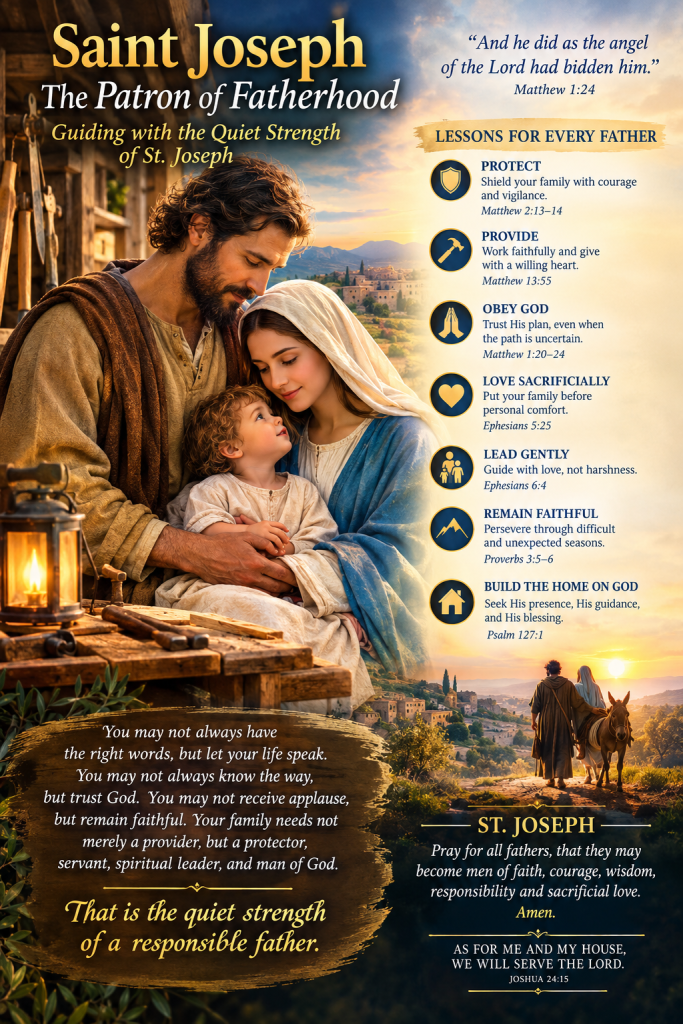
Being a responsible father like St. Joseph means anchoring a family in quiet strength, selfless protection, sacrificial love, and steady, faithful devotion. Scripture introduces Joseph as “a just man” (Matthew 1:19), a man whose righteousness was revealed not through many words, but through his actions, obedience, compassion, and trust in God.
Long before he became the foster-father and guardian of Jesus, Joseph’s profound sense of responsibility was tested when he discovered that Mary was with child. Not understanding the mystery of what God was doing, Joseph nevertheless desired to protect Mary from public disgrace: “Joseph her husband, being a just man, and not willing to make her a public example, was minded to put her away privily” (Matthew 1:19).
But God had a greater purpose. An angel of the Lord appeared to Joseph in a dream and revealed the divine mystery: “Joseph, thou son of David, fear not to take unto thee Mary thy wife: for that which is conceived in her is of the Holy Ghost” (Matthew 1:20).
Joseph did not argue, delay, or demand an explanation. He obeyed. “Then Joseph being raised from sleep did as the angel of the Lord had bidden him, and took unto him his wife” (Matthew 1:24).
Here we see the first great lesson of fatherhood: a godly father listens when God speaks and obeys even when he does not understand everything.
Joseph took Mary into his home, accepting the responsibility God had entrusted to him. He protected her dignity, cared for her needs, and accompanied her on the difficult journey to Bethlehem as she prepared to give birth to the promised Messiah.
And when the child was born, Joseph remained faithful to his God-given responsibility. He became the earthly guardian of the One who is the eternal Son of God.
When an angel warned him of Herod’s murderous intention, Joseph again demonstrated immediate obedience: “Arise, and take the young child and his mother, and flee into Egypt” (Matthew 2:13).
And Scripture tells us: “When he arose, he took the young child and his mother by night, and departed into Egypt” (Matthew 2:14).
There was no complaint recorded. No hesitation. No concern about personal comfort. Joseph simply obeyed.
He uprooted his life in the middle of the night and led Mary and the infant Jesus to safety. In doing so, Joseph teaches fathers that protection sometimes requires sacrifice, inconvenience, courage, and immediate action.
After Herod’s death, Joseph once again received divine direction: “Arise, and take the young child and his mother, and go into the land of Israel” (Matthew 2:20).
Joseph obeyed again and eventually settled with Mary and Jesus in Nazareth.
There, in the quietness of an ordinary home, Joseph fulfilled his vocation. He worked with his hands and provided for the Holy Family. Matthew identifies him as a craftsman or builder (Matthew 13:55). His was not a life of public recognition, but a life of hidden faithfulness.
The Gospel gives us a beautiful glimpse of Jesus growing within the loving care of His earthly family: “And the child grew, and waxed strong in spirit, filled with wisdom: and the grace of God was upon him” (Luke 2:40).
Later, when Jesus was found in the temple, Scripture says: “And he went down with them, and came to Nazareth, and was subject unto them” (Luke 2:51).
Joseph’s life reminds us that great fatherhood is often formed in ordinary places: in the home, at work, and through sacrifice, protection, teaching, and daily faithfulness.
His life proves that true fatherhood does not need applause. It speaks through action more than words.
A father protects, provides, teaches, sacrifices, and prays as he leads his family toward God.
A father’s responsibility is not merely to provide material necessities, but also to care for the physical, emotional, moral, and spiritual well-being of his family.
Scripture gives fathers this solemn responsibility: “And, ye fathers, provoke not your children to wrath: but bring them up in the nurture and admonition of the Lord” (Ephesians 6:4).
A godly father does not lead through fear, domination, or demands, but instead protects, provides for, corrects, and disciplines his family through love, wisdom, patience, example, and prayer ultimately showing them what it means to walk with God through his own life.
Scripture also calls husbands to a sacrificial standard: “Husbands, love your wives, even as Christ also loved the church, and gave himself for it” (Ephesians 5:25).
This is the heart of Christian fatherhood: self-giving love.
Providing for a family is more than fulfilling an obligation. It can become a daily offering of love: the sacrifice of time, energy, comfort, personal ambition, and sometimes even one’s own plans for the good of those entrusted to him.
Every father needs the faith to move forward during uncertainty by trusting God, even when the future remains completely unknown. “Trust in the LORD with all thine heart; and lean not unto thine own understanding”(Proverbs 3:5).
There will be seasons when a father does not know what tomorrow will bring. There may be financial difficulties, family struggles, uncertain decisions, disappointments, or roads he never expected to travel.
In those moments, Joseph’s example speaks silently: Listen to God. Trust God. Obey God. Protect those entrusted to you. Keep moving forward in faith.
A father does not have to be perfect to be faithful. He must be willing to humble himself before God, seek wisdom, repent when he fails, and continue walking faithfully.
Ultimately, the strength of a godly father comes not from himself but from the Lord. “Except the LORD build the house, they labour in vain that build it” (Psalm 127:1).
A father may build walls, provide food, pay bills, teach skills, and protect his family, but only God can truly build a home. Therefore, the greatest inheritance a father can leave his children is not merely wealth or possessions, but a living example of faith.
Let your children see your faith in action: praying, forgiving, serving, and choosing God above all else so they learn to make Him first too.
St. Joseph’s life was largely hidden from the world, yet his faithfulness was precious in the sight of God. He did not preach great sermons recorded in Scripture. He did not perform public miracles. We do not hear a single spoken word from Joseph recorded in the Gospels.
His silence was obedience, his hands were service, his courage was protection, his work was provision, and his faith was leadership.
He became a sanctuary of faithfulness for Mary and the child Jesus.
Build a home where love is strong, faith is alive, prayer is welcomed, forgiveness is practiced, truth is honoured, and Christ is at the centre.
A father’s greatest success is not how loudly the world remembers his name, but how faithfully his family remembers the God he taught them to love.
May every father learn from St. Joseph to become a man of quiet strength, courageous obedience, sacrificial love, humble service, and unwavering faith.
And may every Christian home become what Joseph’s home in Nazareth quietly became: a place where God was honoured, where love was lived, where sacrifice was embraced, where faith was taught, and where the presence of God was cherished above everything else.
The Living Tabernacle: Mary’s Womb as the Throne Room of God
“For with God nothing shall be impossible” ( Luke 1:37).
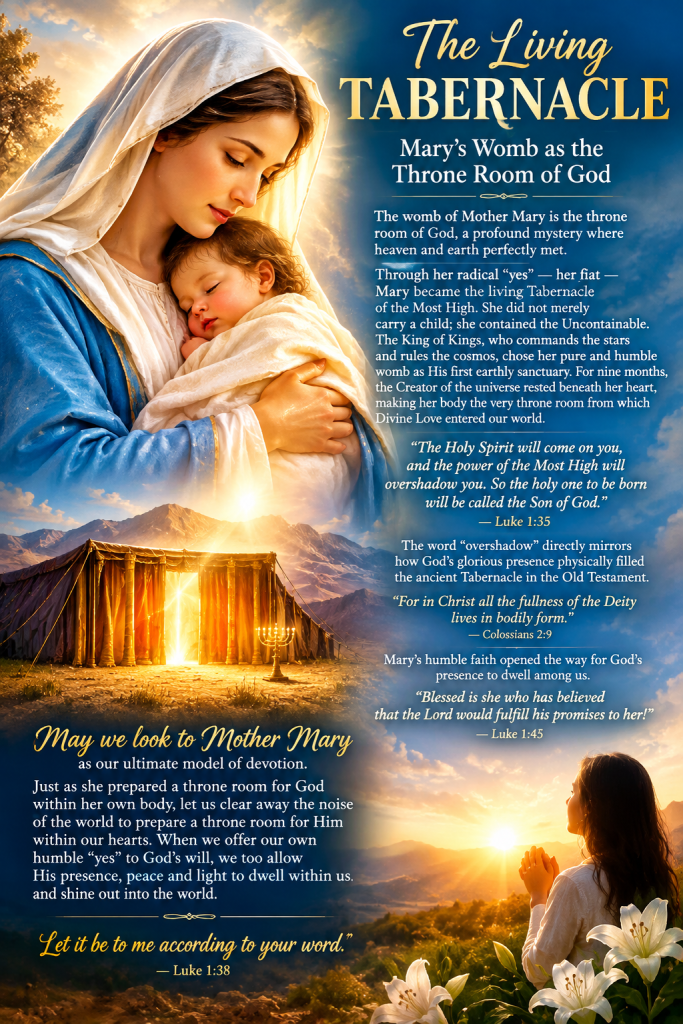
The Womb of Mother Mary is the throne room of God, a profound mystery where heaven and earth perfectly met.
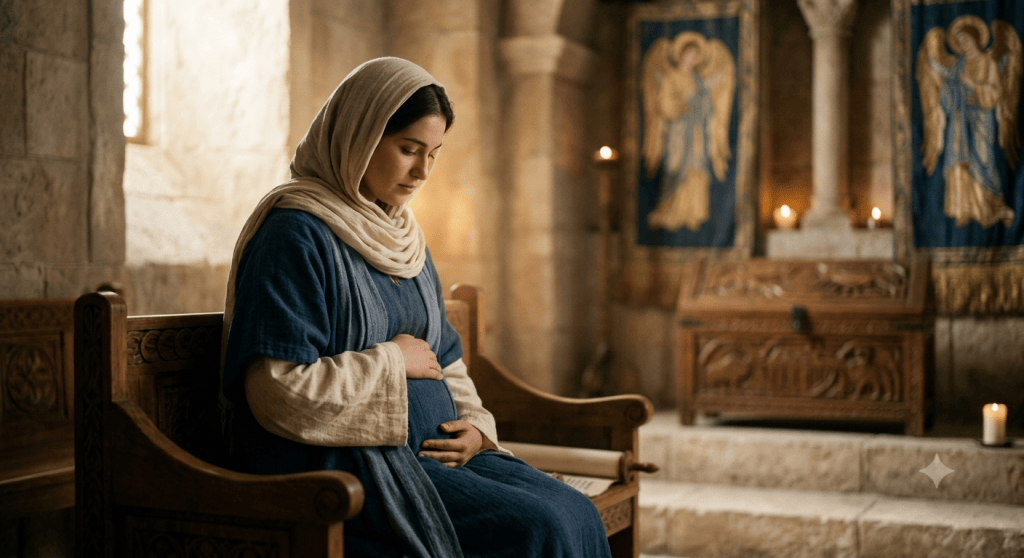
Through her radical “yes” and her fiat, Mary became the living Tabernacle of the Most High. She did not merely carry a child; she contained the Uncontainable.
The King of Kings, who commands the stars and rules the cosmos, chose her pure and humble womb as His first earthly sanctuary. For nine months, the Creator of the universe rested beneath her heart, making her body the very throne room from which Divine Love entered our world.
This reality fulfills the beautiful announcement given to her by the Angel Gabriel:
“The Holy Spirit will come on you, and the power of the Most High will overshadow you. So the holy one to be born will be called the Son of God” (Luke 1:35).
The word “overshadow” directly mirrors how God’s glorious presence physically filled the ancient Tabernacle in the Old Testament. In Mary, God came to dwell not in a tent, but in human flesh:
“For in Christ all the fullness of the Deity lives in bodily form” (Colossians 2:9).
This sacred truth reminds us of the incredible dignity of the human person and the power of surrender. God did not choose a grand, earthly palace of marble and gold for His throne; He chose the quiet, hidden, and faithful womb of a humble young woman, prompted by her deep faith:
“Blessed is she who has believed that the Lord would fulfill his promises to her!” ( Like 1:45)
May we look to Mother Mary as our ultimate model of devotion. Just as she prepared a throne room for God within her own body, let us clear away the noise of the world to prepare a throne room for Him within our hearts. When we offer our own humble “yes” to God’s will, we too allow His presence, peace, and light to dwell within us and shine out into the world.
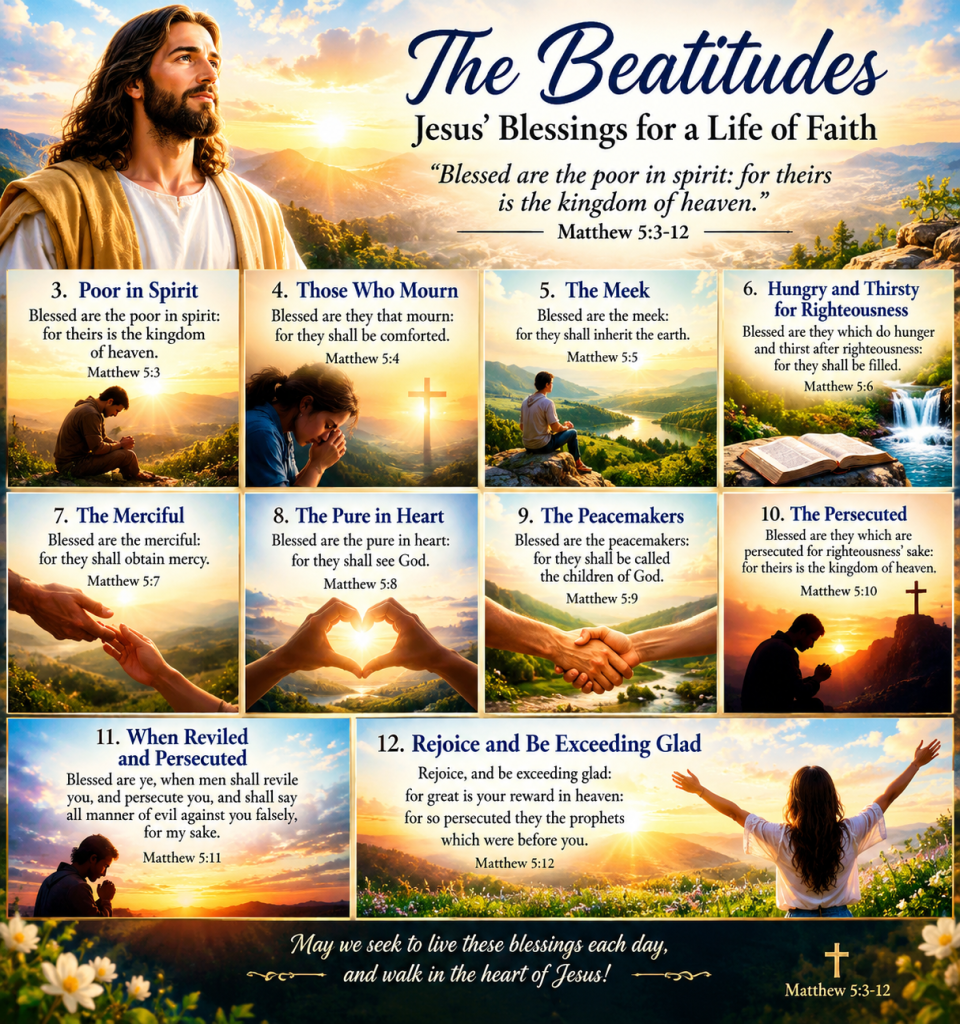
1. “Blessed are the poor in spirit: for theirs is the kingdom of heaven” (Matthew 5:3).
To be poor in spirit means to recognize our complete dependence upon God. It is humility before Him, knowing that we need His grace and cannot rely on ourselves.
2. “Blessed are they that mourn: for they shall be comforted” (Matthew 5:4).
This speaks of those who grieve deeply, including sorrow over sin and the brokenness of the world. God promises His comfort to the hurting and repentant heart.
3. “Blessed are the meek: for they shall inherit the earth” (Matthew 5:5).
Meekness is not weakness. It is strength brought under God’s control responding with gentleness, humility, and self-control rather than pride or revenge.
4. “Blessed are they which do hunger and thirst after righteousness: for they shall be filled” (Matthew 5:6).
Just as the body longs for food and water, the believer should deeply desire to live rightly before God. Jesus promises that those who genuinely seek righteousness will be spiritually satisfied.
5. “Blessed are the merciful: for they shall obtain mercy” (Matthew 5:7).
Mercy means showing compassion, forgiveness, and kindness to others, especially when they have fallen short. Those who extend mercy reflect God’s own merciful character.
6. “Blessed are the pure in heart: for they shall see God” (Matthew 5:8).
A pure heart seeks God sincerely, without hypocrisy or divided devotion. Lord Jesus points us toward an inner life that is clean, sincere, and devoted to Him.
7. “Blessed are the peacemakers: for they shall be called the children of God” (Matthew 5:9).
Peacemakers do more than avoid conflict. They actively seek reconciliation, forgiveness, and harmony. They reflect the character of God, who calls people into peace with Himself and one another.
8. “Blessed are they which are persecuted for righteousness’ sake: for theirs is the kingdom of heaven” (Matthew 5:10).
Following righteousness can sometimes bring rejection or suffering. Lord Jesus reminds His followers that faithfulness to God has eternal significance, even when it is costly.
9. “Blessed are ye, when men shall revile you, and persecute you” (Matthew 5:11).
When people insult, falsely accuse, or mistreat believers because of their faith in Christ, Lord Jesus tells them not to abandon Him. Their identity and reward are found in Him, not in human approval.
10. “Rejoice, and be exceeding glad: for great is your reward in heaven” (Matthew 5:12).
Lord Jesus calls His followers to rejoice even in suffering for His sake. The focus shifts from present hardship to the eternal reward with God. The prophets before them also endured persecution for their faithfulness.
The Beatitudes describe a Christ-centered way of living that reflects His heart. Starting with humility, recognizing our need for God, they guide us to be gentle, merciful, pure, and peaceful, finding joy and comfort in Him even through trials.
“Keep me as the apple of Your eye; hide me under the shadow of Your wings” (Psalm 17:8).
During a period of intense trial and opposition, King David penned this verse, which is one of the most tender, powerful, and reassuring declarations of divine love and protection in the entire Bible.
“Keep me as the apple of Your eye.” The pupil is one of the most vital, delicate, and sensitive parts of the human body.
Just as your eyelid reflexively blinks to shield your eye from the slightest particle or harm, God actively guards you with the same instinctual, instant protection.
You are central to His vision. You are not an afterthought or lost in the crowd; God’s gaze is focused on you with immense value, tenderness, and love (Zechariah 2:8).
“Hide me under the shadow of Your wings.”
A mother bird gathers her young under her broad, strong wings to shield them from predators, harsh weather, or scorching heat.
A place of physical proximity, you have to be right next to God to stay within His shadow. It implies total intimacy and refuge. While the danger outside may still rage, beneath His wings there is stillness, comfort, and ultimate security.
God does not protect us out of mere duty; He protects us out of deep affection. You are cherished like the most delicate part of His eye and sheltered with the fierce, protective love of a parent bird over its young. Step out of the storm and rest in the safety of His presence.