Blog

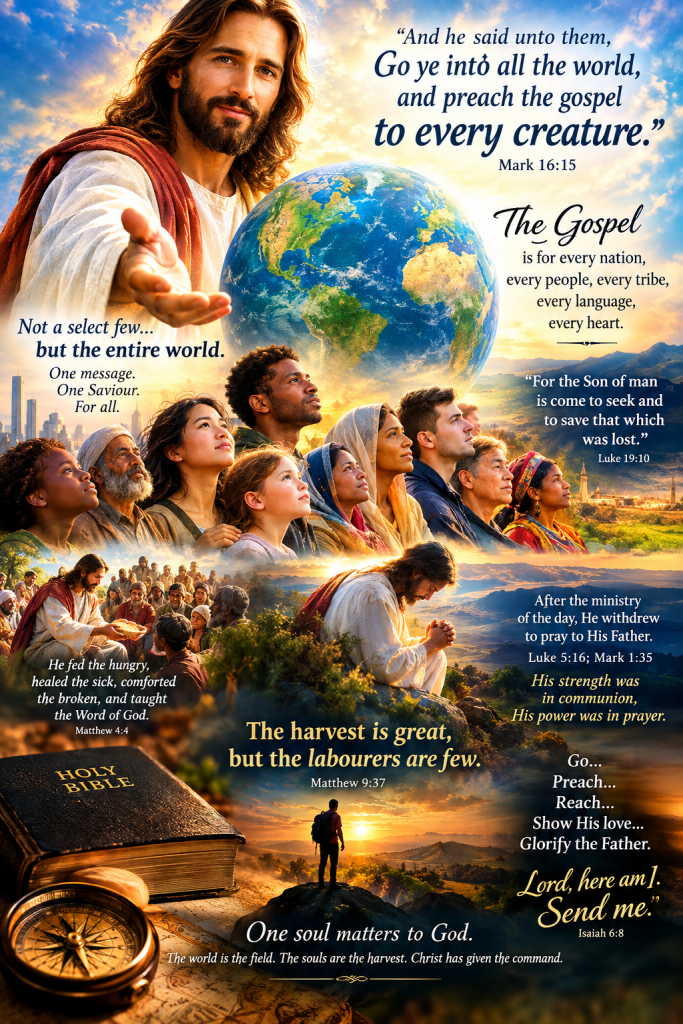
  • GO YE INTO ALL THE WORLD

    “And he said unto them, Go ye into all the world, and preach the gospel to every creature”

    (Mark 16:15).

    The mission given by our Lord Jesus Christ is not confined to a particular nation, community, congregation, family, or select group of people. Our vision must reach beyond the boundaries we can see. Our target must be the entire world.

    The Gospel is for every creature.

    There are souls everywhere who are searching for hope, longing for peace, carrying wounds that nobody can see, and walking through darkness without knowing where to turn. Some may never enter a church. Some may never open a Bible. Some may never hear a sermon from a pulpit.

    But they can encounter Christ through a word spoken in love, a life lived in obedience, a helping hand, a testimony, a message, or someone who is willing to carry the Gospel beyond familiar boundaries.

    The Lord Jesus did not come into this world merely to reach a comfortable few. He came to seek and to save that which was lost. 

    “For the Son of man is come to seek and to save that which was lost” (Luke 19:10).

    Christ’s eyes were always upon souls

    The earthly ministry of our Lord Jesus Christ gives us a pattern that cannot be ignored.

    He went among the people. He saw the multitudes. He listened to the broken. He touched the rejected. He welcomed the forgotten. He taught those who were hungry for truth. He comforted those who were grieving. He healed the sick and strengthened the weak.

    He did not see people merely according to their social position, wealth, reputation, or status.

    He saw souls.

    When He looked upon the multitude, He was moved with compassion. “But when he saw the multitudes, he was moved with compassion on them, because they fainted, and were scattered abroad, as sheep having no shepherd” (Matthew 9:36).

    When we look at the world, do we see only people or do we see souls that Christ loves?

    He fed both body and soul. Lord Jesus cared about people’s physical needs, but He never neglected their spiritual needs.

    He fed the hungry, yet He also taught them the Word of God. He healed the sick, yet He called people to repentance and faith. He comforted the brokenhearted, yet He directed them toward the Father.

    The Lord Jesus said: “Man shall not live by bread alone, but by every word that proceedeth out of the mouth of God” (Matthew 4:4).

    Food can sustain the body for a day. The Word of God can lead a soul toward eternal life.

    He glorified the Father. Throughout His earthly ministry, Lord Jesus continually directed attention to His Father. He did not seek His own glory. His life was an offering of obedience.

    Whatever work God has placed before us, our ultimate purpose should not be to make our own name great. It should be to glorify His Name.

    Our ministry, our words, our gifts, our resources, our time, and even our daily conduct should point people toward Christ. 

    The hidden strength behind His public ministry was a life of prayer. After ministering to the multitudes, Lord Jesus often withdrew from the crowds to seek His Father. “And he withdrew himself into the wilderness, and prayed” (Luke 5:16). 

    “And in the morning, rising up a great while before day, he went out, and departed into a solitary place, and there prayed” (Mark 1:35).

    The One who had spent the day teaching, healing, comforting, travelling, answering questions, and ministering to people still made time to be alone with the Father. His public strength was connected to His private communion with God.

    We cannot effectively carry God’s message to the world while neglecting our own relationship with God. Before we speak to people about the Father, we must learn to spend time speaking with the Father.

    The Lord Jesus looked at the multitudes and said:

    The harvest is great but the labourers are few.

    The world is still full of souls. Our responsibility is not necessarily to stand before thousands.

    We may begin with one person. One soul matters to God.

    One encouraging word may prevent someone from giving up. One testimony may awaken faith. One act of kindness may open a heart. One Scripture may remain in someone’s mind for years. One person who faithfully shares Christ may become the instrument through which another person encounters the Gospel.

    We must therefore never underestimate what God can do through a willing servant.

    Let us not make the Gospel smaller than Christ made it.

    We must look beyond just our neighborhood, friends, those who already agree with us, or those who are easy to reach.

    The Gospel crosses borders, languages, cultures, and social boundaries because the love of Christ is not confined by the boundaries created by humanity.

    Are we willing to go?

    The world does not merely need more religious words. It needs people whose lives demonstrate that they have encountered Christ.

    We are called to go, speak, serve, love, pray, encourage, teach, and testify.

    Prophet Isaiah heard the voice of the Lord:

    “Whom shall I send, and who will go for us?”

    And he answered:

    “Lord, here am I. Send me” (Isaiah 6:8).
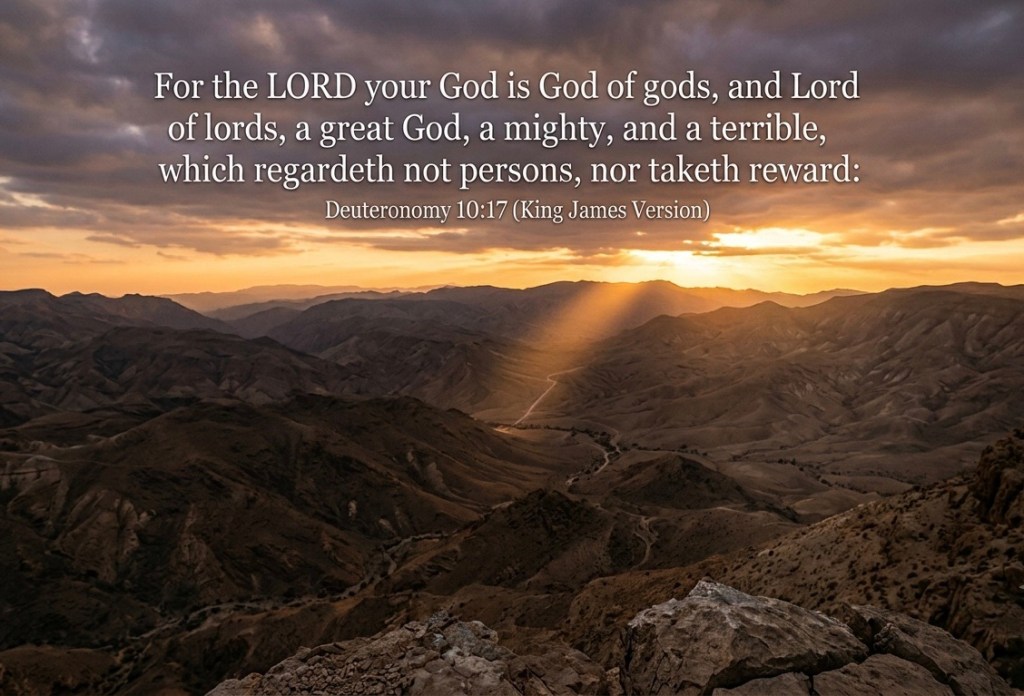
  • THE SOVEREIGN KING

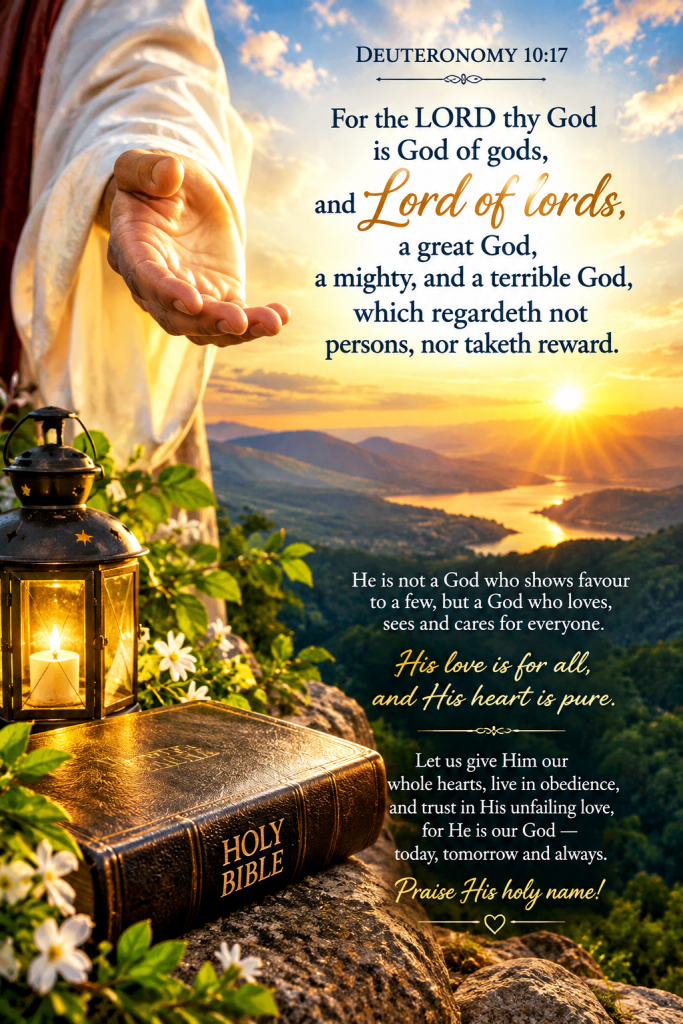
    No earthly throne can match His height,

    No mortal judge can twist the right.

    The God of gods, the Lord of all,

    Before whose throne the mighty fall.

    He takes no bribe, He shows no grace

    To status, power, or pride of place.

    The great, the awesome God of might,

    Who rules with justice in His sight.

    “Great is our Lord, and abundant in power; his understanding is beyond measure.”

    (Psalms 147:5)

    “It is he who made the earth by his power, who established the world by his wisdom, and by his understanding stretched out the heavens.” (Jeremiah 10:12)

    “The Lord is the everlasting God, the Creator of the ends of the earth. He does not faint or grow weary; his understanding is unsearchable.” (Isaiah 40:28)

    “Ah, Lord God! It is you who have made the heavens and the earth by your great power and by your outstretched arm! Nothing is too hard for you. (Jeremiah 32:17)

    “The Lord is a man of war; the Lord is his name.” (Exodus 15:3)

    “Your right hand, O Lord, glorious in power, your right hand, O Lord, shatters the enemy.” ( Exodus 15:6)

    “The Lord your God is in your midst, a mighty one who will save; he will rejoice over you with gladness.” (Zephaniah 3:17)

  • THE BATTLE WITHIN

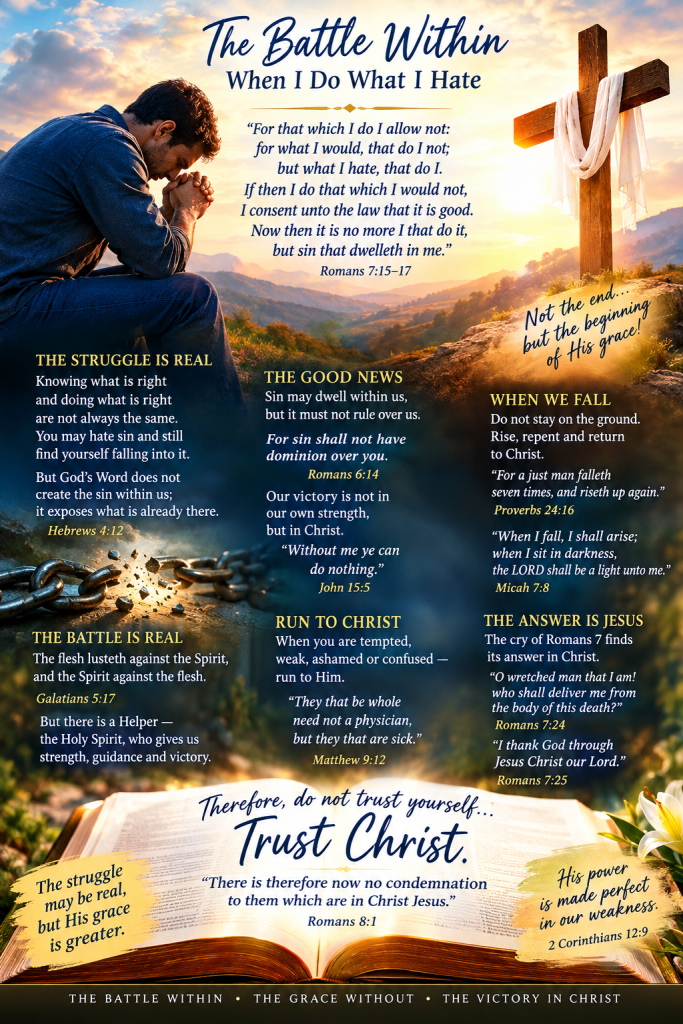
    There is a battle that cannot always be seen by human eyes. It is not fought with swords, armies, or earthly weapons. It is fought within the heart of man.

    The Apostle Paul speaks with remarkable honesty in Romans 7:15–17: “What I would, that do I not; but what I hate, that do I.”

    These words reveal something every believer must understand: knowing the will of God and obeying the will of God are not always the same thing.

    A person may know what is right and still struggle to do it. He may hate sin and yet find himself falling into temptation. He may desire holiness and still discover weakness within himself.

    The Apostle Paul says: “If then I do that which I would not, I consent unto the law that it is good.”

    The problem is not God’s law. God’s commandment is good because God is good. “Wherefore the law is holy, and the commandment holy, and just, and good” (Romans 7:12). God’s Word does not create the sin within us; it exposes what is already there. Hebrews 4:12 declares: “For the word of God is quick, and powerful, and sharper than any twoedged sword.” When God’s Word enters our hearts, it shows us not merely what we want others to see, but who we truly are before God.

    The Apostle Paul says: “What I hate, that do I.” He acknowledges his weakness with humility, and that is where spiritual healing begins. He who comes before God and says, “Lord, search me, reveal me, cleanse me, and change me,” has opened his heart to the work of grace. King David prayed: “Search me, O God, and know my heart: try me, and know my thoughts” (Psalm 139:23). True spirituality is bringing our struggles into the presence of God.

    The Apostle Paul says: “Sin that dwelleth in me.” In Romans 6:14, he later declares: “For sin shall not have dominion over you.” We are not strong enough to defeat sin. Christ is stronger than the sin that is fighting against us. Lord Jesus said: “Without me ye can do nothing” (John 15:5). Our victory does not come from trusting our own strength. It comes from abiding in Christ.

    Are you struggling with sin or making peace with it?

    If you have sinned, then you must repent. You must return to Christ. “For a just man falleth seven times, and riseth up again” (Proverbs 24:16). “When I fall, I shall arise; when I sit in darkness, the LORD shall be a light unto me” (Micah 7:8).

    You may have been experiencing a painful struggle, making you wonder whether you truly belong to God and why you are still fighting this battle. The Christian life involves warfare. Galatians 5:17 says: “For the flesh lusteth against the Spirit, and the Spirit against the flesh.” But the Holy Spirit works within us, teaching us, correcting us, strengthening us, and leading us toward holiness. Therefore, when you recognize the battle within, do not run away from God, but run toward Him. When you face weakness, temptation, or moments of doubt and shame, turn immediately to Christ for strength.

    Do not hide from the Physician. Go to the Physician. Lord Jesus said: “They that be whole need not a physician, but they that are sick” (Matthew 9:12).

    The Lord Jesus Christ is more real than our weaknesses. His grace outlasts our failures, His mercy covers our shame, and His power is greater than any temptation. Whenever we stumble, His strong hand is always ready to lift us back up. Therefore, do not trust yourself, but trust the Living Christ.

    The Lord told the Apostle Paul: “My grace is sufficient for thee: for my strength is made perfect in weakness” (2 Corinthians 12:9).

    Abide in Christ. “There is therefore now no condemnation to them which are in Christ Jesus” (Romans 8:1).

    For the battle is not ultimately won by the strength of the man who fights. It is won by the grace of the Christ who lives in him.

  • THE GLORY OF THE UNSEEN

    The Prophet Ezekiel’s Vision: Fire and Light

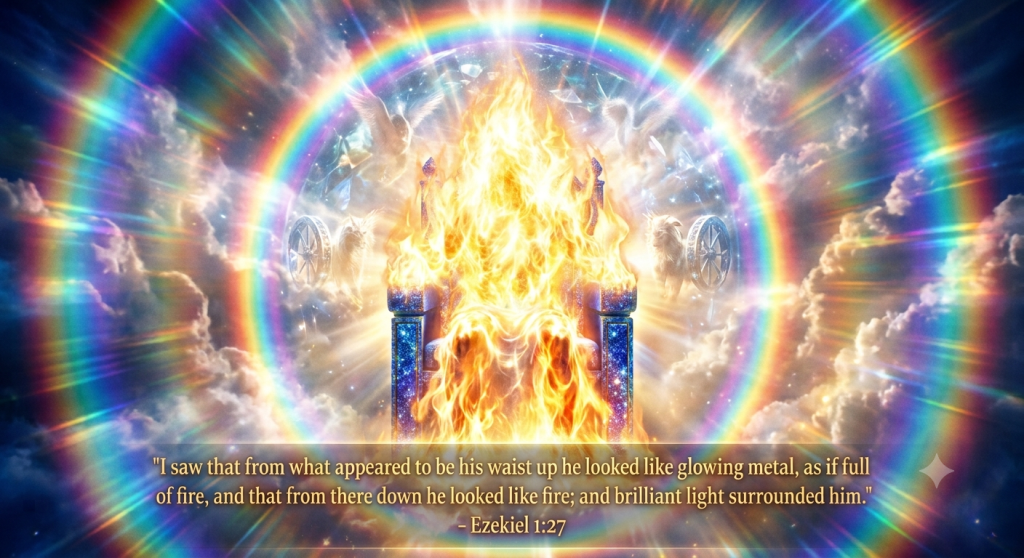
    “And I saw as the colour of amber, as the appearance of fire round about within it, from the appearance of his loins even upward, and from the appearance of his loins even downward, I saw as it were the appearance of fire, and it had brightness round about”. (Ezekiel 1:27).

    From His waist upward, He blazed with the gleam of glowing amber, like a brilliant furnace sealed in holiness. From His waist downward, a torrent of liquid fire poured forth, casting an unquenchable radiance into the deep. A magnificent, blinding brightness encircled Him on every side—the terrible, breathtaking glory of the Almighty, before which the heavens tremble and the earth falls facedown in awe.

    “For the LORD thy God is a consuming fire, even a jealous God” (Deuteronomy 4:24).

    “For our God is a consuming fire” ( Hebrews 12:29)

    Our Lord is Omnipotent, Omnipresent and Omniscient.

    Let’s fear God, worship Him sincerely, and lead a holy life.

    We are accountable for every second that we waste.

  • WHAT IS SIN?

    No, not one is good. No one is perfect. All are sinners.

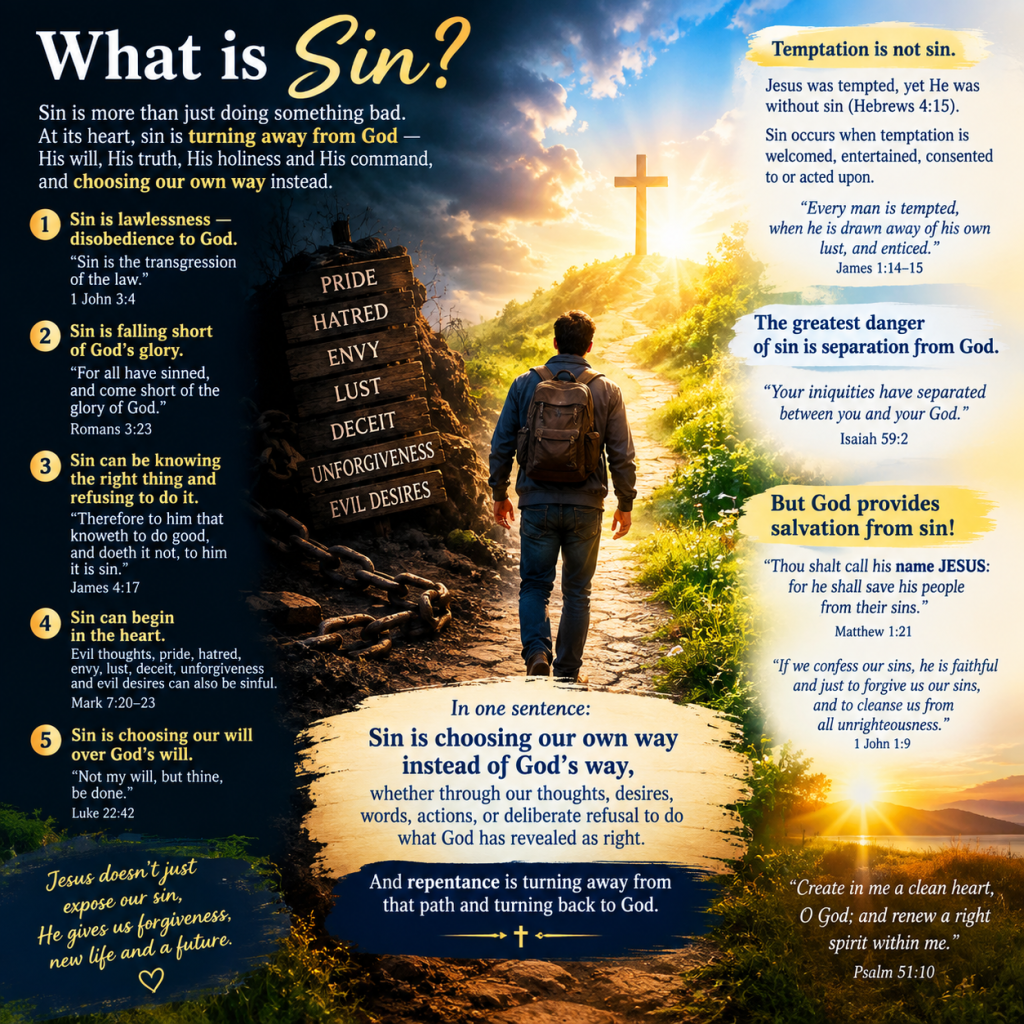
    Sin is lawlessness and disobedience to God. “Sin is the transgression of the law” (1 John 3:4). God establishes what is right and holy. When we knowingly reject His command, we sin.

    Sin is falling short of God’s glory. “For all have sinned, and come short of the glory of God” (Romans 3:23). 

    Every time we commit sin, we crucify the Lamb. Sin is not merely breaking a rule; it is failing to live according to the holiness and righteousness God desires. Sin can be knowing the right thing and refusing to do it. “Therefore, to him that knoweth to do good, and doeth it not, to him it is sin” (James 4:17).

    Sin can be what we do, but it can also be what we deliberately refuse to do when God has shown us what is right. When we miss the prayer hour and fail to wait at His feet, we sin.

    Sin can begin in the heart. The Lord Jesus taught that evil actions proceed from within the human heart (Mark 7:20–23). That means sin is not restricted to outward actions. Pride, hatred, envy, lust, deceit, unforgiveness, and evil desires can also be sinful.

    Sin is choosing our will over God’s will. Our Lord Jesus prays: “Not my will, but thine, be done” (Luke 22:42). A person is considered good if he loves God, trusts Him, and submits his will to His. 

    The Lord Jesus was tempted, yet He was without sin (Hebrews 4:15). Sin occurs when temptation is welcomed, entertained, consented to, or acted upon. “Every man is tempted, when he is drawn away of his own lust, and enticed” (James 1:14).

    Sin separates you from God: “Your iniquities have separated between you and your God” (Isaiah 59:2).

    God does not merely expose sin; He provides salvation from sin through Jesus Christ. “Thou shalt call his name JESUS: for he shall save his people from their sins” (Matthew 1:21).

    And: “If we confess our sins, he is faithful and just to forgive us our sins, and to cleanse us from all unrighteousness” (1 John 1:9).

    Sin is choosing our own way instead of God’s way, whether through our thoughts, desires, words, actions, or deliberate refusal to do what God has revealed as right. And repentance is turning away from that path and turning back to God.

    If one commits sin repeatedly, God will surely bring punishment. He will try to correct you, speak to you in your mind, and convict you that you are wrong; but if you repeatedly refuse to pay heed, you are inviting disaster into your life.

    “He that overcometh shall inherit all things; and I will be his God, and he shall be my son. But the fearful, and unbelieving, and the abominable, and murderers, and whoremongers, and sorcerers, and idolaters, and all liars, shall have their part in the lake which burneth with fire and brimstone: which is the second death” (Revelation 21:7, 8).

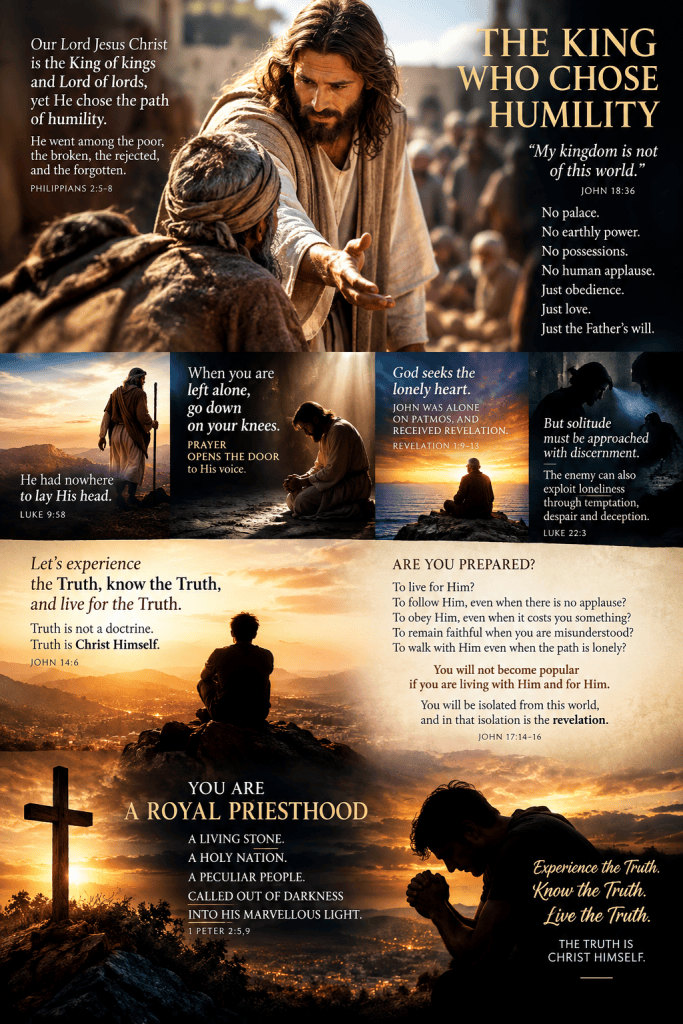
  • THE ROYAL PRIESTHOOD — CALLED OUT OF DARKNESS INTO HIS LIGHT

    “Ye also, as lively stones, are built up a spiritual house, an holy priesthood, to offer up spiritual sacrifices, acceptable to God by Jesus Christ.”
    (1 Peter 2:5)

    “But ye are a chosen generation, a royal priesthood, an holy nation, a peculiar people; that ye should shew forth the praises of him who hath called you out of darkness into his marvellous light.”
    (1 Peter 2:9)

    We belong to a King who did not come to live as earthly kings live.

    Our Lord Jesus Christ is the King of kings and Lord of lords, yet He chose the path of humility.

    He went among the poor, the broken, the rejected, and the forgotten.

    He did not build His kingdom through earthly status, political power, possessions, or human applause.

    Though the Lord Jesus Christ deserved all the royal titles, He did not claim any. When people tried to force Him to be an earthly king or political liberator, He withdrew from them (John 6:15).

    He consistently stated, “My kingdom is not of this world.” He did not live in palaces or accumulate material wealth. In Luke 9:58 the The Lord said, “Foxes have holes and birds of the air have nests, but the Son of Man has no place to lay his head.”

    The Lord Jesus Christ lived a humble life among the marginalized and poor, identifying completely with their daily struggles and lack of worldly status.

    He completely surrendered to Yahweh His Father to do His perfect will, showing complete submission to Him to accomplish His mission.

    Our transformation must not be superficial, but total. Our King expects a silent submission; it is in silence that we hear His whisper. Even when you are troubled amidst a crowd, He may call you in a voice audible to you alone.

    God seeks the heart that feels lonely, but Satan also prefers the lonely heart.

    The Apostle John was alone on the island of Patmos when God sought his heart. His solitude became the setting in which he received the revelation of Jesus Christ (Revelation 1:9–13). But solitude must be approached with discernment. The enemy can also exploit loneliness through temptation, despair, and deception. Judas became vulnerable to the influence of Satan (Luke 22:3). Therefore, when you find yourself alone, do not surrender your heart to darkness.

    When you are left alone, go down on your knees; that humble gesture will make you supernatural.

    Let’s experience the Truth, know the Truth, and live for the Truth. Truth is He who has chosen you to reveal the Truth.

    Spirituality is incredibly vast. To truly understand Him, we must become one with Him; He reveals His Truth only to those who love Him.

    Do you love Him?

    Are you prepared to live for Him?

    You will not become popular if you are living with Him and for Him.

    You will be isolated from this world, and in that isolation is the revelation.

  • THE VOICE OF YAHWEH AND THE WEIGHT OF OBEDIENCE

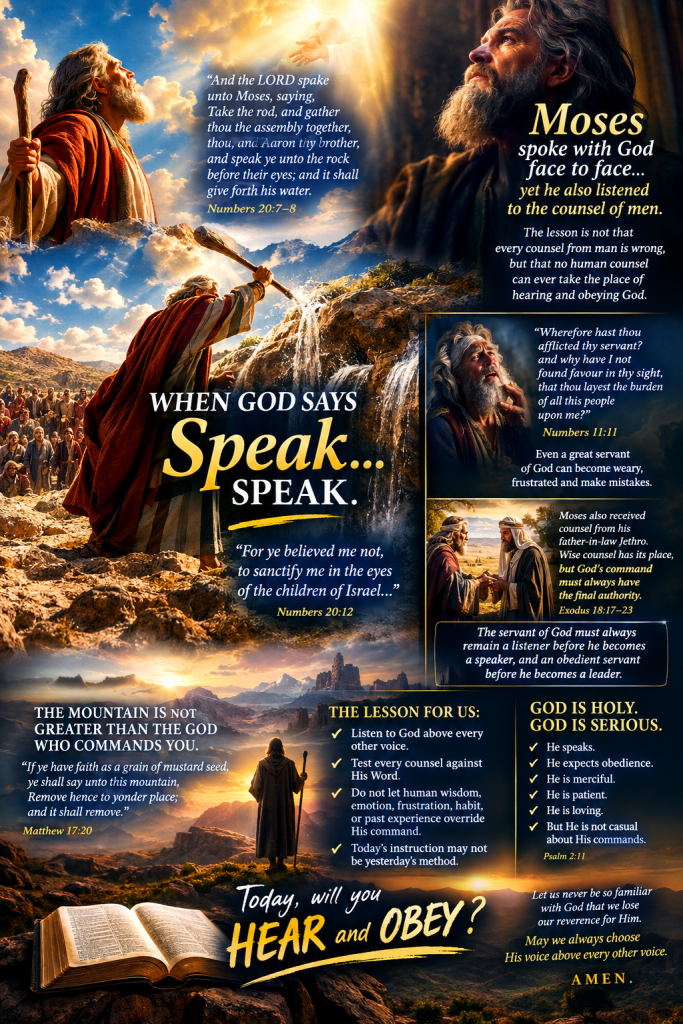
    “And the LORD spake unto Moses face to face, as a man speaketh unto his friend” (Exodus 33:11).

    In Numbers 20:7–8, the Lord spoke to Moses: “Take the staff, and gather the assembly together, you and Aaron your brother. Speak to the rock before their eyes, and it will yield its water.”

    God did not ask Moses to raise his hand. He did not ask him to strike the rock as he had years before at Horeb. He gave a precise, specific command: Speak to the rock.

    When the trial is looming before you, when the situation is parched, dry, and impossible, God does not ask for your human effort, your past methods, or your frustration. He asks for your obedience. Speak to the rock. Speak to the mountain. Though it stands high, firm, and unyielding, if you speak the word God commands, the mountain itself will crack, displace, and yield.

    Yet, Moses did not speak. In a moment of haste, pressure, and lingering frustration with a rebellious crowd, Moses raised his hand and struck the rock twice with his rod.

    To human eyes, striking a rock instead of speaking to it seems like a minor oversight, a small mistake born of impatience. After all, water still gushed forth! The people drank. Their thirst was quenched. The ministry seemed successful on the outside. God, in His mercy, still satisfied the needs of His people; He did not forsake them in that moment.

    But in the sacred alignment between God and His prophet, something fundamental was broken.

    Moses had walked with God. He had spoken to Him face to face as a man speaks to his friend. He had demonstrated God’s power in front of hundreds of thousands of people. Because of that close intimacy, Moses was held to a higher standard. His gesture was not a harmless misstep; it was an act of public disobedience and overconfidence that dishonored the sanctity of Yahweh.

    God told Moses immediately after: “Because you did not trust in me enough to honor me as holy in the sight of the Israelites, you will not bring this community into the land I give them”(Numbers 20:12).

    One act of disobedience kept the great deliverer from stepping into the Promised Land.

    From the Garden of Eden to the wilderness of Zin, the primary sin that fractures the relationship between God and humanity has always been disobedience. One disobedience brought a curse upon Adam’s lineage. One disobedience kept Moses from Canaan.

    Where, then, do we stand? We who have disobeyed not once, not twice, but countless times?

    We often treat God with casual familiarity, forgetting who He truly is. But our Lord is a serious God. When He speaks, He expects complete, unquestioning commitment and exact obedience.

    Consider the reality of His Presence. In the throne room of the Almighty, where His majesty extends into infinite height, there is a profound, terrifying silence. It is a quiet so absolute that it strips away all human pretense, pride, and excuses. And out of that holy stillness rings the thunderous voice of Yahweh, reminding us: He is a God to be feared, revered, and obeyed.

    If Moses who led millions out of bondage, through the parted waters, and into breakthrough was called to account for a single impulsive act, are we prepared to stand before Him today?

    We live in a time where grace is often mistaken for permission to compromise. God speaks once, and His words carry eternal weight. We cannot rely on human wisdom or counsel over the direct word of the Almighty.

    Despite hearing God’s voice face to face, Moses frequently sought and took organizational guidance from his father-in-law, Jethro, the priest of Midian.

    Even leaders, prophets, and faithful believers falter when they begin leaning on human advice over divine instruction. Human counsel may seem practical, logical, and efficient, but it can subtly shift our reliance away from the Spirit of God.

    We must return to a posture of total reliance on Yahweh: Men give advice based on logic; God gives commands based on His holiness and sovereign power. 

    Do not move, act, or strike until you have sought Him directly in prayer.

    God is not silent. He speaks through His Word, His Spirit, and His truth. When He gives a directive, our only response must be immediate, full compliance.

    If your time were up today and you were called to face the Great Yahweh, could your foundation stand?

    Do not let frustration drive your actions. Do not let past successes make you overconfident in current trials. When you face an impossible situation today, do not strike in anger or rely on human methods, do what the Lord asks you to do. If He says speak, then speak.

    Let us lay down our self-reliance, repent of our quiet disobedience, and restore a deep, holy reverence for the voice of Almighty God.

  • DO NOT TURN ASIDE

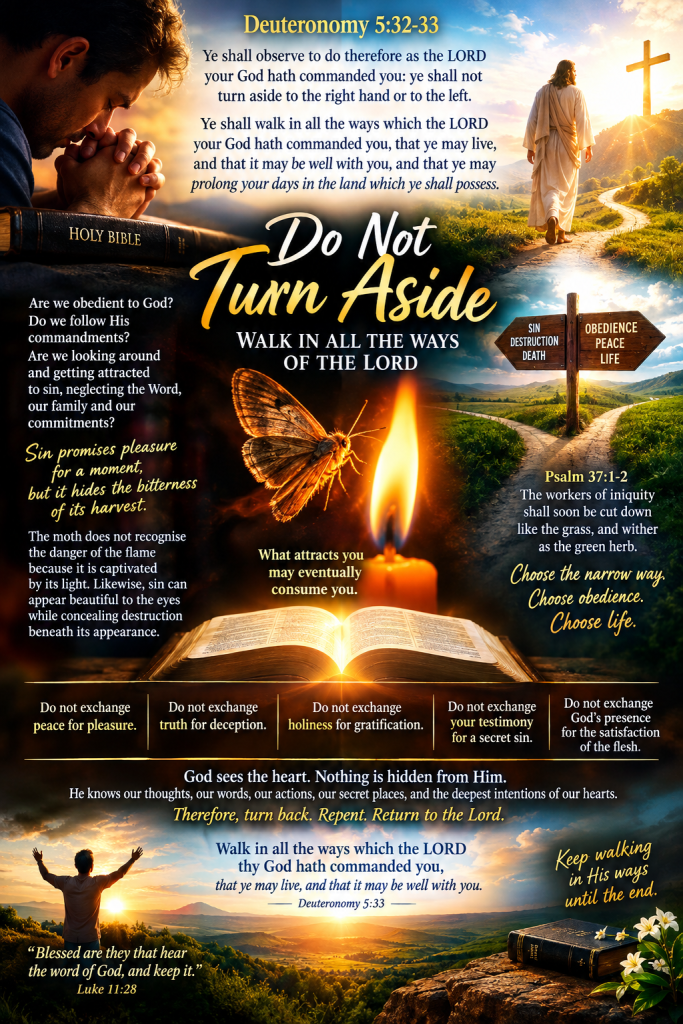
    “Ye shall observe to do therefore as the LORD your God hath commanded you: ye shall not turn aside to the right hand or to the left. Ye shall walk in all the ways which the LORD your God hath commanded you, that ye may live, and that it may be well with you” (Deuteronomy 5:32, 33).

    The Word of God places a searching question before every soul: Are we truly obedient to God? Are we walking in His ways? Are we keeping His commandments, or have we quietly turned aside?

    God says, “Ye shall walk in all the ways.”

    There is a great danger in turning aside even slightly. A person rarely wakes up one morning and decides to destroy everything that God has entrusted to him. Often, destruction begins with a small compromise, a secret desire, an unchecked thought, a wandering eye, or a craving that is allowed to remain in the heart.

    The eyes begin to look where they should not look. The mind begins to dwell upon what it should reject. The heart begins to desire what God has forbidden. The Word of God is neglected. Prayer becomes less important. Conviction becomes quieter. And eventually, what was once resisted begins to be embraced.

    Sin promises pleasure for a moment, but it hides the bitterness of its harvest.

    Are you looking around and allowing your eyes to become glued to something that is drawing your heart away from God? Are you neglecting the Word, your family, your responsibilities, and the commitments entrusted to you because you are pursuing a temporary craving?

    Be careful. By feeding a temporary desire, you may be starving your own future. You may be damaging the trust of those who love you. You may be allowing promises you once made to quietly dissolve while giving your time, attention, and strength to something that was never sent to bless you.

    The moth does not recognize the danger of the flame because it is captivated by its light. Likewise, sin can appear beautiful to the eyes while concealing destruction beneath its appearance.

    What attracts you may eventually consume you.

    That is why the Lord says: “Ye shall not turn aside to the right hand or to the left.”

    God is calling us back to the straight path.

    Psalm 37:1, 2 reminds us that the workers of iniquity shall soon be cut down like the grass and wither as the green herb. 

    The pleasure of sin is temporary, but its consequences can reach deeply into a person’s life. Therefore, do not exchange what is eternal for what is temporary. Do not exchange peace for pleasure, truth for deception, holiness for gratification, your testimony for a secret sin, and God’s presence for the satisfaction of the flesh.

    Lord Jesus said: “If ye love me, keep my commandments” (John 14:15).

    Obedience is not a way of purchasing God’s love. Rather, obedience is one of the fruits of loving Him. When we truly love the Lord, His Word cannot remain a stranger to us.

    We may face temptation, struggle, stumble, and fall along our journey. But when the Holy Spirit convicts us, we must not harden our hearts. We must repent, rise again, and return to the Lord.

    The greatest danger is not that you have fallen; the greatest danger is becoming comfortable lying on the ground.

    Do not make peace with what God has commanded you to leave, nor mistake your bondage for freedom, darkness for light, compromise for wisdom, or temptation for destiny.

    The enemy would love to make sin appear harmless until the chains become difficult to break. That is why we must “walk in all the ways” of the Lord.

    God’s commandments are not given to destroy our lives. They are given because He knows the path that leads to life. The Lord sees what we cannot by knowing the end from the beginning while we still stand at the start.

    He alone knows where temptation leads, what secret sin costs, which relationships will break, which trust will shatter, which blessings will be lost, and which wounds will linger for years.

    Therefore, when God says “Do not turn aside,” He is not withholding something good from us. He is protecting us from something that will wound us.

    And remember, God sees the heart. Nothing is hidden from Him, the Lord searches us and knows us. Our thoughts, our words, our actions, our secret places, and the deepest intentions of our hearts are known before Him.

    We can never deceive God. Our entire life is open before the One who created us. Therefore, let us examine ourselves honestly.

    What has captured my eyes?

    What occupies my thoughts?

    What am I secretly desiring?

    What am I giving more attention to than God?

    What has become more important to me than His Word?

    Where have I turned aside?

    These are not questions merely for someone else. These are questions for me, for you, and for every soul that claims to follow Christ.

    The answer is not despair. The answer is return.

    “Draw nigh to God, and he will draw nigh to you” (James 4:8).

    Return if your footsteps have wandered afar.
    Rise up if you tripped in the dark.
    Reclaim what was lost where you yielded your heart;
    Rekindle the prayer’s dying spark.

    Unfold the sacred pages once more,
    Where wisdom and promise abide.
    Turn away from the shadows that beckon and pull,
    And rest in the Light as your guide.

    “Looking unto Jesus the author and finisher of our faith” (Hebrews 12:2).

    Do not allow the enemy to convince you that you have wandered too far to return.

    The Shepherd still calls.

    The Father still receives the repentant.

    The mercy of God is still available to the humble heart.

    Today is the day to turn back.

    Step upon the ancient track,

    Where quiet footprints lead us back.

    Turn from the broad and easy street,

    To guide our small and steady feet.

    Let compromise fall fast away,

    And simple truth outshine the day.

    Trade fading joys that burn an hour,

    For quiet grace and holy power.

    Leave empty noise and worldly song,

    To hear where truest echoes long.

    Let passing hungers drift and part,

    As Christ becomes the living heart.

    Let our eyes rest upon the face of Christ, our ears attentive to His Word, our hearts surrendered to His Spirit, our feet established upon His path, and our lives pleasing in His sight. 

    Turn not to the left, nor cast a backward glance. Do not make a covenant with sin. Let no quiet vows bind the soul to shadow.

    Walk where the light is, Walk with God. 

    Hear the voice that calls you home,

    Remain faithful.

    And keep walking in His ways until the end.

    “Blessed are they that hear the word of God, and keep it” (Luke 11:28).

  • STAND IN AWE AND SIN NOT

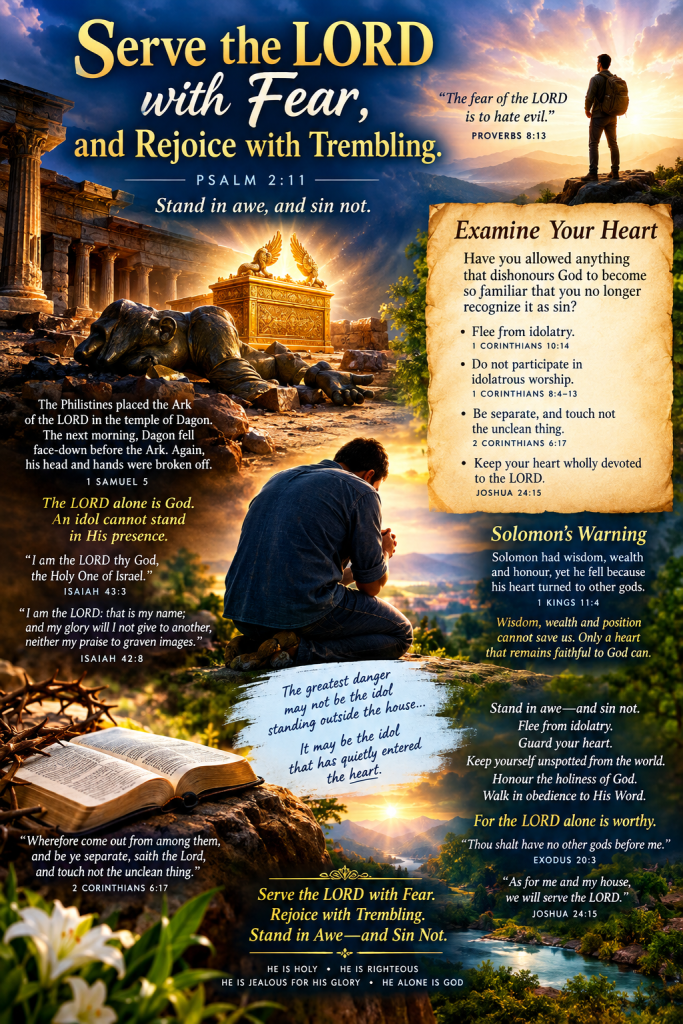
    “Serve the LORD with fear, and rejoice with trembling” (Psalm 2:11).

    To fear the LORD is not merely to be afraid of Him. It is to stand in awe of His holiness, honour His authority, obey His Word, and tremble at the thought of treating holy things lightly. The presence of God should produce reverence in us, not familiarity that leads to carelessness.

    Scripture says: “The fear of the LORD is to hate evil” (Proverbs 8:13).

    God is holy, and He calls His people to holiness. Therefore, we must never become so accustomed to sin and idolatry around us that we cease to recognize what is offensive to God.

    In 1 Samuel 5, the Philistines defeated Israel and captured the Ark of the Covenant. They carried it to Ashdod and placed it inside the temple of Dagon, their god. In doing so, they attempted to place the symbol of the God of Israel beside the image of their false god as though Dagon had triumphed over the LORD.

    But the LORD does not share His glory with idols.

    The next morning, Dagon was found fallen face-down before the Ark of the LORD. The Philistines raised their idol and put it back in its place. But the following morning, Dagon had fallen again, this time with his head and hands broken off.

    The message was unmistakable: The LORD alone is God. An idol cannot stand in His presence.

    The Scripture declares:

    “For I am the LORD thy God, the Holy One of Israel”(Isaiah 43:3).

    And: “I am the LORD: that is my name: and my glory will I not give to another, neither my praise to graven images” (Isaiah 42:8).

    The Ark did not need to defend itself. God Himself demonstrated His supremacy.

    Do we tolerate what God commands us to reject?

    Have we allowed things that dishonour God to become so familiar that we no longer recognize them as spiritually dangerous? Have we compromised with idolatry, worldly values, or practices that are contrary to God’s Word?

    Apostle Paul warns us: “What agreement hath the temple of God with idols?” (2 Corinthians 6:16).

    We are called to be the temple of the living God. Therefore Scripture says: “Wherefore come out from among them, and be ye separate, saith the Lord, and touch not the unclean thing” (2 Corinthians 6:17).

    Separation from ungodliness does not mean hatred of people. We are commanded to love our neighbour and even our enemies. But loving people does not require us to approve of everything they do.

    Lord Jesus Himself said: “If ye love me, keep my commandments” (John 14:15).

    King Solomon received extraordinary wisdom from God. Yet wisdom itself could not preserve him when his heart turned away from the LORD.

    Scripture records: “For it came to pass, when Solomon was old, that his wives turned away his heart after other gods” (1 Kings 11:4).

    His foreign wives turned his heart toward their gods, and Solomon built places for their worship.

    A person may possess wisdom, wealth, position and honour, yet still fall if the heart is allowed to depart from God.

    Solomon’s tragedy was not that he lacked wisdom. It was that he failed to remain faithful to the God who had given him that wisdom.

    Therefore, we must never trust in our knowledge, accomplishments, wealth, or spiritual history. Our confidence must remain in the LORD.

    Apostle Paul gives the believer a direct command:

    “Wherefore, my dearly beloved, flee from idolatry” (1 Corinthians 10:14).

    Apostle Paul says flee. He does not say to become comfortable with it. He strongly warned believers against participating in idolatrous worship or becoming a stumbling block to another person’s conscience 

    Our hearts belong to God. Stand in awe and sin not

    Psalm 2:11 commands us: “Serve the LORD with fear, and rejoice with trembling.”

    Scripture says: “Be ye holy; for I am holy” (1 Peter 1:16)

    And: “Let us have grace, whereby we may serve God acceptably with reverence and godly fear” (Hebrews 12:28).

    “What does the Word of God say?”

    Let us therefore examine ourselves before examining everyone else.

    Is my heart wholly devoted to the LORD?

    Have I permitted anything to take God’s rightful place in my life?

    Have wealth, pleasure, relationships, possessions, reputation, power, or worldly approval become idols in my heart?

    Am I standing firm in God’s truth, or have I quietly compromised?

    The greatest danger may not be the idol standing outside the house. It may be the idol that has quietly entered the heart. Therefore, beloved, stand in awe of the LORD and sin not.

    Flee from idolatry. Guard your heart. Keep yourself unspotted from the world. Honour the holiness of God. Walk in obedience to His Word. For the LORD alone is worthy.

    “Thou shalt have no other gods before me” (Exodus 20:3).

    And let the cry of our hearts always be: “As for me and my house, we will serve the LORD” (Joshua 24:15).

    Serve the LORD with fear. Rejoice with trembling.

    Stand in awe and sin not.

    For He is holy. He is righteous. He is jealous for His glory.

    And He alone is God.

  • WALK AFTER THE LORD

    “Ye shall walk after the LORD your God, and fear him, and keep his commandments, and obey his voice, and ye shall serve him, and cleave unto him” (Deuteronomy 13:4).

    When you truly love God, you will desire to honour Him. When you honour Him, you will desire to obey Him. And when your heart is turned toward Him, you will begin to recognise His voice.

    The Christian life is not merely about knowing about God; it is about walking with God.

    We live in a world filled with noise—voices of temptation, pride, hatred, greed, fear, confusion and sin. Every day, countless voices compete for our attention. Yet, in the midst of all that noise, there is another voice—the voice of the One who created us, loves us and calls us to Himself.

    We need His guidance. Without the Lord directing our steps, how easily can we lose our way! We cannot successfully navigate this fallen and sinful world by human wisdom alone. We need God to guide our thoughts, our decisions, our relationships, our words and every step of our journey.

    The Scripture says:

    “In all thy ways acknowledge him, and he shall direct thy paths” (Proverbs 3:6).

    Therefore, humble yourself before Him. Hold on to Him. Cleave to Him. Seek His presence before seeking the approval of the world. And when you hold on to God, remember this: He is holding on to you.

    God deserves the first place in everything. The first portion belongs to Him. The first part of your day belongs to Him. Your very first thought in the morning is for Him. The first quiet moments of the day are His. The first true wish of your heart turns to Him. God remains the top priority of your life.

    Before the world begins speaking to us, let us learn to sit at the feet of Jesus. Before we reach for the things of this world, let us reach for the presence of God. Before we listen to the many voices around us, let us become still enough to hear the voice of our Creator.

    “But seek ye first the kingdom of God, and his righteousness” (Matthew 6:33)

    How precious it is to begin the day with God!

    The world may be sleeping, the streets may be quiet, and everything around us may be still—but the soul that loves God can already be awake in His presence.

    When the world is running after everything except God, we should be found at His feet.

    Like Mary, who sat at the feet of Jesus and listened to His word, may we learn that there are moments when the most important thing we can do is simply be still and listen.

    God is not confined to a particular hour, a particular day, or a particular place. He speaks through the quietness of the heart. 

    “My sheep hear my voice, and I know them, and they follow me” (John 10:27).

    He Is Looking for a Heart That Will Wait.

    Hearing God’s voice is not merely about receiving a message. It is about developing a heart that is willing to obey.

    God desires a people who will seek Him—not only when they are in trouble, not only when they need a blessing, not only when they need an answer, but because they love Him.

    There is something precious about a soul that waits for God simply because it longs for God.

    “My soul, wait thou only upon God; for my expectation is from him” (Psalm 62:5).

    To wait for God is an expression of love.

    When you love someone, you desire their presence. You listen for their voice. You look forward to being with them. So it should be with the Lord.

    Seek His face. Seek the Blesser. Seek the Giver.

    Come to Him because He is worthy of your love.

    Begin each day by saying:

    “Lord, before I hear the world, I want to hear You. Before I make my plans, I want to surrender them to You. Before I walk into this day, I want You to walk with me. Guide my steps. Guard my heart. Govern my words. Let me not live this day without You.”

    Will you love Him?

    The Lord is calling us deeper—not merely into religion, but into relationship; not merely into outward service, but into inward surrender.

    He wants a heart that says: “Lord, I am Yours.”

    A heart that will listen. A heart that will obey.

    A heart that will wait. A heart that will hold fast.

    A heart that will follow Him even when the path is difficult.

    Seek Him. Wait for Him. Walk after Him. Fear Him. Love Him. Hear His Word. Obey His voice.

    Hold fast to Him Keep His commandments.

    Serve Him.

    This is not merely a command for one moment of life. It is a way of life.

    Walk with Him in the morning. Walk with Him at noon. Walk with Him at night. Walk with Him when everything is going well. Walk with Him when everything seems to be falling apart. Walk with Him when you understand. Walk with Him when you do not understand. And when the world becomes dark and confusing, hold on to Him even more tightly.

    For the soul that has learned to love God, wait upon God, hear His Word and obey His voice has discovered something the world cannot give.

    The greatest victory is not conquering the world around you. The greatest victory is refusing to allow the world to conquer the God-given soul within you.

    So, will you begin your day with Him?

    Will you wait for Him?

    Will you listen?

    Will you obey?

    Will you love Him—not merely for what He can give you, but simply because He is God and He is worthy of your love?

    “Draw nigh to God, and he will draw nigh to you” (James 4:8).

    And let God be first. Always. When the world is running after everything except God, we should be found at His feet.

    “Speak, LORD; for thy servant heareth” ( 1 Samuel 3:9 ).